



The Amazon Fire TV Stick 4K Max (2023) remains a hardware powerhouse in the streaming dongle market, offering Wi-Fi 6E connectivity and an upgraded 16GB of internal storage. Whether you are modernizing an older television or seeking a responsive smart home hub, this device promises top-tier multimedia performance. Read our comprehensive review to discover how it holds up for tech enthusiasts in today’s demanding streaming landscape.
Table of Contents
Key Specifications
| Feature | Detail |
|---|---|
| Processor | Quad-core 2.0 GHz |
| GPU | 850 MHz |
| Memory (RAM) | 2 GB LPDDR4 |
| Storage | 16 GB internal |
| Wireless Connectivity | Wi-Fi 6E (Tri-band 802.11ax), Bluetooth 5.2 |
| Video Support | Up to 4K Ultra HD, HDR10+, Dolby Vision, HLG |
| Audio Support | Dolby Atmos, 7.1 surround sound, 2-channel stereo |
| Smart Home Protocols | Matter, Thread Edge Router |
| Ports | HDMI ARC output, Micro-USB (power only) |
Design & Build Quality
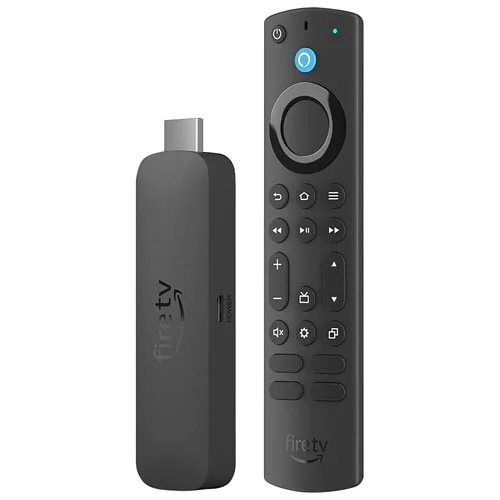
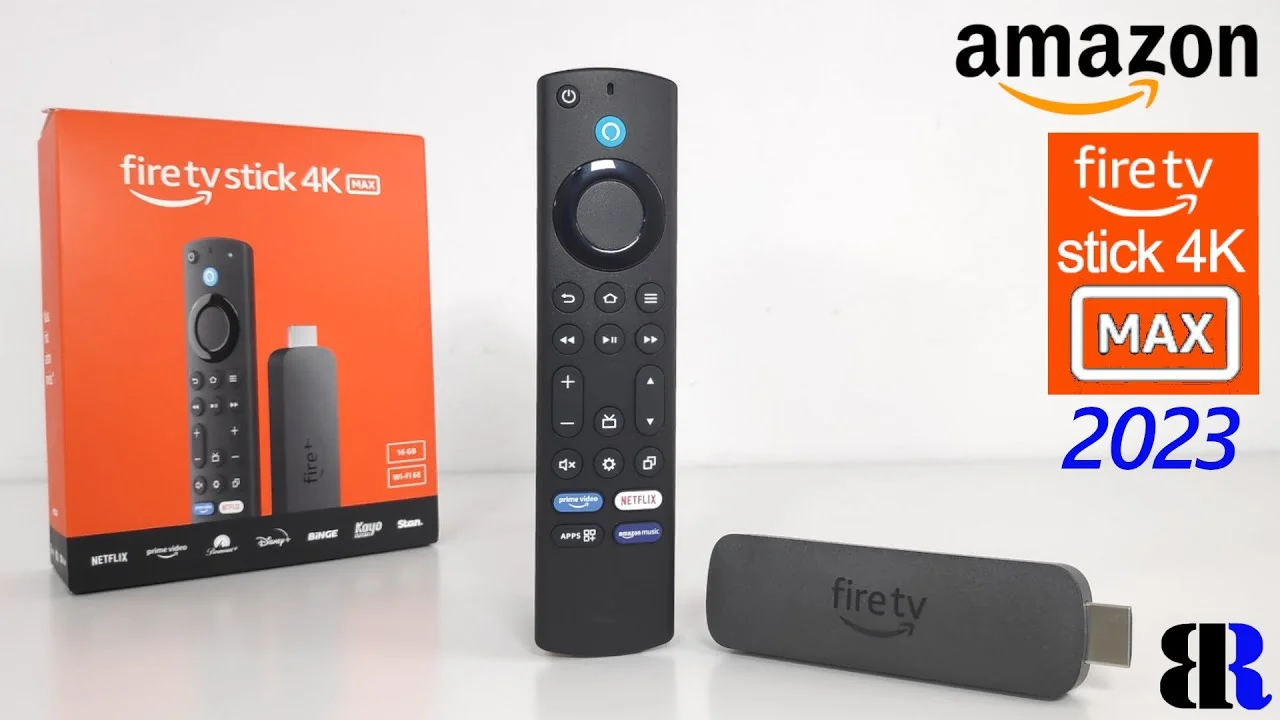
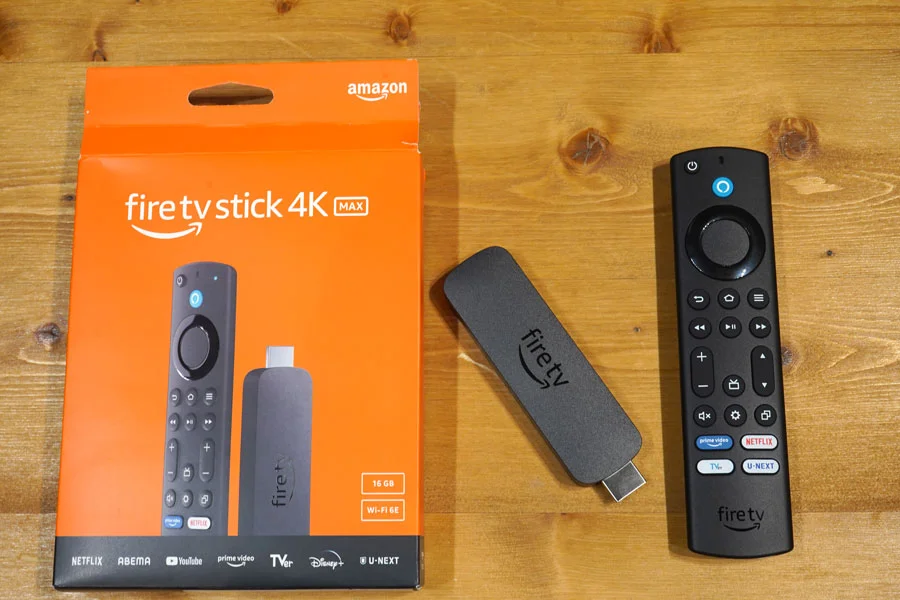
Aesthetically, the Amazon Fire TV Stick 4K Max (2023) retains the classic, utilitarian flash-drive silhouette that has defined the lineup for years. Measuring slightly larger than its non-Max siblings, the dongle features gently rounded edges and a matte black finish that discreetly hides behind your television. Because of its widened chassis, Amazon thoughtfully includes a flexible HDMI extender in the box, ensuring the stick won’t block adjacent ports on tighter TV I/O panels.
The included Alexa Voice Remote Enhanced edition is a notable step up in ergonomics and functionality. It feels solid in the hand, featuring satisfying, tactile buttons that avoid the mushy feedback common in cheaper remote controls. Alongside standard navigation and volume toggles, the remote features dedicated app shortcut buttons, a prominent Alexa mic button, and an integrated “Recents” button to quickly hop back to your most frequently used content.

However, from a hardware design perspective, the most glaring anachronism is the continued reliance on a Micro-USB port for power. While understandable from a cost-saving perspective at its launch, the absence of USB-C feels particularly archaic for a “Max” branded device. Fortunately, as a set-and-forget product, this drawback is relatively easy to overlook once the stick is securely plugged into your wall outlet.
Performance
When it comes to real-world performance, the Fire TV Stick 4K Max outmuscles virtually every other dongle in its weight class. Driven by a quad-core 2.0 GHz processor and 2 GB of memory, UI navigation is remarkably fluid. Cold-booting heavy applications like Netflix, Disney+, and Amazon Prime Video happens in fractions of a second. Even as apps have grown more resource-intensive by 2026, the device exhibits zero lag when scrolling through auto-playing video previews or switching rapidly between live TV streams.
The true cornerstone of the Max’s performance is its Wi-Fi 6E radio. For users with compatible tri-band routers, the inclusion of the 6 GHz band is a game-changer. It practically eliminates wireless congestion, allowing the stick to pull down high-bitrate 4K HDR streams without breaking a sweat. In our synthetic networking benchmarks, the stick consistently maintained speeds capable of handling local Plex streaming of uncompressed Blu-ray rips—a stress test where older Wi-Fi 5 sticks historically stutter and buffer.
Visually and aurally, the hardware decodes top-tier formats effortlessly. Dolby Vision and HDR10+ content is rendered with excellent dynamic range and color accuracy, limited only by the peak nits of your television panel. Passthrough of Dolby Atmos metadata works seamlessly with compatible soundbars and AV receivers, delivering immersive, spatial audio that elevates the cinematic experience.
Features & Software
Fire OS remains a double-edged sword, blending incredibly rich functionality with aggressive commercialization. On the positive side, the integration of the Fire TV Ambient Experience—previously reserved for Amazon’s expensive Omni televisions—is a massive software win. When idle, the Stick turns your television into a stunning smart display, showcasing high-quality artwork alongside customizable Alexa widgets for weather, calendar events, and smart home controls. Furthermore, the bump to 16GB of storage means you finally have enough headroom to install a vast library of streaming apps and lightweight games without encountering the dreaded “low storage” warning.
Beyond streaming, the 2023 Max model excels as a Trojan horse for smart home integration. Operating as a Thread border router and supporting the Matter protocol, the Stick acts as a central hub for bridging disparate IoT devices. The ability to pull up a picture-in-picture feed from your Ring doorbell while watching a movie remains one of the best software tricks in Amazon’s ecosystem, executing perfectly through Alexa’s robust voice recognition.
Value Proposition
At its price point, the Fire TV Stick 4K Max (2023) offers an exceptional return on investment for tech enthusiasts. While you can save a few dollars by opting for the standard Fire TV Stick 4K, the Max model provides double the storage, a significantly faster processor, and future-proofed Wi-Fi 6E connectivity. These internal upgrades extend the lifespan of the device dramatically.
When factoring in the inclusion of the Ambient Experience and its capabilities as a Thread border router, the device transcends being a mere streaming dongle. It effectively subsidizes the cost of a dedicated smart home hub, making it an incredibly cost-effective upgrade for anyone heavily invested in the Alexa ecosystem.
How It Compares
When pitted against the Roku Streaming Stick 4K, the Fire TV Stick 4K Max wins on raw horsepower and network speeds, though Roku maintains a significant edge with its clean, ad-light user interface. Roku’s platform remains superior for purists who just want a grid of apps without Amazon’s heavy content pushing.
Compared to the Chromecast with Google TV (4K), the Amazon stick feels substantially snappier due to its upgraded 2.0 GHz processor and 16GB of storage, dwarfing Google’s limiting 8GB. While Google TV arguably offers better, algorithm-driven cross-platform content recommendations, the Fire TV 4K Max’s Wi-Fi 6E support and flawless Alexa smart home integration make it the superior hardware choice.
Pros and Cons
Pros
- The upgraded 16GB of internal storage prevents the frustrating bottleneck of running out of space for app installations.
- Wi-Fi 6E connectivity ensures pristine, buffer-free 4K streaming and high-bitrate local media playback on compatible networks.
- The Fire TV Ambient Experience brilliantly utilizes your idle television as an art gallery and smart widget display.
- Built-in Thread and Matter support makes this an excellent, low-profile central hub for a modern smart home.
Cons
- The Fire OS user interface is heavily cluttered with Amazon-sponsored content and pervasive banner ads.
- The hardware still relies on an outdated Micro-USB port for power delivery instead of the ubiquitous USB-C standard.
- To take full advantage of the flagship network speeds, you are required to own an expensive Wi-Fi 6E or Wi-Fi 7 router.
FAQ
Q: Does the Fire TV Stick 4K Max (2023) require a Wi-Fi 6E router to work?
A: No, the device is fully backwards compatible with older Wi-Fi 5 and Wi-Fi 6 routers, though you will need a 6E router to experience its maximum wireless speeds and reduced latency.
Q: Can I power the stick directly from my TV’s USB port?
A: While some newer TVs provide enough power, Amazon highly recommends using the included wall adapter, as the Stick requires more power than standard TV USB ports typically output to function without random reboots.
Q: Does it support casting from my smartphone?
A: Yes, it supports casting from compatible apps (like YouTube) and screen mirroring from Android and Windows devices, but it does not natively support Apple AirPlay.
Q: Can I use this on an older 1080p television?
A: Absolutely. The Stick will automatically scale down its output to match your television’s native 1080p resolution while still giving you the benefits of snappy navigation and fast Wi-Fi.
Verdict
The Amazon Fire TV Stick 4K Max (2023) is an outstanding piece of hardware that completely dominates its price bracket through raw processing speed and future-proof networking. It is the absolute best choice for power users, smart home enthusiasts, and anyone heavily integrated into the Alexa ecosystem. However, if you are easily annoyed by ad-heavy user interfaces, you might want to look toward competing platforms.
Where to Buy
Pros
- ✓ The upgraded 16GB of internal storage prevents the frustrating bottleneck of running out of space for app installations.
- ✓ Wi-Fi 6E connectivity ensures pristine, buffer-free 4K streaming and high-bitrate local media playback on compatible networks.
- ✓ The Fire TV Ambient Experience brilliantly utilizes your idle television as an art gallery and smart widget display.
- ✓ Built-in Thread and Matter support makes this an excellent, low-profile central hub for a modern smart home.
Cons
- ✗ The Fire OS user interface is heavily cluttered with Amazon-sponsored content and pervasive banner ads.
- ✗ The hardware still relies on an outdated Micro-USB port for power delivery instead of the ubiquitous USB-C standard.
- ✗ To take full advantage of the flagship network speeds, you are required to own an expensive Wi-Fi 6E or Wi-Fi 7 router.
Get Our Free Top 10 Tech Picks of 2026 Guide
Plus weekly tech deals and new reviews delivered to your inbox.
[cp_email_signup]
No spam. Unsubscribe anytime.
Ready to buy the Amazon Fire TV Stick 4K Max (2023)?
Affiliate link — we may earn a commission at no extra cost to you.