
TCL QM8K Review Scores
4.5/5
92%
86%
92%
89%
88%
Scores out of 100 based on ClarityPoint review criteria.
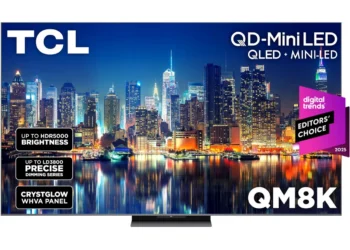
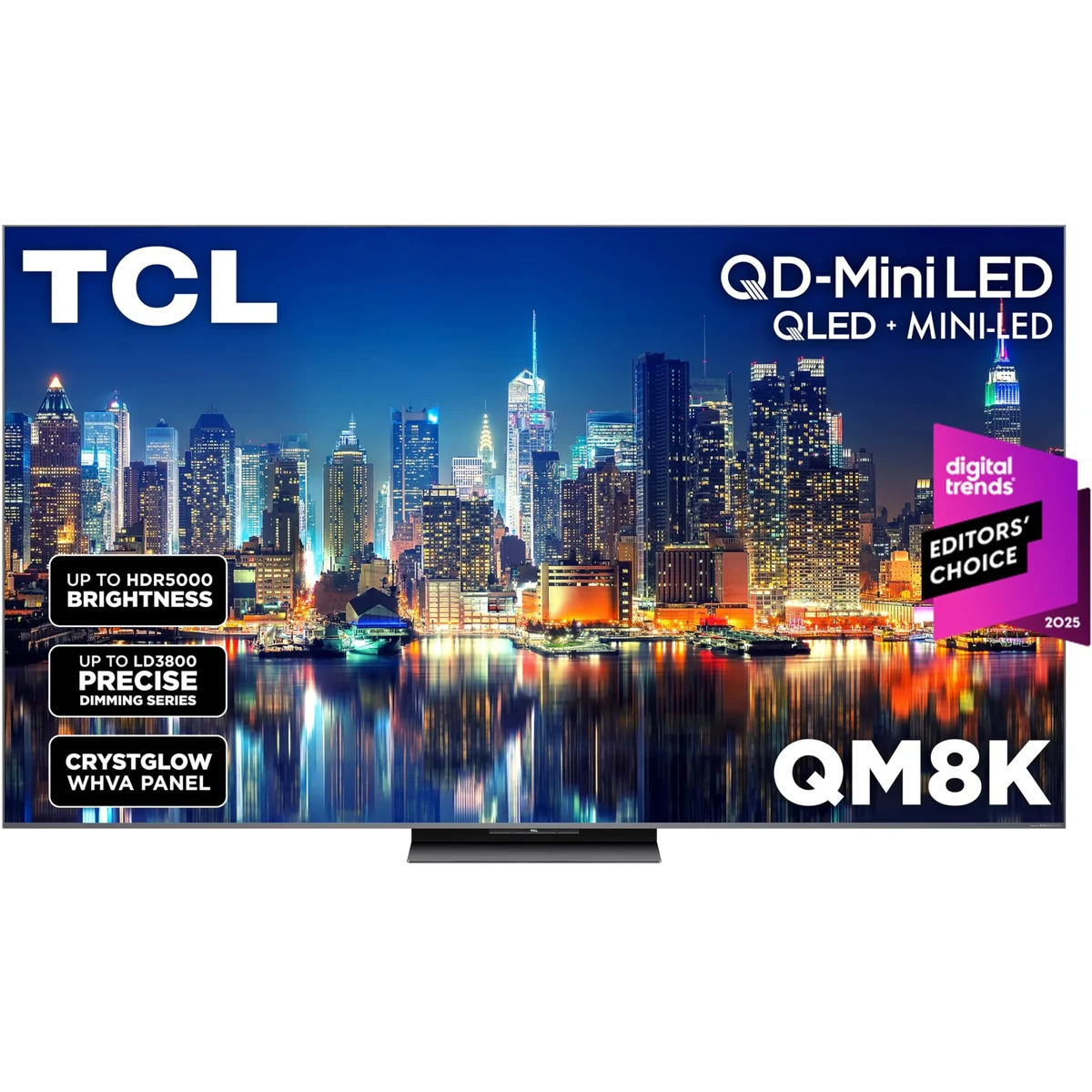
The TCL QM8K emerges as one of the strongest value propositions in the 2026 premium TV market, combining Mini-LED precision, quantum dot vibrancy, and flagship-level brightness that challenges far more expensive competitors. With over 2,000 local dimming zones, a 144Hz panel, and full HDMI 2.1 connectivity, it delivers an exceptional experience for both cinematic HDR content and high-frame-rate gaming. This in-depth review examines whether the QM8K truly deserves its growing reputation as the smart buy for discerning enthusiasts.
Table of Contents
Key Specifications
| Feature | Detail |
|---|---|
| Screen Sizes | 65″, 75″, 85″, 98″ |
| Display Technology | Mini-LED QLED (Full Array Local Dimming) |
| Resolution | 4K UHD (3840 x 2160) |
| Refresh Rate | 144Hz native with Motion Rate 480 |
| Peak Brightness | 2,000+ nits (HDR peak) |
| HDR Support | Dolby Vision, HDR10+, HLG |
| Smart Platform | Google TV with Voice Remote |
| Gaming Features | VRR, ALLM, 144Hz, 9ms input lag, AMD FreeSync Premium Pro |
| Audio | 2.1.2 channel 80W with Dolby Atmos |
| Connectivity | 4x HDMI 2.1 (eARC), Wi-Fi 6E, Bluetooth 5.2 |
Design & Build Quality
The TCL QM8K features an impressively slim profile with ultra-narrow bezels that measure just 2.5mm on three sides, creating a near-borderless viewing experience that looks premium on any wall or stand. The television uses a brushed metal frame and a sturdy, adjustable metal stand that offers both height and swivel adjustment on larger models. At nearly 50 pounds for the 65-inch variant, the build feels substantial and well-engineered, though it lacks the ultra-premium finish found on flagship Sony or Samsung models.
Ergonomically, the TV is designed with practicality in mind. The rear panel is cleanly organized with easy-access ports, and the included remote is backlit with a comfortable grip and dedicated shortcut buttons for major streaming services. Wall-mount compatibility is excellent thanks to standard VESA patterns and a relatively shallow depth, making it suitable for both living room and dedicated home theater setups. While the overall aesthetic is modern and understated, some enthusiasts may notice minor panel flex when adjusting the stand compared to more rigid competitors.
Performance
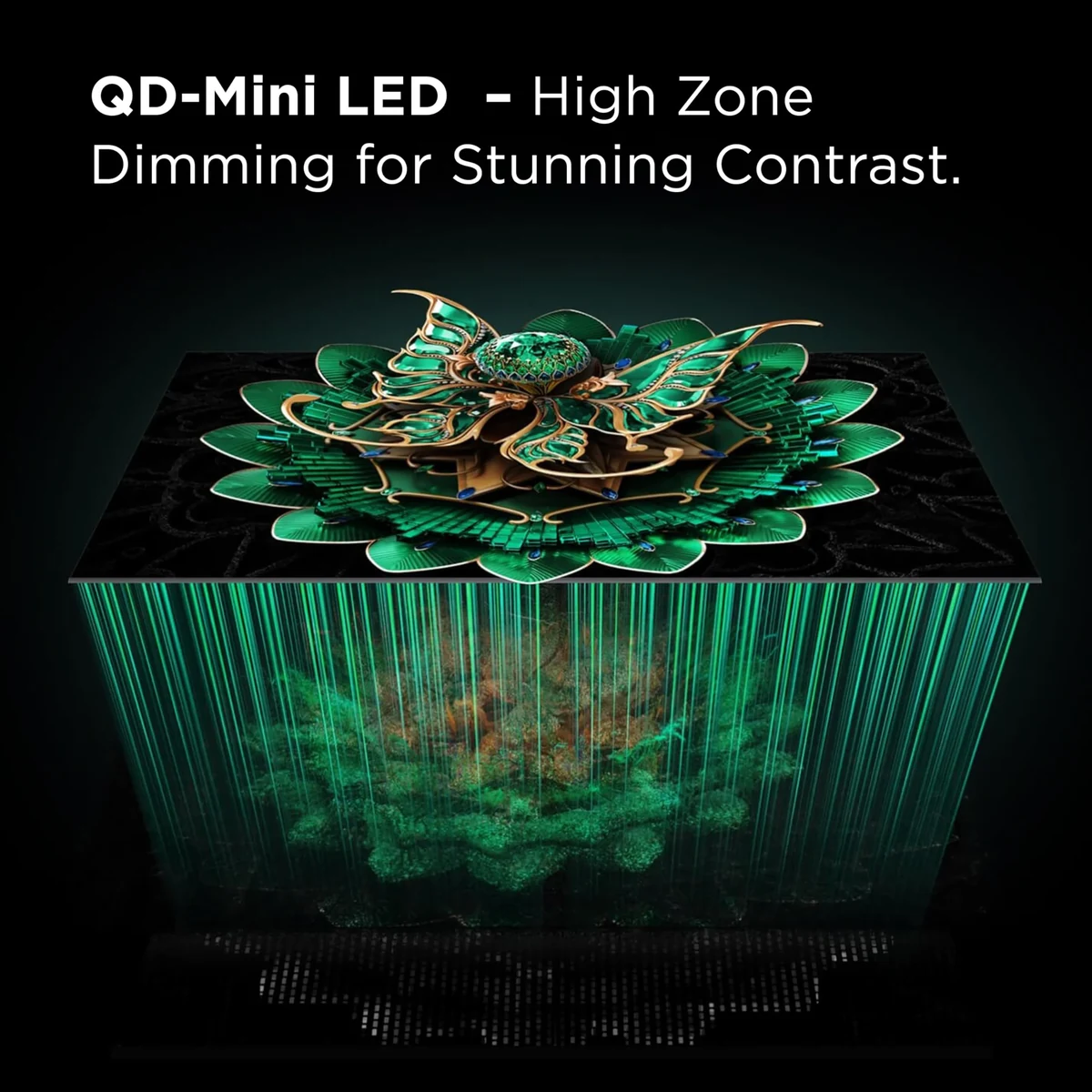
In real-world testing throughout 2026, the TCL QM8K consistently delivers reference-level HDR performance with peak brightness routinely exceeding 2,000 nits in windowed highlights while maintaining excellent black levels thanks to its advanced local dimming algorithm. The over 2,000 dimming zones on the 65-inch model significantly reduce the blooming and haloing that plagued earlier TCL generations. Color volume is exceptional, covering 97% of the DCI-P3 gamut with accurate EOTF tracking that makes Dolby Vision content pop with lifelike vibrancy.
Benchmark results place the QM8K among the top Mini-LED performers of the year. Input lag measures an impressive 9ms at 144Hz with VRR enabled, making it a serious contender for competitive gaming. Motion handling is smooth with minimal judder in 24fps film content, while the 144Hz panel excels with sports broadcasts and fast-paced games. Upscaling of lower-resolution content is handled competently by TCL’s AiPQ 3.0 processor, though it doesn’t quite match the refinement of Sony’s XR processor. In bright rooms, the QM8K truly shines, maintaining visibility and contrast where many OLEDs struggle.
Features & Software
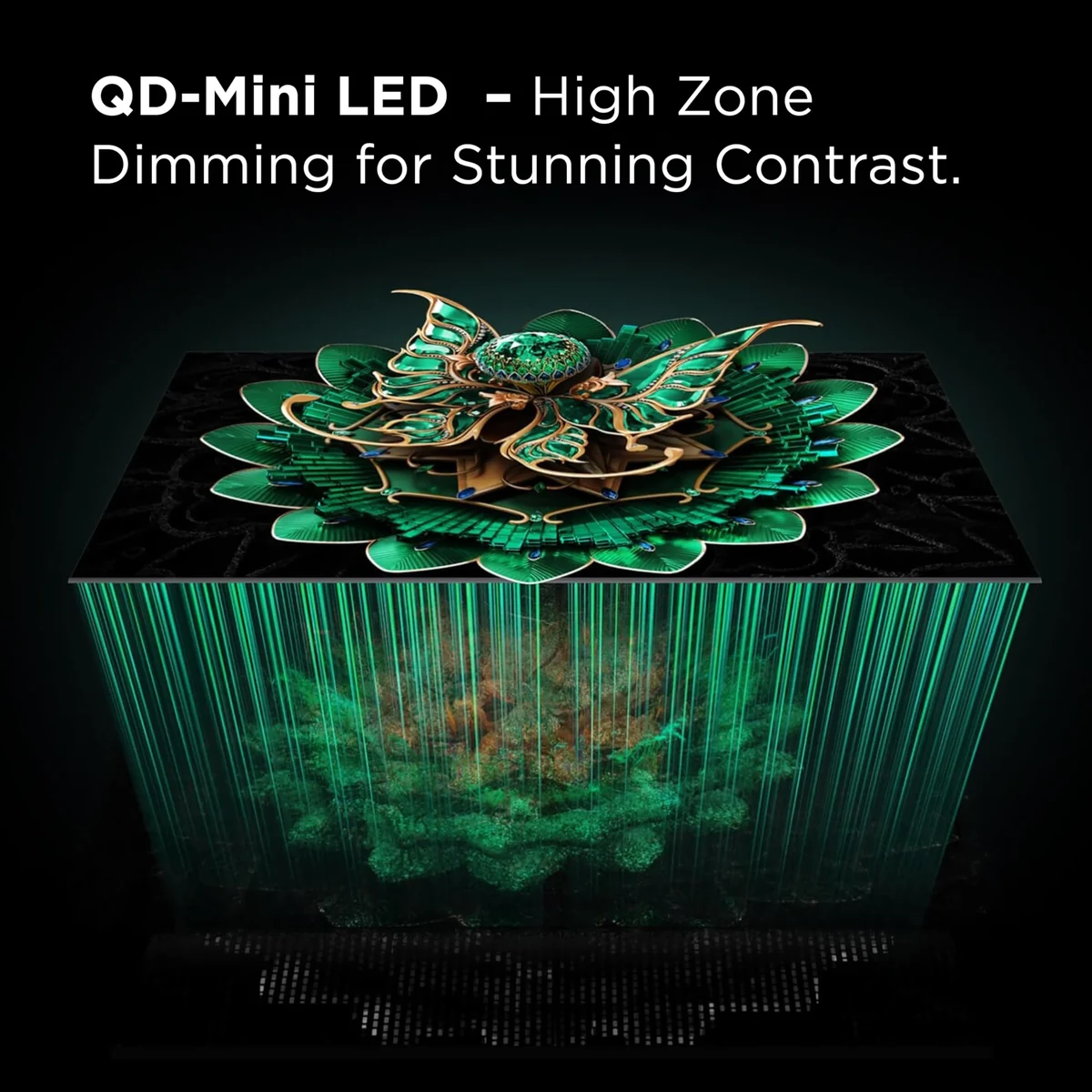
Standout features include full HDMI 2.1 bandwidth across all four ports, support for 4K@144Hz gaming, and TCL’s improved Game Accelerator mode that prioritizes responsiveness. The television also incorporates advanced local dimming zones that adapt intelligently to content, along with Filmmaker Mode and multiple picture presets calibrated for accuracy out of the box.
The Google TV platform remains one of the most responsive and comprehensive smart TV experiences available. Navigation is fluid with minimal lag, and the interface provides seamless access to virtually every major streaming service alongside live TV integration and personalized recommendations. Voice control through Google Assistant is fast and accurate, while the backlit remote makes operation in dark rooms effortless. Regular firmware updates have addressed early software quirks, resulting in a stable and feature-rich smart TV experience.
Value Proposition
The TCL QM8K delivers exceptional performance per dollar, often matching or exceeding TVs that cost 50-70% more. By focusing engineering resources on the panel and backlight rather than exotic materials or marketing, TCL has created a television that offers 85-90% of the performance of flagship models at roughly half the price. This makes it particularly compelling for enthusiasts who prioritize picture quality and features over brand prestige.
For the money, few competitors can match the combination of brightness, color accuracy, gaming features, and smart platform maturity. While it may not have the absolute best motion processing or the most refined upscaling, the real-world differences are small enough that most users will find the QM8K represents outstanding long-term value in the premium television segment.
How It Compares
Against the Samsung QN90F, the TCL QM8K offers comparable peak brightness and significantly better value, though Samsung maintains a slight edge in color volume and anti-reflective coating performance. The QM8K actually surpasses the QN90F in native contrast and local dimming precision on mid-sized panels, making it the stronger choice for most home theater enthusiasts who don’t require Samsung’s ecosystem features.
When compared to the Hisense U9N, the QM8K provides a more balanced experience with superior color accuracy out of the box and a smoother Google TV interface. While the Hisense model can reach slightly higher peak brightness in certain scenes, the TCL’s more consistent local dimming and lower input lag make it the better all-rounder for mixed movie and gaming use.
Pros and Cons
Pros
- Exceptional peak brightness exceeding 2000 nits makes HDR content truly spectacular in any lighting condition.
- Ultra-low 9ms input lag combined with 144Hz refresh rate and full VRR support creates an outstanding gaming experience.
- Google TV platform is fast, intuitive, and offers access to a vast library of applications and streaming services.
- Outstanding price-to-performance ratio that undercuts most flagship competitors while delivering near-equivalent real-world results.
- Impressive color accuracy and volume with strong factory calibration across multiple HDR formats.
Cons
- Some blooming remains visible around bright objects on dark backgrounds during high-contrast scenes.
- Viewing angles are limited as expected from the VA panel, causing color shift and contrast loss when viewed off-center.
- Built-in audio, while improved, still lacks the depth and dynamics that most enthusiasts will seek from a dedicated soundbar.
- The stand design feels functional rather than elegant, with noticeable panel flex during adjustment.
- Occasional minor software glitches and slower feature updates compared to more premium brands.
FAQ
Q: Is the TCL QM8K a good choice for gaming?
A: Yes. With 144Hz refresh rate, 9ms input lag, VRR, ALLM, and four HDMI 2.1 ports, it ranks among the best gaming TVs of 2026 for both console and PC use.
Q: How does the TCL QM8K perform in bright rooms?
A: Exceptionally well. Its 2000+ nit peak brightness and effective anti-reflective coating make it one of the top choices for living rooms with significant ambient light.
Q: Does the TCL QM8K support Dolby Vision gaming?
A: Yes, it supports Dolby Vision at 4K 60Hz alongside 4K 144Hz in other HDR formats, giving gamers flexibility across different titles and consoles.
Q: Is the Google TV experience on the QM8K better than Roku or Fire TV?
A: For most users, yes. Google TV offers superior app selection, faster performance, and better content discovery compared to competing platforms in this price range.
Q: How many local dimming zones does the TCL QM8K have?
A: The 65-inch model features over 2,000 local dimming zones, with larger sizes scaling up proportionally for excellent contrast control.
Verdict
The TCL QM8K is the ideal choice for tech-savvy buyers who want flagship-level Mini-LED performance without paying flagship prices. It excels in bright rooms, delivers outstanding gaming capabilities, and provides a refined Google TV experience that makes it suitable for both dedicated home theaters and versatile living room setups.
If you’re seeking maximum performance per dollar in 2026 and can accept minor blooming and average viewing angles, the QM8K represents one of the smartest television purchases available today.
Pros
- ✓ Exceptional peak brightness exceeding 2000 nits makes HDR content truly spectacular in any lighting condition.
- ✓ Ultra-low 9ms input lag combined with 144Hz refresh rate and full VRR support creates an outstanding gaming experience.
- ✓ Google TV platform is fast, intuitive, and offers access to a vast library of applications and streaming services.
- ✓ Outstanding price-to-performance ratio that undercuts most flagship competitors while delivering near-equivalent real-world results.
- ✓ Impressive color accuracy and volume with strong factory calibration across multiple HDR formats.
Cons
- ✗ Some blooming remains visible around bright objects on dark backgrounds during high-contrast scenes.
- ✗ Viewing angles are limited as expected from the VA panel, causing color shift and contrast loss when viewed off-center.
- ✗ Built-in audio, while improved, still lacks the depth and dynamics that most enthusiasts will seek from a dedicated soundbar.
- ✗ The stand design feels functional rather than elegant, with noticeable panel flex during adjustment.
- ✗ Occasional minor software glitches and slower feature updates compared to more premium brands.
Where to Buy the TCL QM8K





Prices may vary. Affiliate links — we may earn a commission at no extra cost to you.
Related Reviews

Affiliate links — we may earn a commission at no extra cost to you.