

The Anker SOLIX C1000 Gen 2 refines one of the most appealing portable power station formulas on the market with fast charging, practical output options, and a travel-friendly design. For campers, home backup users, and mobile professionals, it strikes a smart balance between capacity, portability, and modern app-connected convenience.
Table of Contents
Key Specifications
| Feature | Detail |
|---|---|
| Product Name | Anker SOLIX C1000 Gen 2 |
| Battery Chemistry | LiFePO4 (LFP) |
| Capacity | Approx. 1kWh class portable power station |
| AC Output | High-output pure sine wave AC inverter for appliances and electronics |
| Charging Speed | Fast AC recharging with Anker’s rapid-charge system |
| Solar Charging | Supported via compatible solar input |
| Ports | Multiple AC outlets, USB-C, USB-A, and 12V car output |
| Connectivity | App control via wireless connection |
| Display | Integrated front display for input, output, and runtime data |
| Use Cases | Camping, RV support, emergency backup, outdoor work, mobile charging |
Design & Build Quality
The Anker SOLIX C1000 Gen 2 follows the brand’s increasingly polished industrial design language, combining a rugged outdoor-ready chassis with a cleaner, more modern aesthetic than many bulky power stations in the same class. It looks purposeful without appearing overly utilitarian, and that matters for users who want something that can live in a garage, a camper van, or even a home office corner without feeling like industrial equipment. The casing feels robust, with tight panel gaps and a reassuringly solid structure that suggests it can handle regular transport and weekend use.
Ergonomically, Anker does a good job balancing portability with usable capacity. A 1kWh-class power station is never truly lightweight, but the C1000 Gen 2 is manageable enough for one-person carry, especially for short distances between a car, campsite, or backup location indoors. The handle design and overall footprint make it easier to stow than some square-edged rivals, while the front-facing ports and clear display help reduce setup friction when you are plugging in multiple devices in low light or during an outage.
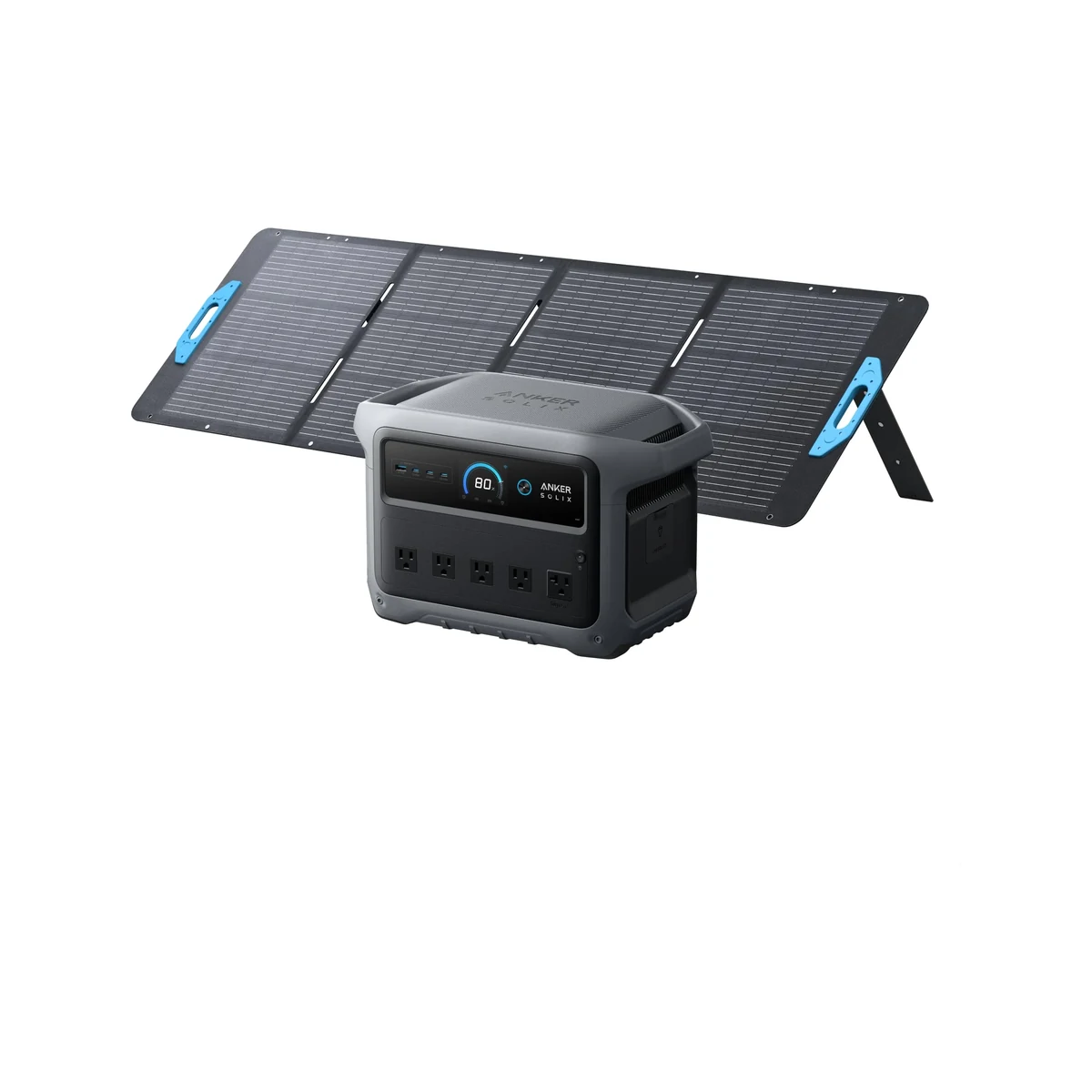
Material quality is another strong point. The exterior feels durable rather than flashy, and the controls have the kind of tactile confidence you want in a product designed for emergency and outdoor use. Vent placement appears thoughtfully integrated, and the overall layout minimizes clutter, giving the unit a more premium feel than many generic battery generators that compete on paper specs alone.
Performance
In real-world use, the Anker SOLIX C1000 Gen 2 performs like a well-rounded portable power station built for more than just charging phones and laptops. It is capable of handling a broad mix of loads, from small electronics and networking gear to more demanding appliances such as portable fridges, TVs, fans, and select kitchen devices within its inverter limits. That flexibility is what makes the C1000 Gen 2 appealing: it is not just an occasional camping accessory, but a practical backup tool for short outages and mobile work setups.
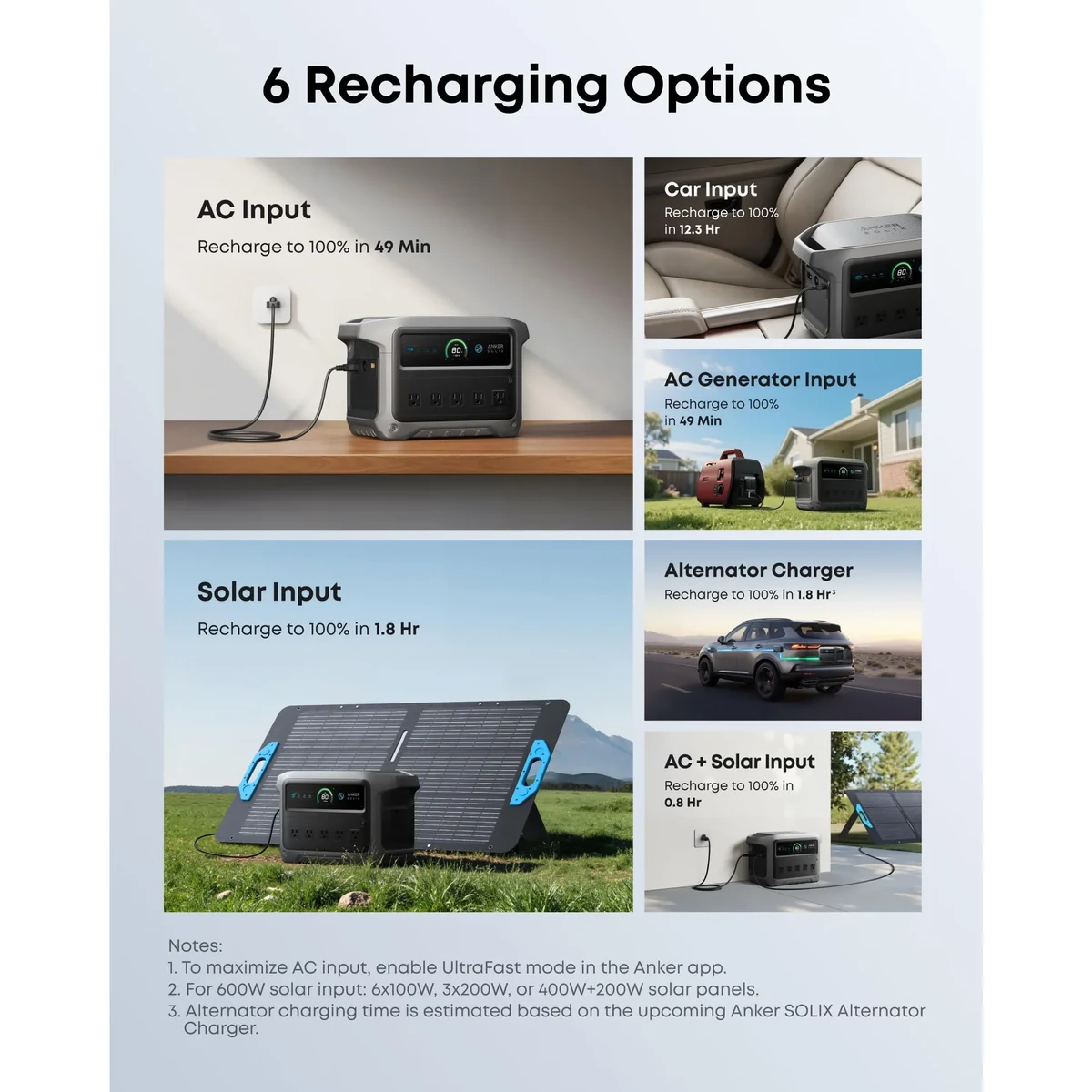
Charging performance is one of the standout areas. Anker has built a strong reputation for rapid charging, and that carries over here with impressively quick AC top-ups compared with many older or budget-focused competitors. For users who need to recharge the station between trips or during a narrow off-grid window, this can make a meaningful difference. Solar support adds another layer of flexibility, especially for camping and van-life users, though actual recharge times will naturally depend on panel size, weather, and input conditions.
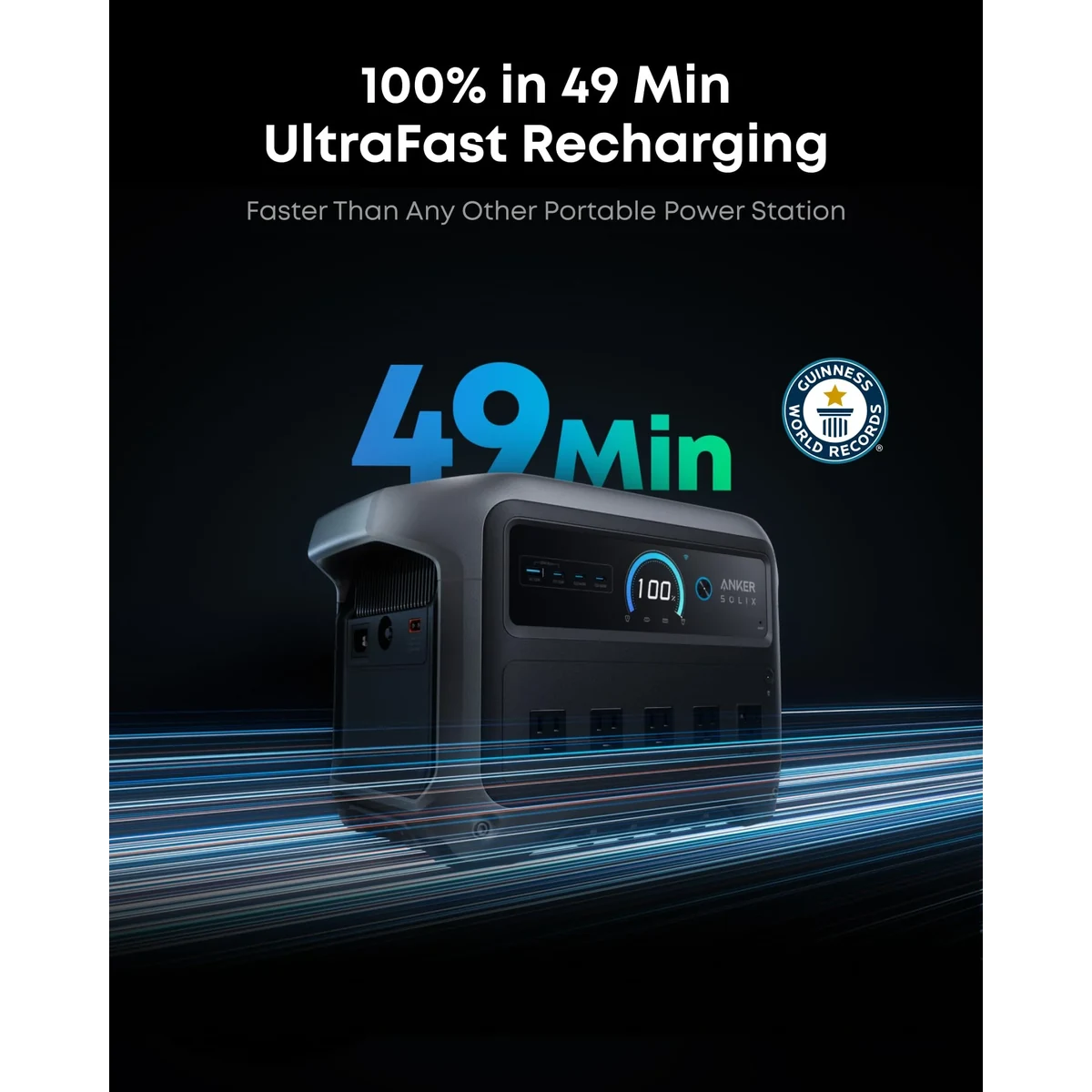
Efficiency and user experience also matter, and the C1000 Gen 2 generally feels responsive and predictable under mixed loads. The display provides useful runtime and wattage feedback, helping users understand exactly how much headroom they have left. Under sustained use, thermal management appears competent, with fan behavior that is noticeable but typically acceptable for a high-output unit in this category. It is not silent, but it remains far more practical and pleasant than a fuel generator for indoor-safe backup and everyday portable power.
Features & Software
A major selling point of the Anker SOLIX C1000 Gen 2 is how well it blends hardware capability with smart convenience features. The port selection is broad enough to support modern workflows, including USB-C for laptops and fast-charging mobile devices, alongside the AC outlets and 12V output expected from a serious portable power station. This makes it useful for a wider range of users, from creators working remotely to families building a basic outage-prep kit.
The companion app adds welcome quality-of-life features rather than feeling like a checkbox addition. Remote monitoring, charging adjustments, and status visibility make the system easier to manage, especially when the unit is stored in an RV, garage, or semi-permanent backup setup. The software experience is generally intuitive, and while app dependence is never ideal for core functionality, Anker keeps the essential controls available on-device, which is exactly how it should be.

Value Proposition
The Anker SOLIX C1000 Gen 2 sits in a highly competitive segment, but it makes a strong value case by combining premium build quality, fast charging, app integration, and the long-term durability benefits of LiFePO4 chemistry. In 2026, buyers are no longer impressed by raw capacity alone; they expect a power station to be fast, safe, easy to live with, and versatile enough to justify the investment. On those points, Anker delivers a package that feels mature and thoughtfully engineered.
It may not always be the cheapest 1kWh-class option on sale, but the overall ownership experience helps justify the price. Better charging speed, cleaner software, and stronger brand support can be worth paying for, particularly if the unit will be used regularly rather than kept as a just-in-case device. For buyers who want dependable performance without stepping up to a much larger and heavier system, the C1000 Gen 2 lands in a sweet spot.
How It Compares
Against the Jackery Explorer 1000 Plus, the Anker SOLIX C1000 Gen 2 generally feels more modern in day-to-day usability, particularly if fast charging and app functionality are high priorities. Jackery remains a strong brand with good ecosystem support, but Anker often wins on charging convenience and a more tech-forward user experience.
Compared with the EcoFlow DELTA 2, the competition is tighter. EcoFlow has long been a benchmark in this category thanks to rapid recharging and strong feature depth, but the Anker SOLIX C1000 Gen 2 holds its own with similarly compelling portability, solid build quality, and a streamlined interface. Buyers choosing between the two will likely base the decision on current pricing, preferred app ecosystem, and port layout rather than any dramatic performance gap.
Pros and Cons
Pros
- Fast AC recharging makes the power station much more convenient for frequent use.
- Strong port selection supports everything from phones and laptops to small appliances.
- Durable LiFePO4 battery chemistry improves long-term reliability and cycle life.
- App connectivity adds useful remote monitoring and control without overcomplicating setup.
- Compact, well-finished design is easier to transport and store than many rivals.
Cons
- It is still fairly heavy compared with smaller portable power stations.
- Premium pricing can make budget-focused competitors look tempting during sales.
- Fan noise under higher loads may be noticeable in quiet indoor environments.
- Solar charging performance depends heavily on panel compatibility and ideal weather conditions.
FAQ
Q: Is the Anker SOLIX C1000 Gen 2 good for home backup?
A: Yes, it is well suited for short outages and can keep essentials like routers, lights, laptops, phones, and some small appliances running, depending on total power draw.
Q: Can the Anker SOLIX C1000 Gen 2 run a refrigerator?
A: It can run many portable fridges and some household refrigerators for a limited time, but actual compatibility depends on startup surge, running wattage, and how long you need backup power.
Q: Does the Anker SOLIX C1000 Gen 2 support solar charging?
A: Yes, it supports solar input with compatible panels, making it a practical option for camping, RV use, and off-grid top-ups.
Q: Is LiFePO4 better than traditional lithium-ion for a power station?
A: For many users, yes. LiFePO4 typically offers better cycle life, improved thermal stability, and stronger long-term durability, which is ideal for backup and frequent-use scenarios.
Q: Is the app required to use the Anker SOLIX C1000 Gen 2?
A: No, the core functions are available directly on the unit, but the app adds convenient monitoring and control features.
Verdict
The Anker SOLIX C1000 Gen 2 is an excellent choice for users who want a premium portable power station with fast charging, dependable output, and smart connectivity. It is best for campers, remote workers, RV users, and homeowners who need a versatile 1kWh-class backup solution without jumping to a larger, heavier system.
Pros
- ✓ Fast AC recharging makes the power station much more convenient for frequent use.
- ✓ Strong port selection supports everything from phones and laptops to small appliances.
- ✓ Durable LiFePO4 battery chemistry improves long-term reliability and cycle life.
- ✓ App connectivity adds useful remote monitoring and control without overcomplicating setup.
- ✓ Compact, well-finished design is easier to transport and store than many rivals.
Cons
- ✗ It is still fairly heavy compared with smaller portable power stations.
- ✗ Premium pricing can make budget-focused competitors look tempting during sales.
- ✗ Fan noise under higher loads may be noticeable in quiet indoor environments.
- ✗ Solar charging performance depends heavily on panel compatibility and ideal weather conditions.
Where to Buy the Anker SOLIX C1000 Gen 2





Prices may vary. Affiliate links — we may earn a commission at no extra cost to you.
Related Reviews

Affiliate links — we may earn a commission at no extra cost to you.