


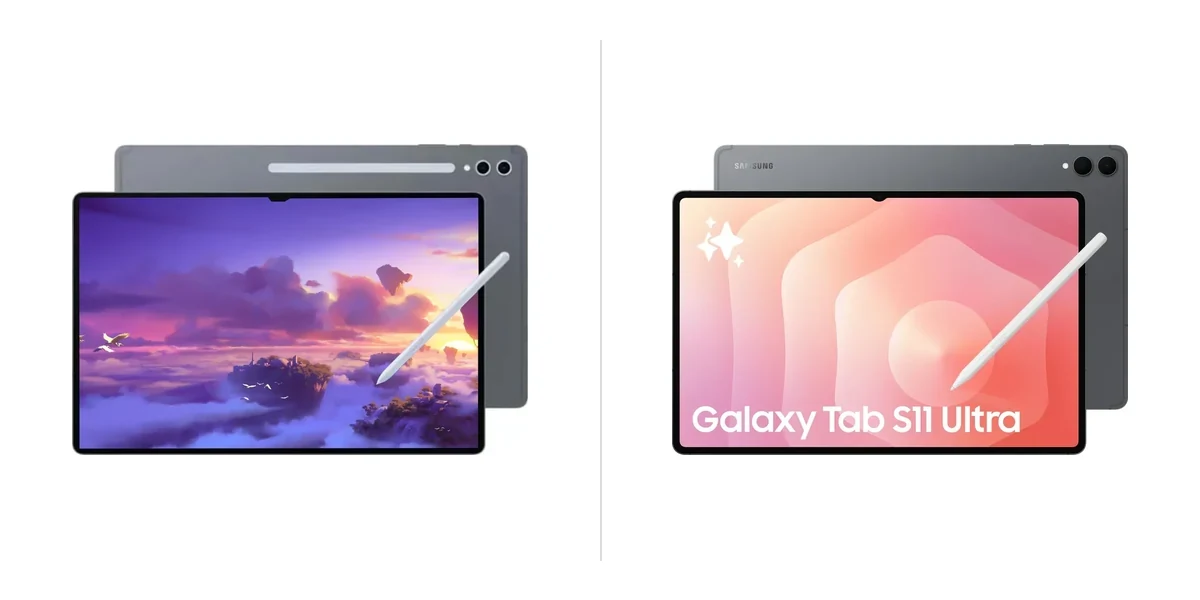
In 2026, Samsung’s flagship tablet lineup pits the Galaxy Tab S11 against its larger sibling, the Galaxy Tab S11 Ultra. Both deliver premium Dynamic AMOLED displays, advanced S Pen functionality with AI tools, class-leading software support, and powerful Snapdragon performance. This head-to-head breaks down their real-world differences to help you choose the right premium Android tablet.
At a Glance
| Feature | Samsung Galaxy Tab S11 | Samsung Galaxy Tab S11 Ultra |
|---|---|---|
| Price | $975 | $818.95 |
| Overall Score | 88/100 | 87/100 |
| Best For | Balanced productivity, durability & portability | Immersive media, creative work & multitasking |
| Display | Dynamic AMOLED with exceptional contrast, color accuracy & brightness | 14.6-inch Dynamic AMOLED 2X with stunning contrast, color accuracy & smoothness |
| Performance | Snapdragon 8 Gen 5 with efficient cooling for intensive workloads | Snapdragon 8 Gen 4 + 16GB RAM for exceptional multitasking |
| S Pen & Software | AI-enhanced S Pen, 7 years of updates | Improved-latency S Pen, 7 years of updates |
Design and Build
The Samsung Galaxy Tab S11 impresses with its premium build quality, IP68 rating, thin profile, and lightweight construction that balances elegance with real-world durability. Its design is an evolutionary step from the Tab S10 rather than a dramatic redesign, which may leave some users wanting more visual excitement. In contrast, the Galaxy Tab S11 Ultra focuses on an ultra-thin aesthetic that makes its massive screen surprisingly portable, though its 718-gram weight becomes fatiguing during prolonged handheld use without a case or stand.
Both tablets share a premium feel and lack of major design innovation over their predecessors. The Tab S11’s IP68 rating gives it a clear advantage for users who need spill and dust resistance, while the Ultra prioritizes screen real estate at the expense of one-handed comfort. Full review of Samsung Galaxy Tab S11: https://claritypoint.com/archives/21383. Full review of Samsung Galaxy Tab S11 Ultra: https://claritypoint.com/archives/21353.
Performance and Features
The Galaxy Tab S11’s Snapdragon 8 Gen 5 processor paired with efficient cooling delivers uncompromising performance for intensive workloads and gaming. Its included S Pen with AI enhancements meaningfully improves note-taking, sketching, and productivity workflows. However, battery life still falls short of some competitors during extended 4K video playback or heavy gaming, and certain Galaxy AI features require a constant internet connection while feeling inconsistent.
The Tab S11 Ultra counters with a Snapdragon 8 Gen 4 chipset and 16GB of RAM that excel at heavy multitasking and future-proof performance. Its 14.6-inch Dynamic AMOLED 2X display offers exceptional smoothness and size that benefits both media consumption and creative work, while the S Pen’s improved latency makes it feel like a professional drawing tool. Despite these strengths, One UI 8 still ships with noticeable bloatware, and some professional creative apps lack the optimization found in competing ecosystems.
Both tablets promise seven years of software updates, ensuring long-term security and relevance that few Android tablets can match.
Pricing and Value
At $975, the Galaxy Tab S11 carries a significant premium that may be difficult to justify for casual users, though its higher overall score, IP68 durability, and efficient cooling help validate the investment for those who need a more portable and resilient device. The Galaxy Tab S11 Ultra, currently priced at $818.95, delivers a larger display, more RAM, and comparable flagship features at a lower cost, making it the stronger value proposition for users who can utilize the extra screen real estate.
While both represent substantial investments, the Ultra’s lower price combined with seven years of updates gives it better long-term value for media-focused and creative buyers. The choice ultimately depends on whether the S11’s portability and durability advantages outweigh the Ultra’s bigger canvas and lower sticker price.
Pros and Cons
Samsung Galaxy Tab S11
Pros:
– The Dynamic AMOLED display delivers exceptional contrast, color accuracy, and brightness that makes content truly come alive.
– Snapdragon 8 Gen 5 performance combined with efficient cooling handles intensive workloads and gaming without compromise.
– The included S Pen with AI enhancements significantly improves note-taking, sketching, and productivity workflows.
– Seven years of software updates provide outstanding long-term value and security compared to most competitors.
– Premium build quality with IP68 rating offers both elegance and real-world durability in a thin, lightweight design.
Cons:
– The premium pricing positions it as a significant investment that may be difficult to justify for casual users.
– Battery life, while improved, still falls short of some competitors during extended 4K video playback or heavy gaming sessions.
– Certain Android applications remain poorly optimized for large tablet screens, resulting in occasional awkward layouts or unused space.
– The design represents an evolutionary rather than revolutionary step from the Tab S10, potentially disappointing users seeking major visual changes.
Samsung Galaxy Tab S11 Ultra
Pros:
– The 14.6-inch Dynamic AMOLED 2X display delivers stunning contrast, color accuracy, and smoothness that excels for both media and creative work.
– Snapdragon 8 Gen 4 processor combined with 16GB RAM provides exceptional multitasking and future-proof performance.
– The included S Pen with improved latency transforms the tablet into a professional note-taking and drawing tool.
– Seven years of promised software updates ensure the device will remain relevant and secure for years to come.
– Premium build quality and ultra-thin design make it surprisingly portable for its screen size.
Cons:
– The starting price makes it a significant investment that may be difficult to justify for non-professional users.
– At 718 grams, the tablet becomes fatiguing to hold for extended periods without a stand or case.
– One UI 8 still includes a noticeable amount of pre-installed Samsung bloatware and duplicate apps.
– The lack of significant design innovation over the Tab S10 Ultra may disappoint users looking for a fresh aesthetic.
– Some professional creative applications still lack the same level of tablet optimization found in the iPad ecosystem.
Who Should Buy Which
Buy the Samsung Galaxy Tab S11 if you want a more portable premium tablet with excellent durability thanks to its IP68 rating and efficient cooling system. It’s the better choice for users who value responsive S Pen AI features for note-taking and productivity while needing a device that can handle real-world use without worry. Those who prefer a balanced experience over maximum screen size will appreciate its lighter design and strong overall performance.
Choose the Samsung Galaxy Tab S11 Ultra if you crave the immersive 14.6-inch display for media consumption, digital art, or serious multitasking. It’s ideal for creative professionals who benefit from the larger canvas and improved S Pen latency, provided they don’t mind the added weight and can work around occasional app optimization quirks. At its lower current price, it delivers tremendous value for users who will actually utilize the extra screen real estate.
Verdict
The Samsung Galaxy Tab S11 narrowly wins overall with its 88/100 score versus the Ultra’s 87/100, thanks to superior IP68 durability, more efficient cooling, and a better-balanced portable design that avoids the fatigue issues of its larger sibling. It is the clearer recommendation for most users who want a versatile, future-proof tablet that excels at productivity and everyday durability.
That said, the Galaxy Tab S11 Ultra is the superior pick for anyone whose workflow benefits from the massive 14.6-inch display and heavy multitasking capabilities, especially at its more accessible $818.95 price point. Both devices deliver outstanding seven-year software support that ensures long-term value. Your choice should come down to screen size preference versus portability needs.