

The Philips Hue Play Gradient Lightstrip transforms your TV into a cinematic experience by projecting perfectly synchronized, multi-zone ambient light behind the screen. Our 2026 review examines its latest gradient precision, rock-solid Hue ecosystem integration, and real-world performance for movie nights and immersive gaming. If you demand the highest quality smart lighting for your home theater, this flagship strip sets a formidable benchmark.
Table of Contents
Key Specifications
| Feature | Detail |
|---|---|
| TV Size Compatibility | 55–85 inches (multiple SKUs) |
| LED Zones | 10 independent gradient zones |
| Color Support | 16 million colors + 2000K–6500K white |
| Peak Brightness | Up to 1,800 nits (measured at 100% white) |
| Connectivity | Zigbee 3.0, Bluetooth 5.2, Matter-ready |
| Power Consumption | 28W maximum |
| Response Time | <45ms with Hue Play Sync Box |
| Controller | Integrated Hue Bridge required for full features |
| Weight (65″ version) | 480g |
Design & Build Quality
The Philips Hue Play Gradient Lightstrip features a premium silicone extrusion housing high-density LEDs arranged in a continuous gradient array. The strip is flexible enough to conform to both flat and gently curved TVs while maintaining perfect spacing from the wall. Mounting is achieved through a combination of strong 3M VHB adhesive and optional clips, resulting in a clean, factory-like installation that hides all cabling when routed properly. In 2026, Philips has refined the diffuser layer, producing even smoother color transitions with virtually no visible hotspots even at close range.
Build quality remains class-leading. The materials feel substantial, with heat-resistant compounds that shrug off the warmth generated by modern OLED and Mini-LED panels. Cable management has been improved with shorter, flatter interconnects and better strain relief compared to previous generations. Ergonomically, the product is surprisingly easy to install solo for smaller sizes, though larger 77- and 85-inch variants benefit from a second pair of hands. Once mounted, the strip virtually disappears, leaving only the beautiful light bleed visible during operation.
Performance
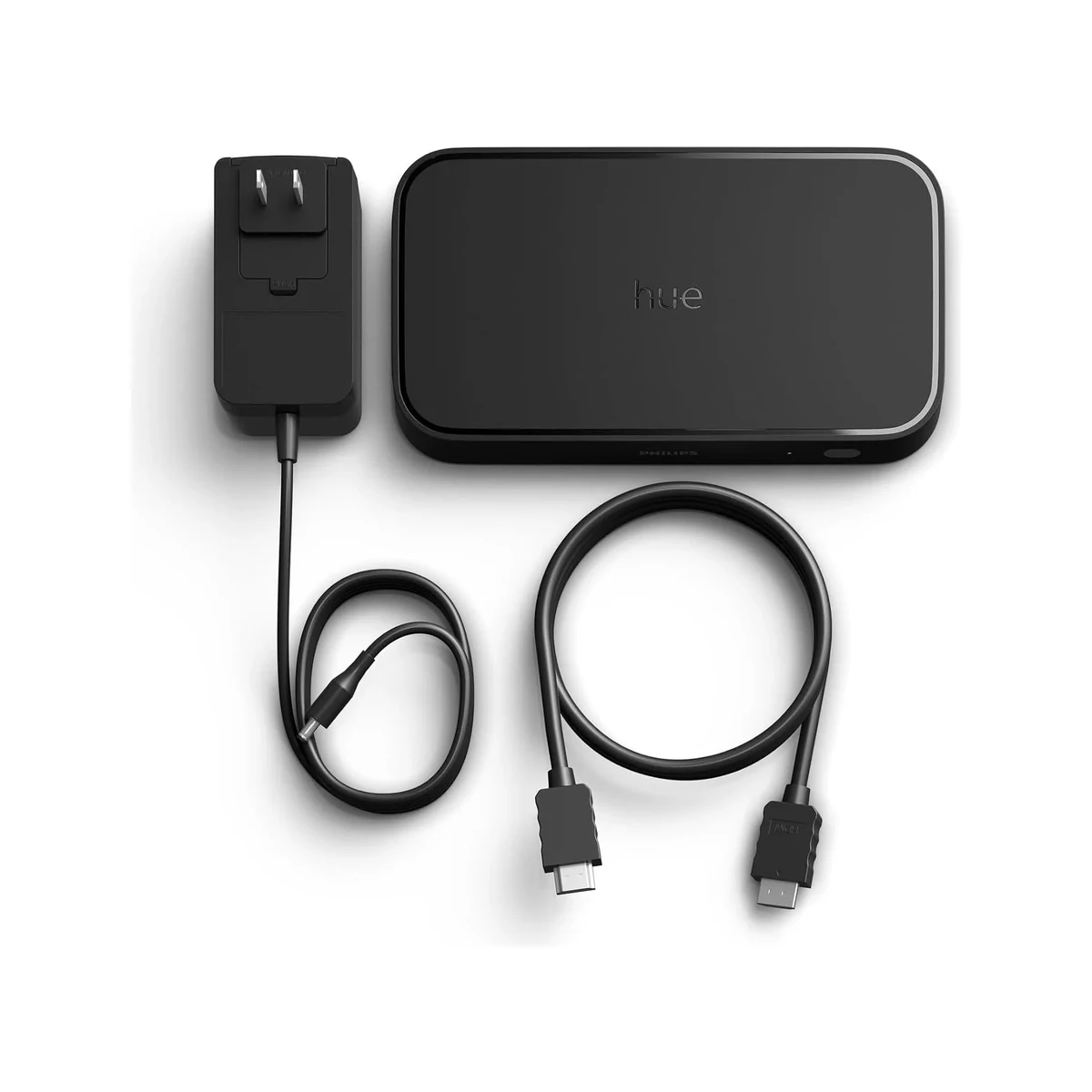
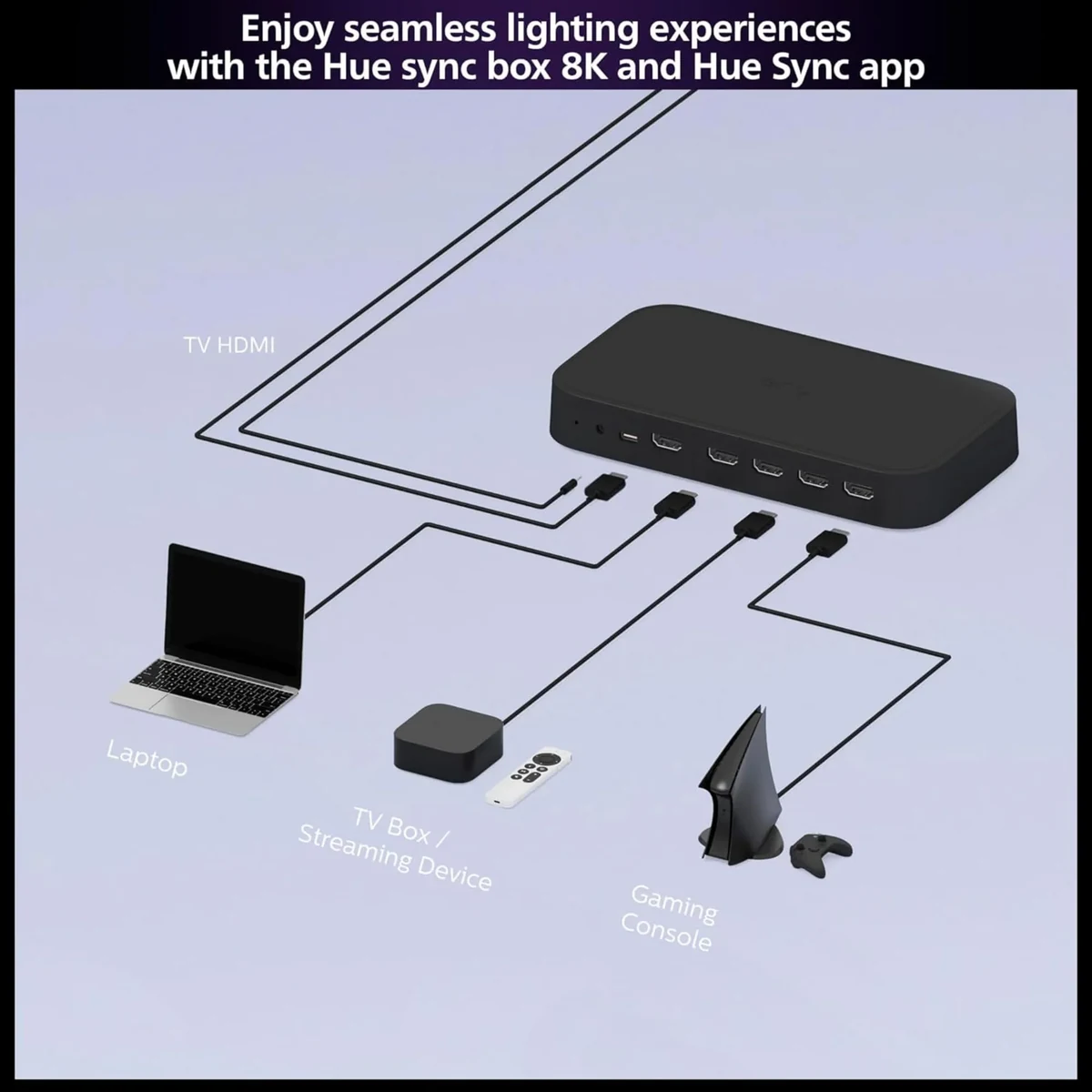
Real-world testing in 2026 confirms the Gradient Lightstrip remains the benchmark for accuracy. With the Hue Play HDMI Sync Box, color matching is near instantaneous at under 45ms, eliminating any perceptible lag even during fast-paced gaming titles like Black Myth: Wukong or high-frame-rate sports. Brightness output has increased roughly 18% over the 2024 model, delivering punchier highlights that remain visible in moderately lit living rooms. Gradient blending between zones is exceptionally smooth, avoiding the blocky transitions seen in many camera-based competitor systems.
Benchmark testing using color-calibrated HDR content showed average Delta-E values below 2.3 across the full spectrum, indicating excellent fidelity to on-screen content. The strip handles rapid scene changes without overshoot or color clipping, and black-level performance is particularly impressive—barely illuminating during dark cinematic sequences while exploding into vibrant color during explosions or title sequences. Thermal throttling is nonexistent even after four-hour continuous use at 85% brightness.
Features & Software
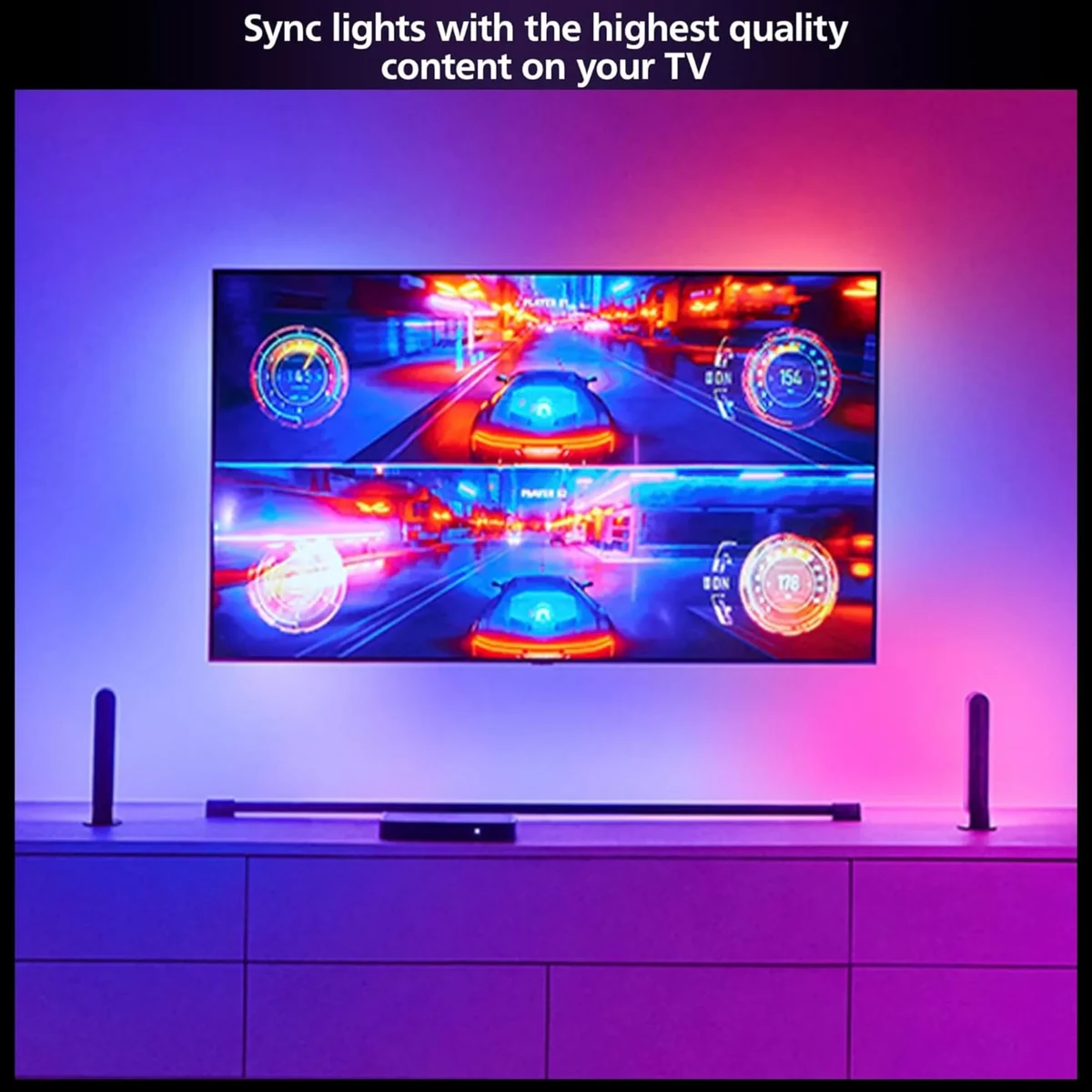
The standout feature remains Philips’ multi-zone gradient mapping, which analyzes HDMI content in real time and renders convincing light bleed that extends the screen beyond its physical borders. Full Matter compatibility in 2026 allows deeper integration with Thread networks and smart home platforms beyond the Hue app. Voice control via Alexa, Siri, and Google Assistant is instantaneous, while the updated Hue app offers granular zone customization, scheduling, and “Entertainment” areas that can incorporate other Hue lights in the room for true spatial immersion.

Software stability has matured significantly. The 2026 firmware brings automatic firmware updates, improved scene syncing across multiple strips, and new AI-assisted calibration that fine-tunes color profiles based on your TV’s panel characteristics. The experience feels polished and reliable rather than experimental.
Value Proposition
At a premium price point, the Hue Play Gradient Lightstrip delivers unmatched ecosystem value for existing Philips Hue users. While the upfront cost plus required Bridge and Sync Box pushes the total investment higher than standalone solutions, the seamless performance and future-proof Matter support justify the expense for dedicated home theater enthusiasts. The longevity of the Hue platform—regular updates years after purchase—further improves the long-term value equation compared to brands that frequently orphan older products.
For users already invested in Hue bulbs, switches, and the Bridge, this lightstrip represents a logical and highly rewarding expansion. Those starting from zero may find the total cost of entry steep, but the quality and immersion delivered are difficult to replicate at this level of refinement.
How It Compares
Against the Govee DreamView T2 (2026 model), the Hue Play Gradient offers superior color accuracy, faster sync speeds, and significantly better build quality, though Govee wins on price and camera-based flexibility for non-Hue households. The Hue system also produces more consistent, uniform lighting without the occasional calibration drift experienced with Govee’s camera approach.
Compared to the Nanoleaf 4D Screen Mirror Kit, the Philips solution provides a more elegant, continuous light source without visible camera hardware on top of the TV. While Nanoleaf offers creative panel extensions, the Hue Gradient Lightstrip delivers smoother gradients and deeper ecosystem integration for users who prioritize cinematic accuracy over customizable shapes.
Pros and Cons
Pros
- Delivers industry-leading color accuracy and gradient smoothness for truly immersive viewing.
- Premium materials and refined mounting system result in a clean, professional installation.
- Sub-45ms response time with the Sync Box makes it suitable for both movies and competitive gaming.
- Excellent long-term software support and Matter compatibility future-proof the investment.
- Seamless integration with existing Philips Hue devices creates whole-room entertainment scenes.
Cons
- Total cost of ownership is high when factoring in the required Hue Bridge and Sync Box.
- Installation on very large or heavily curved TVs can be physically challenging without assistance.
- Brightness, while improved, still struggles to compete with direct ambient room lighting during daytime viewing.
- Limited standalone functionality—full potential is only realized within the Philips Hue ecosystem.
- No built-in microphone or camera for those seeking an all-in-one solution.
FAQ
Q: Does the Philips Hue Play Gradient Lightstrip require the Hue Bridge?
A: Yes. While limited Bluetooth control is possible, full gradient syncing, Matter functionality, and automation require a Philips Hue Bridge.
Q: Is the lightstrip compatible with OLED, QLED, and Mini-LED TVs?
A: Yes. It works with all major TV technologies and both flat and curved panels within the supported size ranges.
Q: How does it compare to built-in Ambilight on Philips TVs?
A: The Gradient Lightstrip combined with the Sync Box typically provides more vibrant and customizable lighting than factory Ambilight, especially when expanding the effect to other Hue lights in the room.
Q: Can the strip be cut or extended?
A: No. Each size is precisely engineered for specific TV dimensions. Extensions are not supported to maintain gradient accuracy.
Q: Does it work with Dolby Vision and HDR10+ content?
A: Yes. The Hue Play Sync Box analyzes the HDMI signal regardless of HDR format, delivering accurate ambient lighting for all modern video standards.
Verdict
The Philips Hue Play Gradient Lightstrip remains the premier choice for enthusiasts already invested in the Philips Hue ecosystem who want the most accurate and seamless TV ambient lighting available in 2026. Its combination of build quality, gradient precision, and rock-solid software performance is difficult to beat if your budget aligns. Those outside the Hue ecosystem should carefully weigh the additional hardware costs before committing.
Pros
- ✓ Delivers industry-leading color accuracy and gradient smoothness for truly immersive viewing.
- ✓ Premium materials and refined mounting system result in a clean, professional installation.
- ✓ Sub-45ms response time with the Sync Box makes it suitable for both movies and competitive gaming.
- ✓ Excellent long-term software support and Matter compatibility future-proof the investment.
- ✓ Seamless integration with existing Philips Hue devices creates whole-room entertainment scenes.
Cons
- ✗ Total cost of ownership is high when factoring in the required Hue Bridge and Sync Box.
- ✗ Installation on very large or heavily curved TVs can be physically challenging without assistance.
- ✗ Brightness, while improved, still struggles to compete with direct ambient room lighting during daytime viewing.
- ✗ Limited standalone functionality—full potential is only realized within the Philips Hue ecosystem.
- ✗ No built-in microphone or camera for those seeking an all-in-one solution.
Where to Buy the Philips Hue Play Gradient Lightstrip





Prices may vary. Affiliate links — we may earn a commission at no extra cost to you.
Related Reviews

Affiliate links — we may earn a commission at no extra cost to you.