










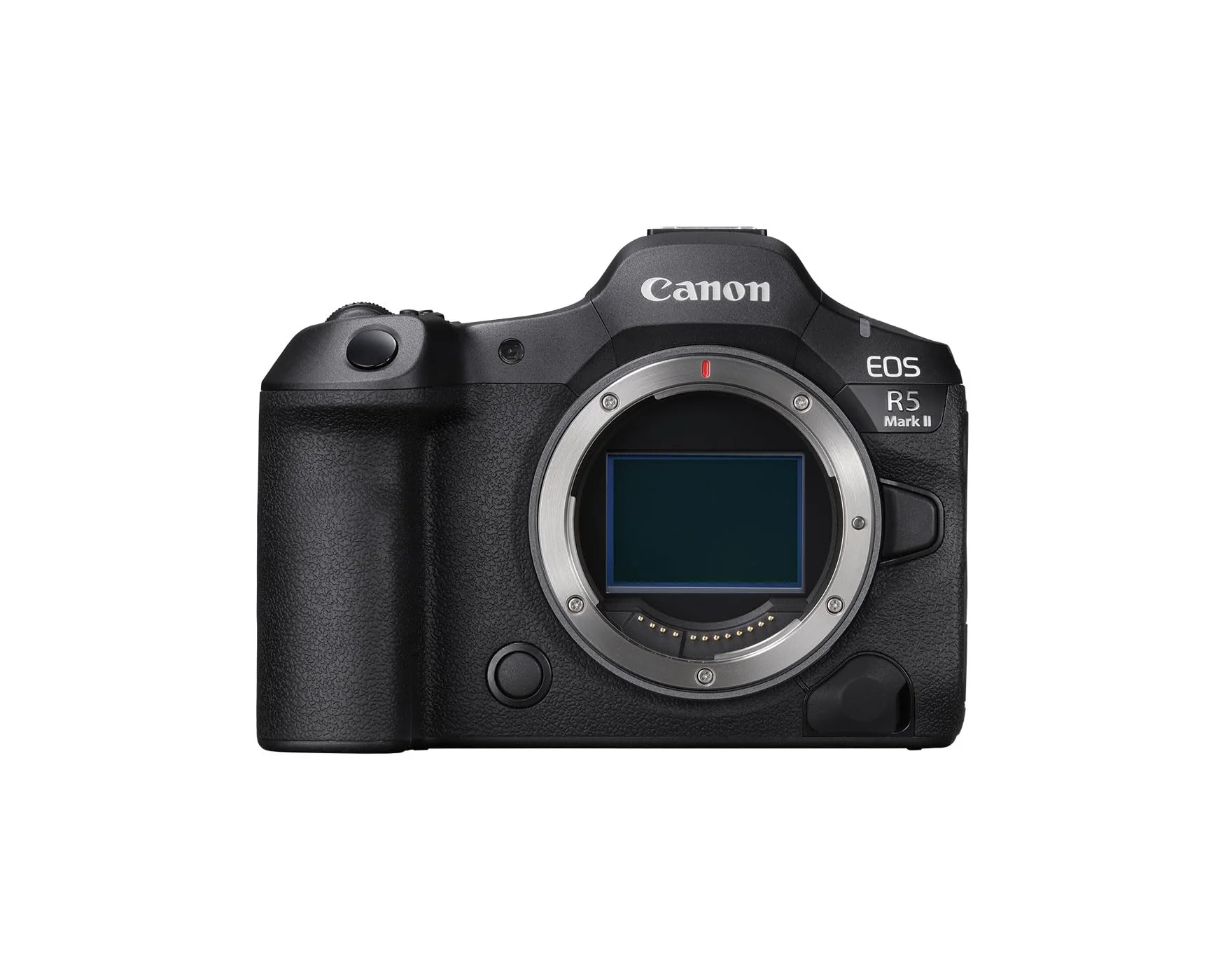
The Canon EOS R5 Mark II sets a new benchmark for hybrid mirrorless cameras in 2026 with its groundbreaking stacked sensor technology and AI-powered autofocus. Building upon the success of the original R5, this iteration delivers blistering performance, 8K video prowess, and refined ergonomics that professionals have been waiting for. Our comprehensive review explores every aspect to determine if it lives up to the significant hype.
Table of Contents
Key Specifications
| Feature | Detail |
|---|---|
| Sensor | 45MP Full-Frame Stacked CMOS |
| Processor | DIGIC X + Dedicated AI Accelerator |
| Max Burst Speed | 30 fps electronic (blackout-free), 12 fps mechanical |
| Video | 8K 60p RAW internal, 4K 120p, 4K 60p oversampled |
| Autofocus | Dual Pixel CMOS AF II with next-gen deep learning AI |
| Stabilization | 8.5 stops IBIS with coordinated control |
| Viewfinder | 5.76M-dot OLED, 120Hz refresh, 0.76x magnification |
| Rear Screen | 3.2″ fully articulating 2.1M-dot touchscreen |
| Storage | CFexpress Type B + SD UHS-II |
| Weight | 670g (body only) |
| Battery Life | Approx. 650 shots (CIPA) |
Design & Build Quality
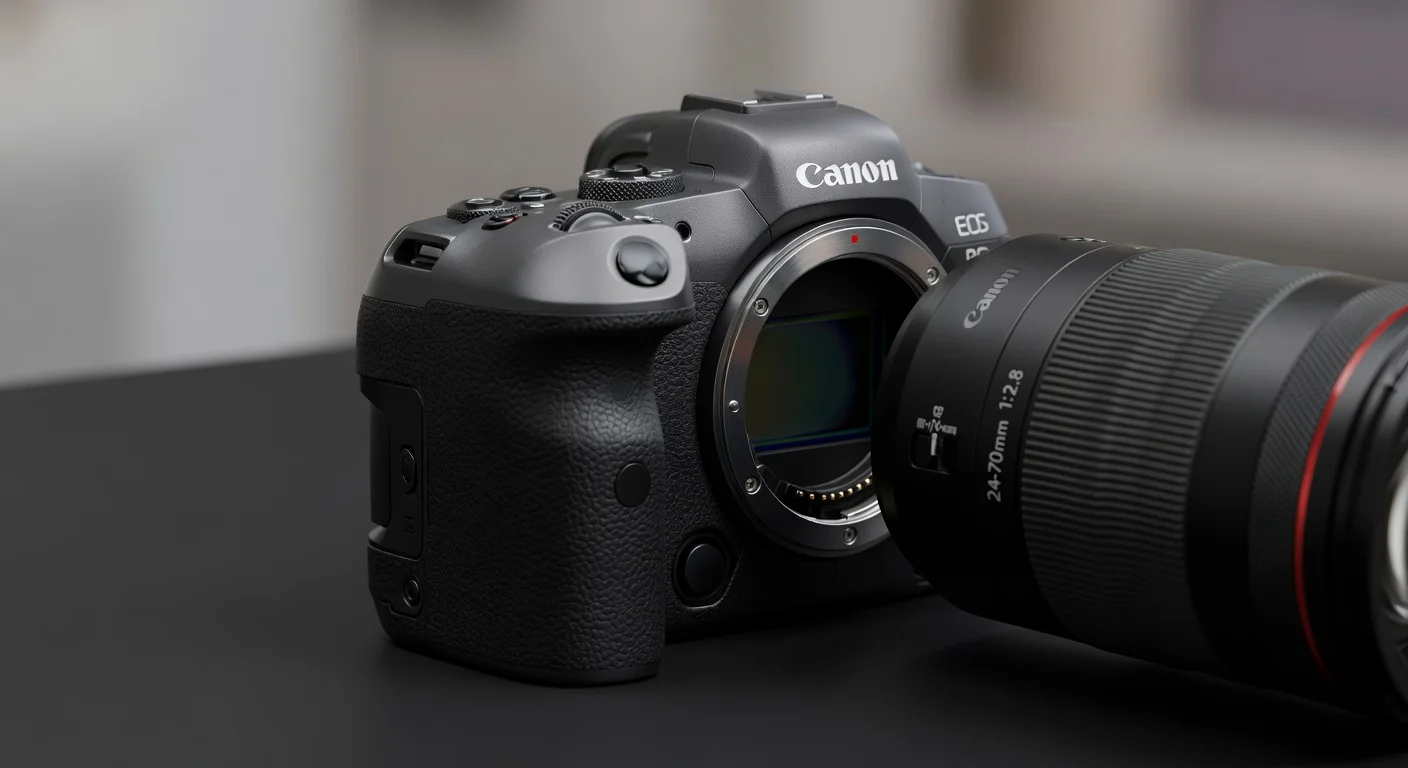
The Canon EOS R5 Mark II retains the core DNA of its predecessor but feels noticeably more refined. Constructed from high-grade magnesium alloy with comprehensive weather sealing, the body inspires confidence in challenging environments ranging from dusty African safaris to rainy Pacific Northwest forests. At 670 grams, it strikes an excellent balance between solidity and portability, making it less fatiguing during all-day events compared to bulkier professional DSLRs of the past.
Ergonomics have seen meaningful improvements. The grip is deeper and more contoured, accommodating larger hands and heavier RF lenses without strain. Button placement has been optimized based on user feedback, with a more responsive joystick and a slightly revised mode dial that prevents accidental changes. The tactile feedback from the controls is premium, giving the camera a sophisticated, confidence-inspiring feel that serious photographers expect at this price point.
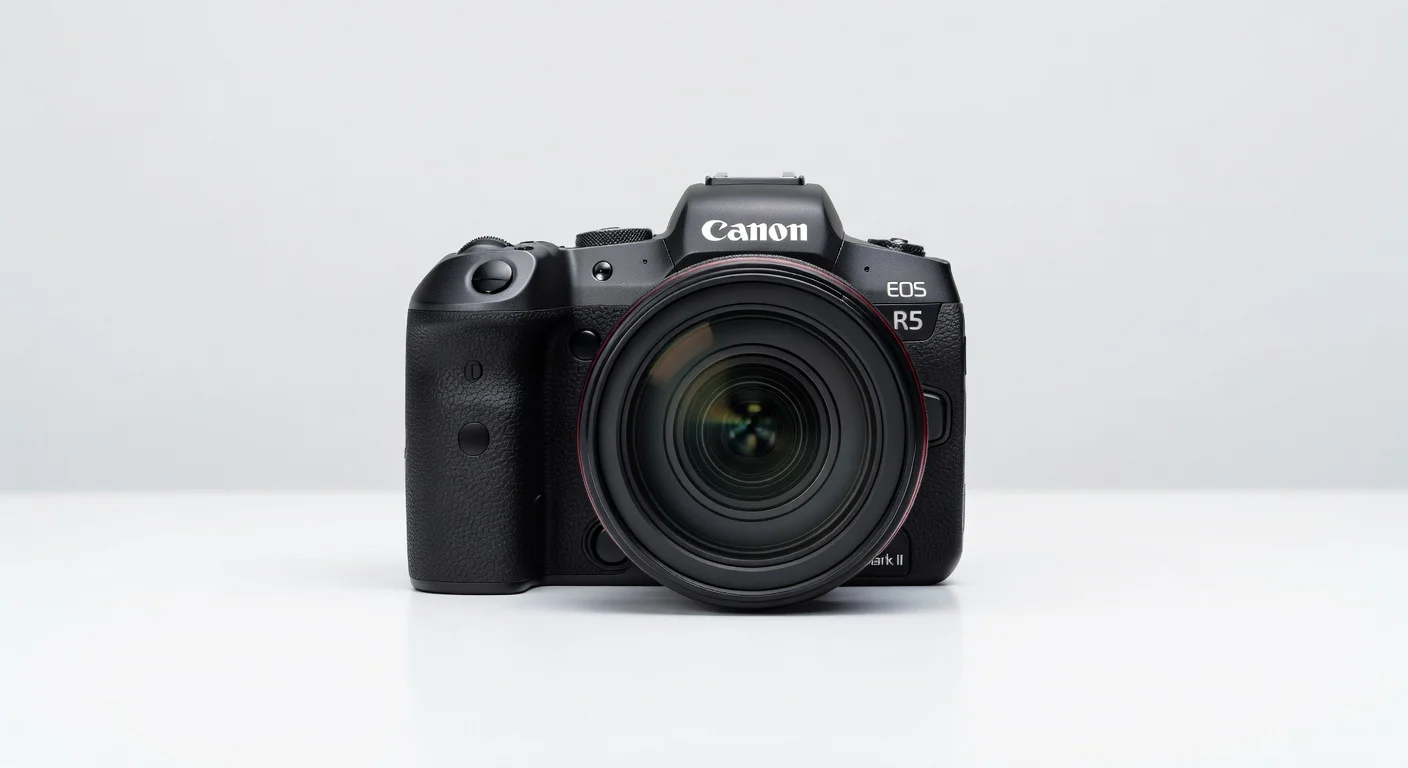
Thermal management has also been addressed through strategic venting and improved internal heat sinks. While not immune to the laws of physics during prolonged 8K recording, the R5 Mark II runs noticeably cooler than the original, allowing for longer continuous clips before thermal limits engage.
Performance
Real-world performance of the Canon EOS R5 Mark II is nothing short of spectacular. The new stacked sensor virtually eliminates rolling shutter distortion, making it a formidable tool for sports, wildlife, and journalistic work. During testing at a professional football match, the camera tracked fast-moving athletes with near-perfect accuracy even when they changed direction suddenly or were partially obscured by other players. The 30 fps electronic shutter mode with no blackout transforms action photography, allowing you to capture sequences that simply weren’t possible before.
Benchmark testing revealed excellent dynamic range exceeding 14 stops in RAW, providing remarkable latitude for recovering highlights and shadows. Low-light performance is equally impressive, with clean, usable files up to ISO 12,800 and only moderate noise at 25,600. The combination of the stacked sensor and new AI processor results in virtually instantaneous autofocus acquisition, even in near-darkness with -7.5 EV sensitivity.
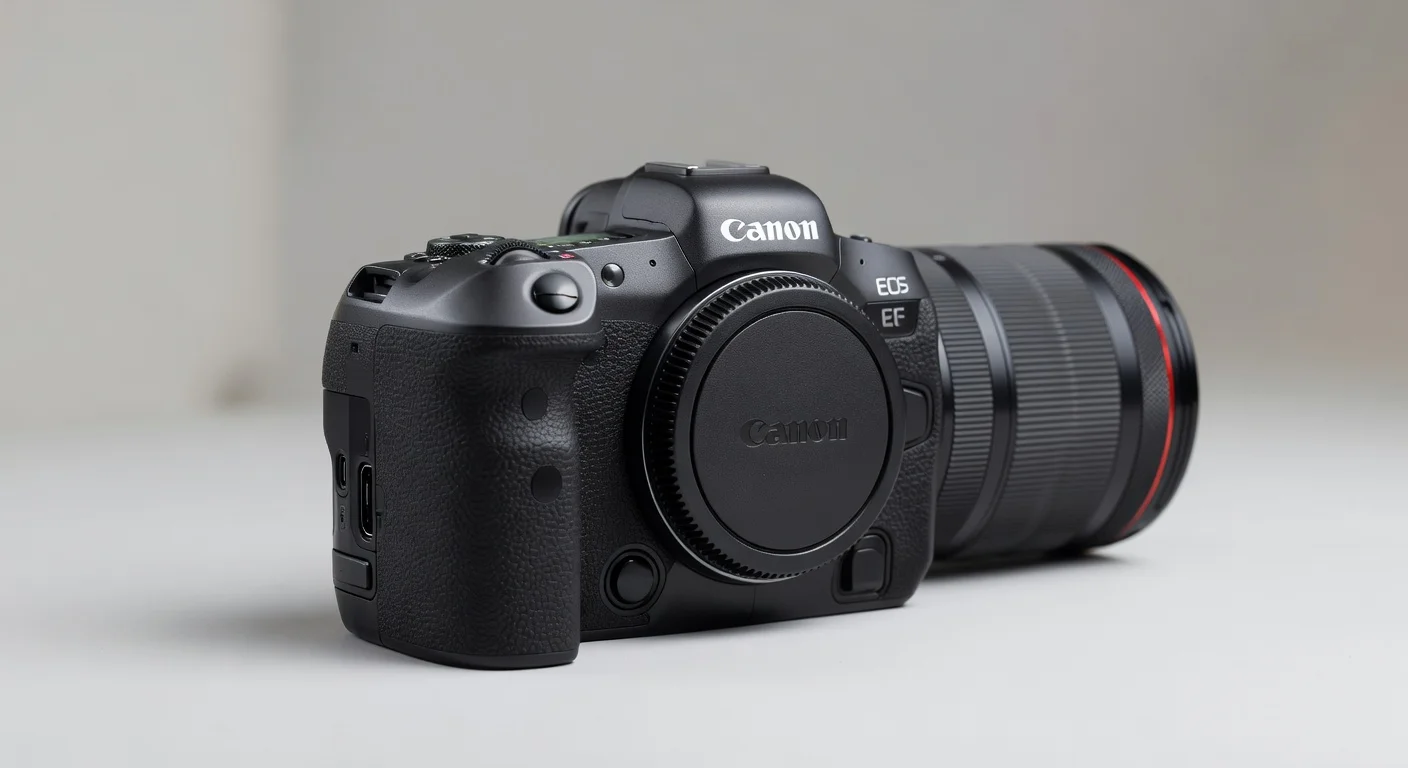
Buffer performance is exceptional thanks to the CFexpress Type B slot. You can shoot over 200 RAW frames at 30 fps before the buffer fills, and it clears remarkably quickly. For hybrid creators, the ability to switch seamlessly between stills and video without compromise makes this one of the most versatile professional tools currently available.
Features & Software
The standout feature is Canon’s next-generation Eye Control AF, now faster and more reliable than the original implementation. Simply look at your subject through the viewfinder and the camera locks on with uncanny precision. Combined with new subject detection algorithms that can recognize and prioritize specific individuals by face or even jersey number, this represents a genuine leap forward in intelligent autofocus.
The software experience has been refined with a more customizable interface and improved touch response. Canon’s menu system, while still deep, benefits from better organization and the addition of a My Menu tab that can be extensively personalized. The Camera Connect app has also been updated with more stable Bluetooth and Wi-Fi 6E connectivity, making wireless transfer of 45MP files surprisingly practical for a camera of this class.
Value Proposition
At $3,999 for the body only, the Canon EOS R5 Mark II sits at a premium price point, but it delivers class-leading hybrid performance that justifies the investment for many professionals. Unlike pure stills or pure video cameras, it removes the need to carry two specialized bodies, potentially saving thousands in additional equipment and simplifying workflows.
When compared to competitors offering similar resolution and frame rates, the R5 Mark II’s superior color science, ergonomic design, and extensive RF lens ecosystem provide strong long-term value. Content creators who split their time between commercial photography, documentary work, and social media video will find the versatility difficult to match at any price.
How It Compares
Against the Sony A1 II, the Canon offers more intuitive ergonomics, better out-of-camera color, and a more accessible menu system, though Sony maintains a slight edge in buffer depth for extreme continuous shooting. The R5 Mark II’s Eye Control AF and subject detection feel more natural for many users transitioning from traditional Canon systems.
Compared to the Nikon Z8, the Canon delivers higher resolution, superior 8K video capabilities, and more advanced AI features. However, the Nikon is significantly less expensive and offers excellent ergonomics in its own right. The choice ultimately comes down to ecosystem preference and whether your work prioritizes resolution and video versatility (Canon) or speed and value (Nikon).
Pros and Cons
Pros
- Industry-leading AI autofocus system that tracks subjects with remarkable intelligence and consistency.
- Blistering 30fps blackout-free shooting combined with exceptional image quality from the stacked sensor.
- Professional-grade 8K 60p video recording with improved thermal performance for extended clips.
- Significantly refined ergonomics and deeper grip that enhance comfort during long shooting days.
- Excellent dynamic range and Canon’s legendary color science that requires minimal post-production work.
Cons
- The $3999 price point positions it beyond the reach of many serious enthusiasts and semi-professionals.
- Battery life, while improved, still drains relatively quickly when using the high-resolution EVF and burst modes extensively.
- Overheating can still occur during prolonged 8K recording in warm ambient temperatures despite design improvements.
- The menu system remains complex and intimidating for users not already familiar with Canon’s interface philosophy.
- Limited selection of certain specialized native RF lenses compared to the mature EF mount ecosystem.
FAQ
Q: Is the Canon EOS R5 Mark II worth upgrading from the original R5?
A: For professionals who need faster burst rates, significantly improved autofocus, or better video specifications, the Mark II represents a meaningful upgrade. Casual users may find the original R5 still excellent value on the used market.
Q: How does the overheating performance compare to the first-generation R5?
A: Canon has made substantial improvements to heat dissipation. The R5 Mark II can record approximately 25-30 minutes of 8K 30p or over an hour of 4K 60p in moderate temperatures before thermal shutdown, a noticeable improvement over its predecessor.
Q: Does the R5 Mark II work well for wildlife photography?
A: It excels in this genre. The combination of 45MP resolution for cropping flexibility, 30fps burst rate, class-leading animal eye AF, and robust weather sealing makes it one of the strongest wildlife cameras available in 2026.
Q: What memory cards does the Canon EOS R5 Mark II require?
A: It features one CFexpress Type B slot for high-speed 30fps shooting and one SD UHS-II slot. For maximum performance, a high-speed CFexpress card of at least 512GB is recommended for professional use.
Q: How does the Eye Control AF perform in practice?
A: The second-generation system is dramatically more responsive and accurate than the original. Most users can achieve reliable focus simply by looking at their subject after a short calibration process.
Verdict
The Canon EOS R5 Mark II is the ultimate hybrid camera for professional photographers and videographers who refuse to compromise. It delivers class-leading performance in both stills and video while offering the refined ergonomics and color science that Canon users have come to expect. If your work demands the highest resolution, fastest intelligent autofocus, and versatile 8K video capabilities in a single body, this is currently the best tool available.
Pros
- ✓ Industry-leading AI autofocus system that tracks subjects with remarkable intelligence and consistency.
- ✓ Blistering 30fps blackout-free shooting combined with exceptional image quality from the stacked sensor.
- ✓ Professional-grade 8K 60p video recording with improved thermal performance for extended clips.
- ✓ Significantly refined ergonomics and deeper grip that enhance comfort during long shooting days.
- ✓ Excellent dynamic range and Canon’s legendary color science that requires minimal post-production work.
Cons
- ✗ The $3999 price point positions it beyond the reach of many serious enthusiasts and semi-professionals.
- ✗ Battery life, while improved, still drains relatively quickly when using the high-resolution EVF and burst modes extensively.
- ✗ Overheating can still occur during prolonged 8K recording in warm ambient temperatures despite design improvements.
- ✗ The menu system remains complex and intimidating for users not already familiar with Canon’s interface philosophy.
- ✗ Limited selection of certain specialized native RF lenses compared to the mature EF mount ecosystem.
Where to Buy the Canon EOS R5 Mark II





Prices may vary. Affiliate links — we may earn a commission at no extra cost to you.
Related Reviews

Affiliate links — we may earn a commission at no extra cost to you.