The Fujifilm X100VI stands as a triumphant evolution of the iconic X100 series, merging timeless retro design with a groundbreaking 40.2MP sensor and 6-stop in-body stabilization. This compact powerhouse delivers Fujifilm’s legendary film simulations and hybrid viewfinder in a package that feels more capable than ever for street, travel, and documentary photographers. Our 2026 review examines whether the X100VI truly earns its place as the ultimate enthusiast compact.
Table of Contents
Key Specifications
| Feature | Detail |
|---|---|
| Sensor | 40.2MP APS-C X-Trans CMOS 5 HR |
| Processor | X-Processor 5 |
| Lens | Fixed 23mm f/2 (35mm full-frame equivalent) |
| Stabilization | 6.0-stop in-body image stabilization (IBIS) |
| Viewfinder | Hybrid 3.69M-dot OLED EVF / 0.66x Optical |
| Rear Screen | 3.0-inch 1.62M-dot tilting touchscreen |
| Autofocus | Intelligent Hybrid AF with subject detection |
| Burst Shooting | Up to 20 fps (electronic), 11 fps (mechanical) |
| Video | 6.2K/30p, 4K/60p |
| Battery Life | Approx. 450 frames (CIPA) |
| Dimensions & Weight | 128.0 x 75.0 x 55.3mm, 521g with battery |
Design & Build Quality
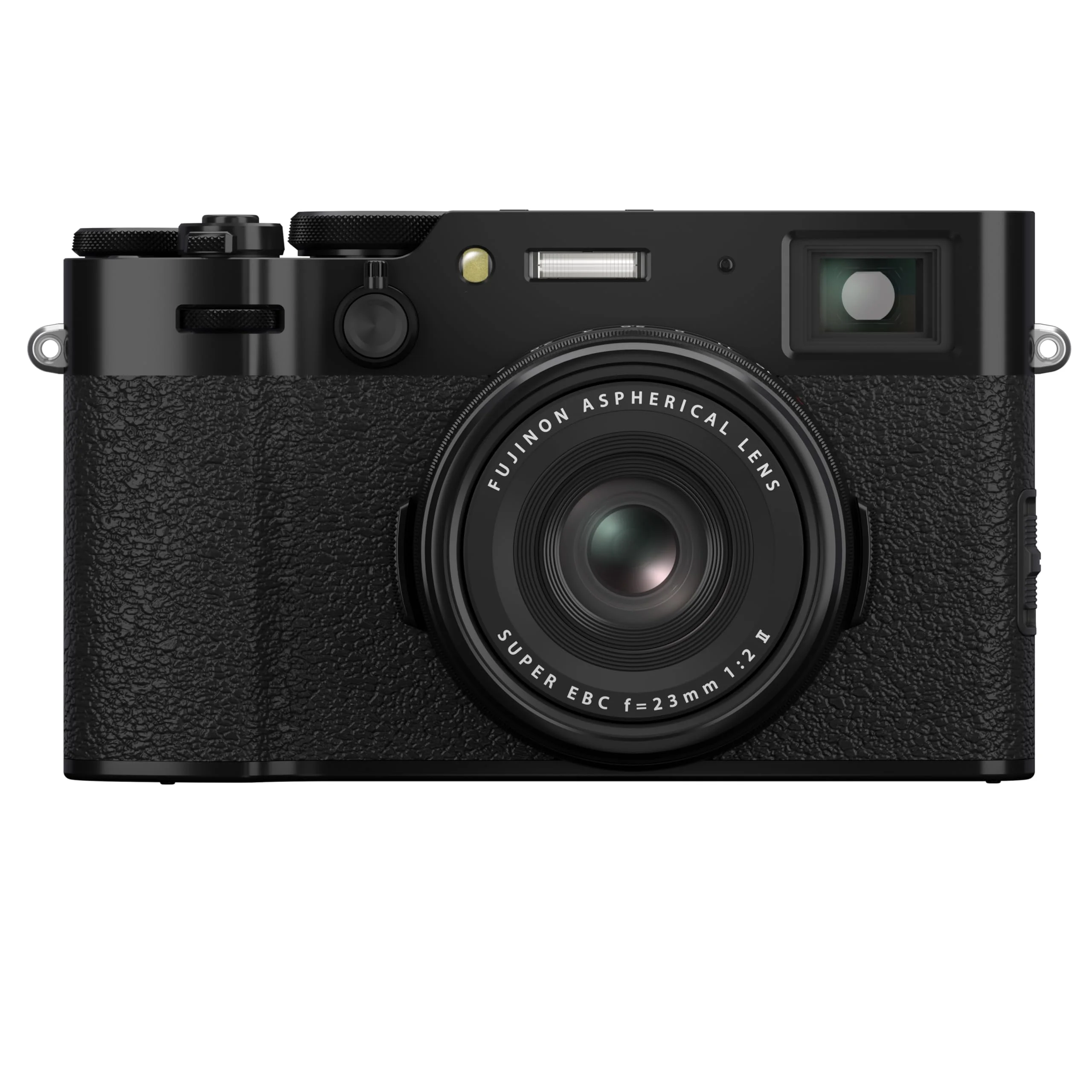
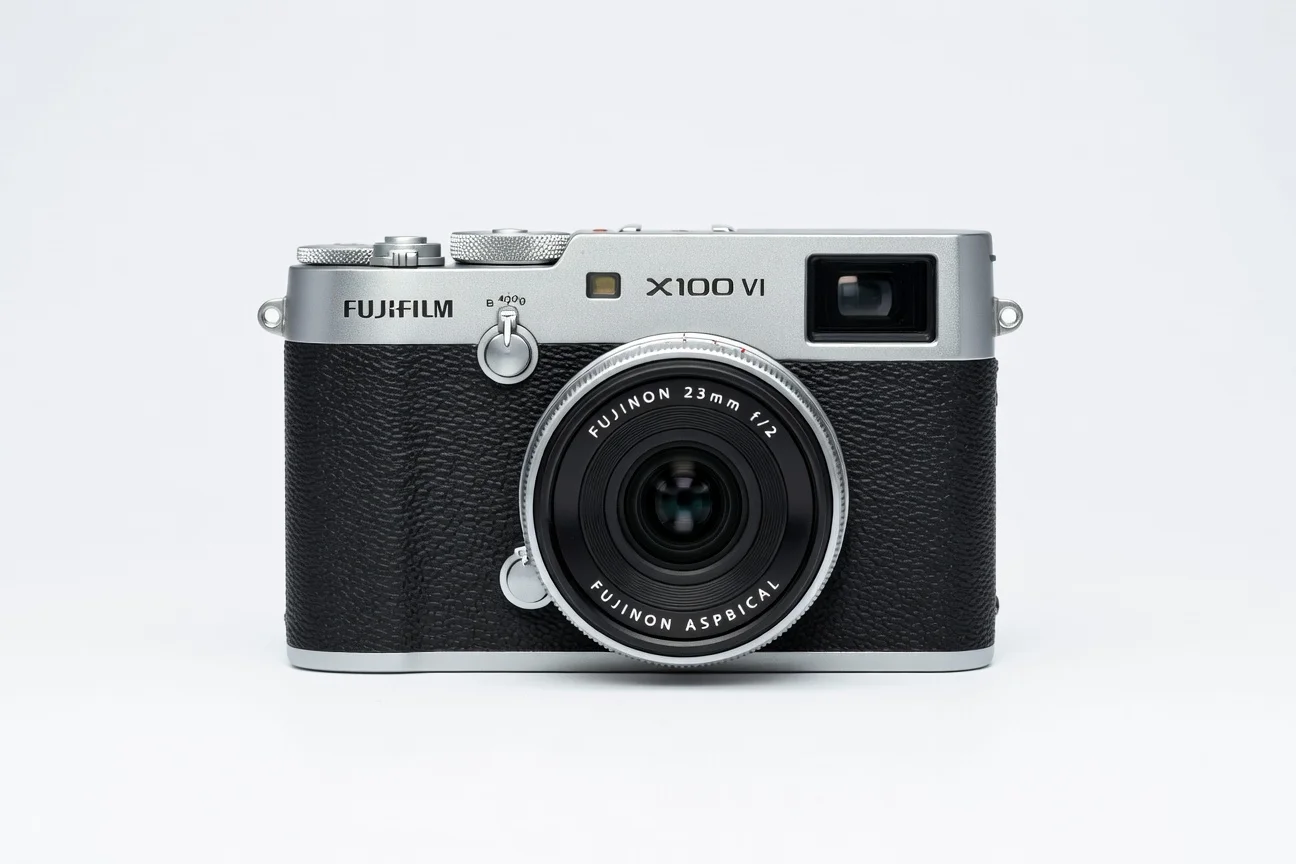
The Fujifilm X100VI retains the timeless retro aesthetics that have made the X100 line legendary among enthusiasts. Its magnesium-alloy top and base plates paired with synthetic leather wrapping create a premium tactile experience that feels both durable and elegant. The compact form factor slips easily into a jacket pocket yet feels substantial in the hand, striking an ideal balance between portability and presence.
Ergonomics see meaningful refinements over the X100V with a slightly deeper grip, more positive dial detents, and thoughtfully repositioned controls that enhance one-handed operation without sacrificing the classic layout. Weather sealing has been improved throughout, giving photographers confidence to shoot in light rain or dusty environments. The tilting LCD, hybrid viewfinder, and physical dials combine to create an engaging, almost mechanical shooting experience that stands in refreshing contrast to fully touchscreen-dependent cameras.
Performance
Real-world testing in 2026 proves the X100VI is significantly more capable than its predecessor. The 40.2MP X-Trans sensor paired with the X-Processor 5 delivers exceptional resolution, wide dynamic range, and class-leading color accuracy. Autofocus is noticeably faster and more reliable, with subject detection that confidently tracks faces, eyes, vehicles, and animals even in challenging street conditions.
The addition of 6-stop IBIS transforms the shooting experience, allowing crisp handheld images at shutter speeds as slow as 1/8th second with the 23mm lens. Continuous burst performance reaches 20 fps electronically with a generous buffer, while RAW processing speeds have improved markedly. Low-light performance impresses through ISO 6400 with minimal noise and retained detail, making the X100VI a versatile tool from golden hour street photography through to dimly lit indoor venues.
Features & Software
Fujifilm’s film simulation modes remain the standout feature, now enhanced by the higher-resolution sensor that reveals even greater nuance in Classic Neg, Acros, and the new Reala Ace simulation. The hybrid optical-electronic viewfinder continues to be one of the most enjoyable ways to compose photographs, offering instant parallax-free switching between compositional aids and a pure optical view.
The camera’s menu system has been refined for faster access to key functions, though it retains the layered depth familiar to longtime Fujifilm users. Advanced features including focus bracketing, pixel-shift high-resolution mode, and sophisticated interval shooting expand creative options. Wireless connectivity via Bluetooth and Wi-Fi integrates smoothly with the Fujifilm XApp for quick transfer and remote control.
Value Proposition
At its $1,599 launch price, the X100VI represents a significant investment for a fixed-lens compact. However, when weighed against the cost of a full-frame mirrorless body, equivalent prime lens, and necessary accessories, it delivers exceptional value for photographers seeking a single, always-ready tool. The combination of IBIS, class-leading image quality, and the unmatched shooting experience justifies the premium for dedicated enthusiasts.
Unlike interchangeable-lens systems that require constant lens changes, the X100VI encourages a more deliberate, intimate approach to photography that many users find creatively liberating. Its strong resale value and cult following further enhance long-term ownership economics compared to rapidly depreciating mainstream mirrorless models.
How It Compares
Against the Leica Q3, the X100VI offers similar street photography ethos at roughly half the price. While the Leica’s full-frame sensor and faster 28mm f/1.7 lens provide superior low-light performance and shallower depth of field, the Fujifilm counters with its hybrid viewfinder, film simulations, and far more accessible price point.
Compared to the Ricoh GR IIIx, the X100VI delivers a more engaging shooting experience thanks to its viewfinder, superior build quality, and in-body stabilization. The Ricoh remains smaller and more pocketable with its 40mm-equivalent lens, but lacks the tactile controls and optical viewfinder that make the Fujifilm so addictive to use.
Pros and Cons
Pros
- Exceptional 40.2MP image quality with outstanding color science and dynamic range.
- In-body stabilization dramatically improves handheld shooting versatility.
- Hybrid optical/electronic viewfinder remains one of the most enjoyable ways to compose images.
- Film simulation JPEGs are so good that many photographers rarely need to edit RAW files.
- Premium build quality and refined ergonomics inspire daily use and creative confidence.
Cons
- The fixed 35mm-equivalent focal length limits versatility for photographers who need zoom or wider angles.
- Battery life is average at best, often requiring users to carry spares for full shooting days.
- The $1,599 price represents a substantial increase over the X100V, potentially pricing out some enthusiasts.
- Video recording is prone to overheating during extended clips despite hardware improvements.
- Menu system, while functional, still feels dated compared to competitors’ more streamlined interfaces.
FAQ
Q: Does the Fujifilm X100VI have in-body image stabilization?
A: Yes, it is the first X100 model to feature 6-stop IBIS, significantly expanding handheld shooting possibilities.
Q: Is the X100VI worth upgrading from the X100V?
A: For most users yes. The 40MP sensor, IBIS, faster AF, and improved screen provide meaningful upgrades that enhance the core shooting experience.
Q: Can the Fujifilm X100VI be used professionally?
A: Absolutely. Many working street, travel, and documentary photographers rely on it as a lightweight second body or even primary camera due to its image quality and discreet size.
Q: How does the X100VI perform for video?
A: It offers capable 6.2K and 4K recording with excellent film simulations, though overheating limits long continuous clips.
Q: Is the Fujifilm X100VI good for beginners?
A: It can be, particularly for those who enjoy learning through tactile controls and film simulations, though its price point makes it better suited for serious enthusiasts.
Verdict
The Fujifilm X100VI is the finest iteration yet of the X100 series and the best choice for street photographers, travel documentarians, and enthusiasts who prioritize shooting experience and image character over outright versatility. Its combination of class-leading sensor performance, effective IBIS, and that magical hybrid viewfinder creates a camera that genuinely inspires photographers to go out and create. If you value a compact, discreet tool that produces beautiful files with minimal post-production, the X100VI is very hard to beat in 2026.
Pros
- ✓ Exceptional 40.2MP image quality with outstanding color science and dynamic range.
- ✓ In-body stabilization dramatically improves handheld shooting versatility.
- ✓ Hybrid optical/electronic viewfinder remains one of the most enjoyable ways to compose images.
- ✓ Film simulation JPEGs are so good that many photographers rarely need to edit RAW files.
- ✓ Premium build quality and refined ergonomics inspire daily use and creative confidence.
Cons
- ✗ The fixed 35mm-equivalent focal length limits versatility for photographers who need zoom or wider angles.
- ✗ Battery life is average at best, often requiring users to carry spares for full shooting days.
- ✗ The $1,599 price represents a substantial increase over the X100V, potentially pricing out some enthusiasts.
- ✗ Video recording is prone to overheating during extended clips despite hardware improvements.
- ✗ Menu system, while functional, still feels dated compared to competitors’ more streamlined interfaces.
Where to Buy the Fujifilm X100VI





Prices may vary. Affiliate links — we may earn a commission at no extra cost to you.
Related Reviews

Affiliate links — we may earn a commission at no extra cost to you.