









The Canon EOS R5 Mark II emerges in 2026 as Canon’s most capable hybrid camera yet, featuring a groundbreaking 50MP stacked full-frame sensor, class-leading AI autofocus, and virtually unlimited 8K 60p recording. This professional mirrorless powerhouse delivers blistering speed and exceptional image quality while addressing the original R5’s key limitations. Tech-savvy creators and working professionals will find a tool that genuinely moves the industry forward.
Table of Contents
Key Specifications
| Feature | Detail |
|---|---|
| Sensor | 50.2MP Full-Frame Stacked CMOS |
| Processor | DIGIC Accelerator + DIGIC X |
| Burst Speed | 30 fps (electronic), 12 fps (mechanical) |
| Autofocus | Dual Pixel CMOS AF III with Deep Learning AI |
| Image Stabilization | 8.5-stop In-Body Image Stabilization |
| Video | 8K 60p RAW (unlimited), 4K 120p, 1080p 240p |
| Viewfinder | 5.76M-dot OLED, 120fps refresh, 0.76x magnification |
| Rear Screen | 3.2-inch fully articulating touchscreen (2.1M dots) |
| Weight | 670g (body only) |
| Connectivity | Wi-Fi 6E, Bluetooth 5.3, 10Gbps USB-C, HDMI 2.1 |
Design & Build Quality
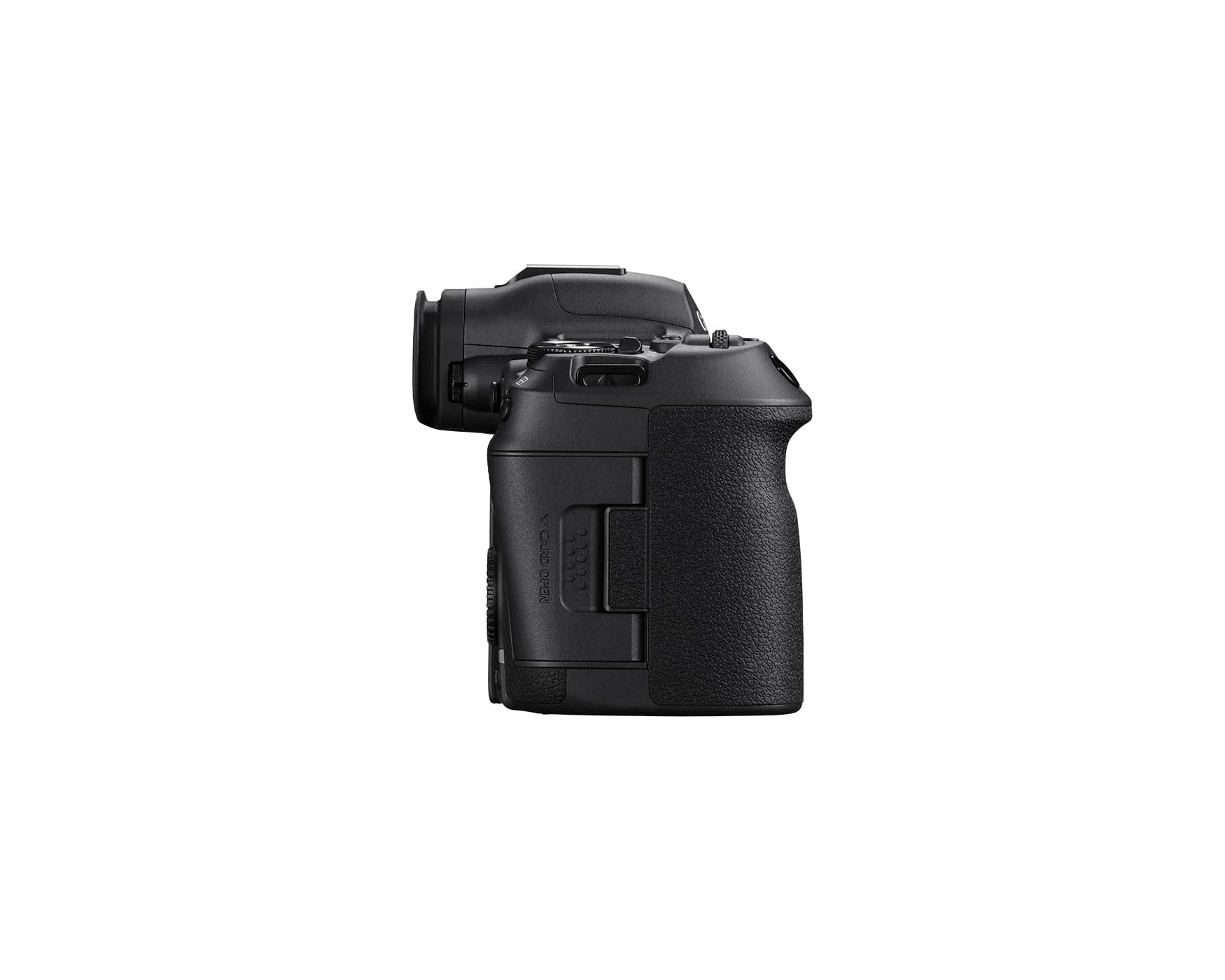
The Canon EOS R5 Mark II retains the classic EOS R design language but refines every detail that matters to working professionals. The magnesium alloy body feels incredibly solid while shaving 45 grams off its predecessor, resulting in better balance with long telephoto lenses. Weather sealing has been upgraded with new gaskets and tighter tolerances, allowing confident use in driving rain or dusty environments without hesitation.
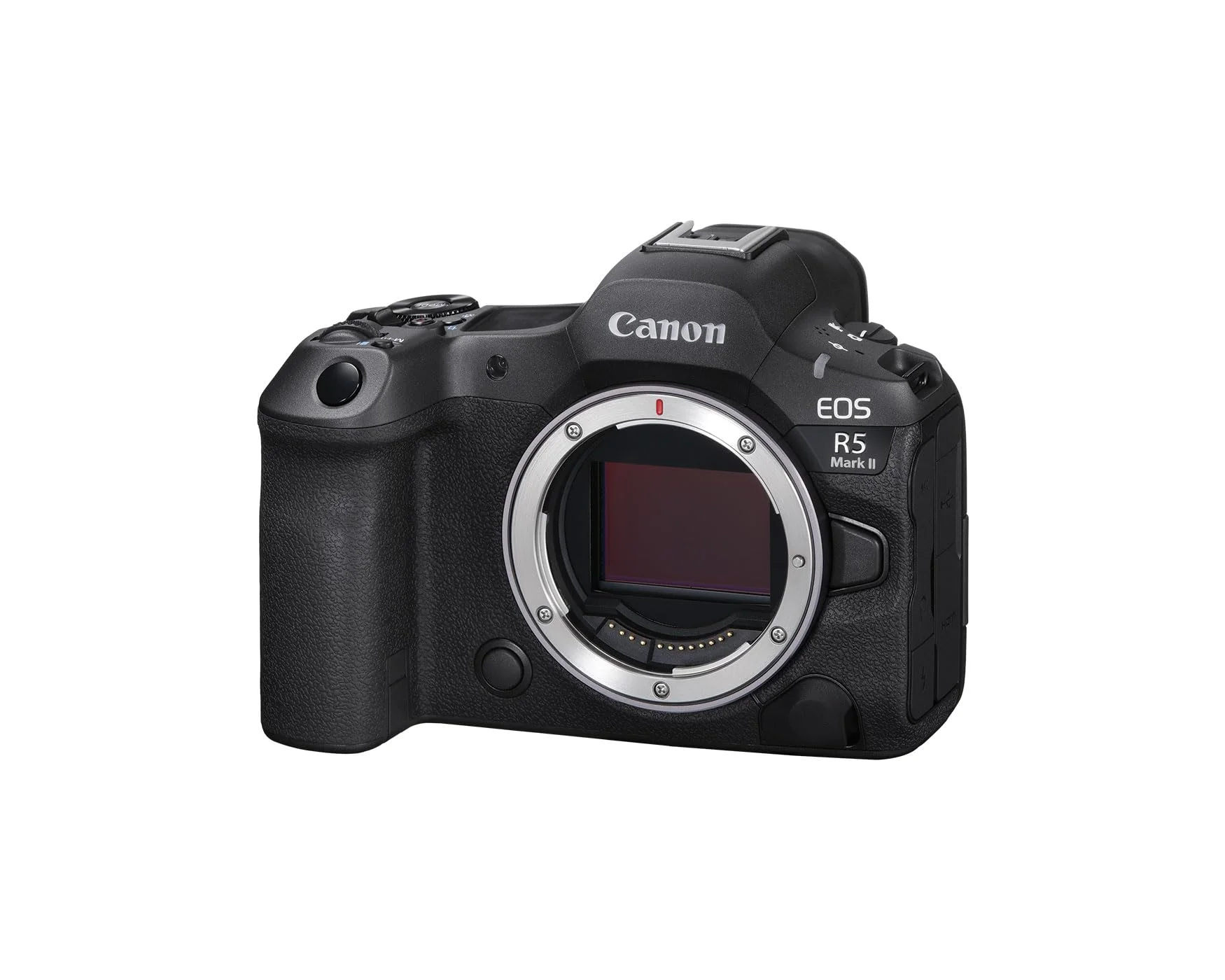
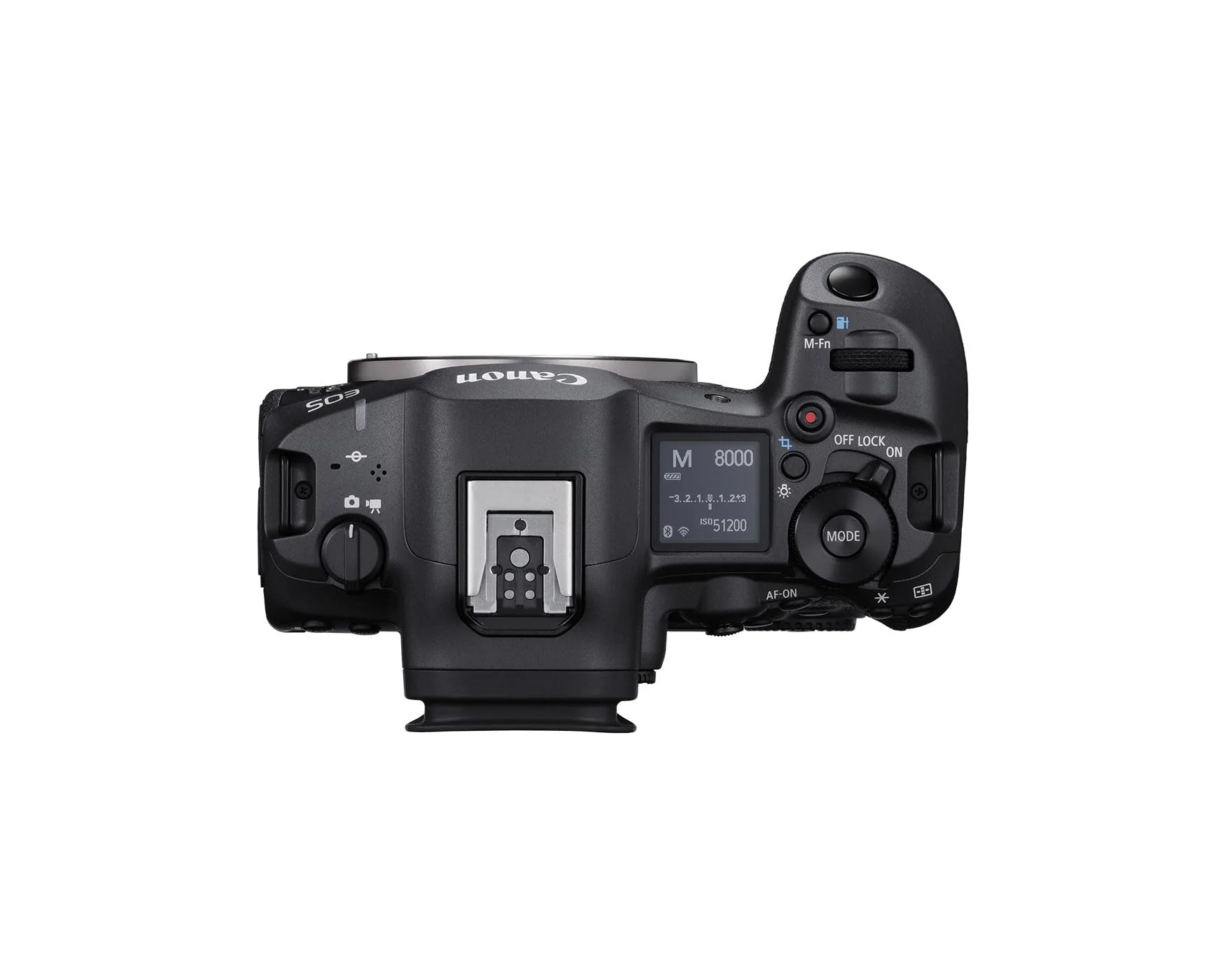
Ergonomics receive meaningful improvements. The grip is deeper and more contoured, providing superior purchase even when wearing gloves. Button placement has been optimized based on user feedback, with a larger joystick and a dedicated switch for stills/video modes. The electronic viewfinder is class-leading—bright, sharp, and responsive—while the fully articulating rear screen finally gives vloggers and gimbal users the flexibility they’ve been requesting since the original R5 launched.
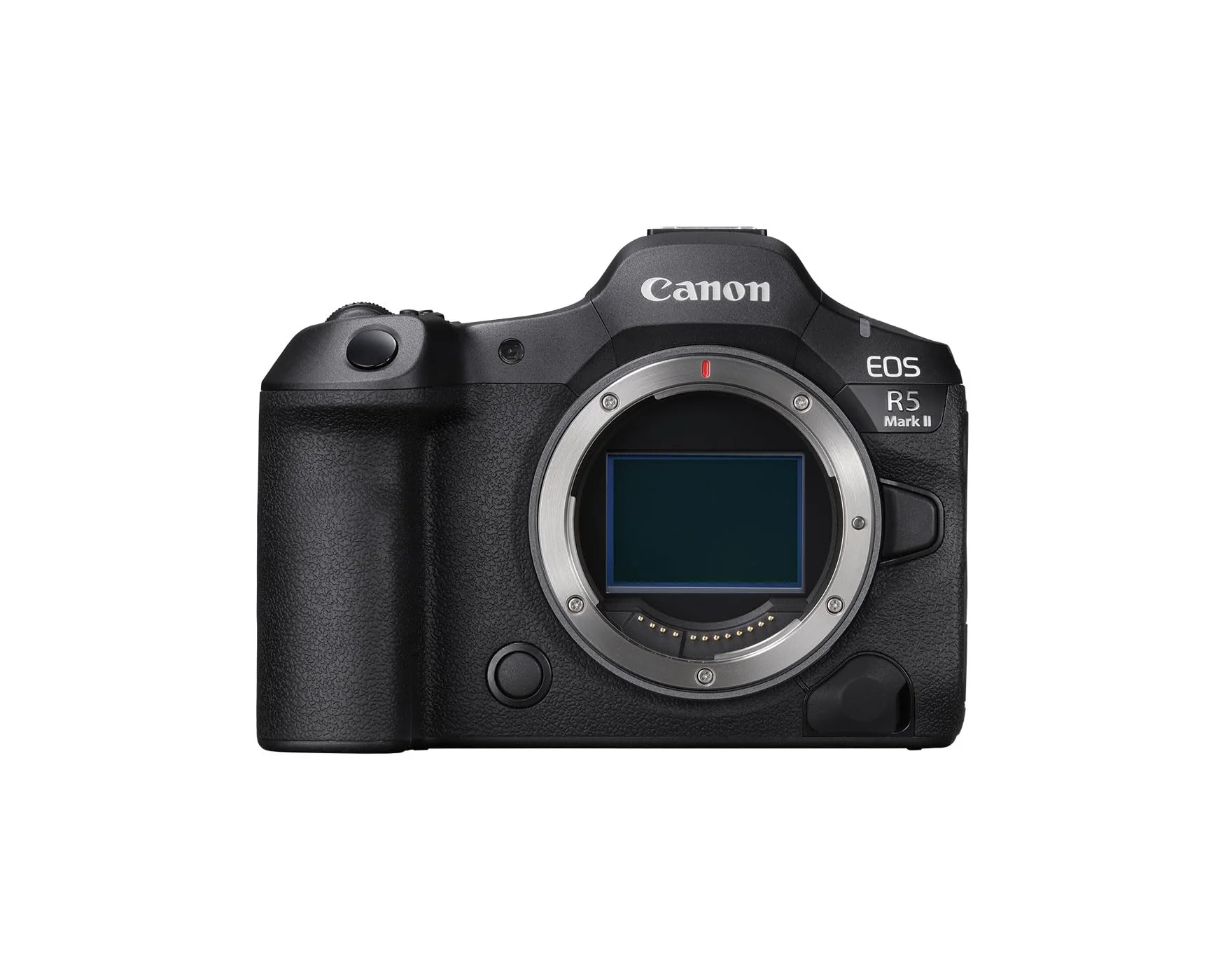
Overall, the camera feels like a precision instrument. Every control falls naturally under the hand, and the build quality inspires confidence that this body will survive years of professional abuse.
Performance
In real-world testing, the R5 Mark II’s stacked sensor transforms the shooting experience. The near-complete elimination of rolling shutter makes electronic shutter usable in almost every scenario, allowing sports and wildlife photographers to shoot at 30 frames per second with full autofocus and exposure tracking. Buffer performance is exceptional, clearing a 200-frame RAW burst in under six seconds when using a CFexpress Type B card.
Autofocus is revelatory. The combination of Deep Learning AI and the new DIGIC Accelerator enables subject detection and tracking that borders on psychic. Whether following a hummingbird, a running athlete, or a Formula 1 car through traffic, the camera maintains focus with remarkable consistency. Eye Control AF has been refined to the point where it feels both faster and more intuitive than the first-generation implementation.
Low-light performance impresses as well. The dual processor architecture delivers clean files up to ISO 12800 and usable results beyond that. Dynamic range measures approximately 14.5 stops, giving editors significant latitude in post-production. For videographers, the ability to record 8K 60p RAW for over two hours without thermal shutdown represents a genuine game changer compared to the original R5’s restrictive recording limits.
Features & Software
Beyond the headline specifications, Canon has implemented several thoughtful features that enhance daily workflow. The camera now includes pre-capture recording, waveform monitoring with false color, and customizable zebra patterns for both stills and video. The AI subject detection library has expanded to include insects, drones, and specific aircraft types alongside the usual people, animals, and vehicles.
The software experience shows clear improvement. Canon has finally modernized the menu system with a more logical grouping of functions and quicker access to frequently changed settings. In-camera RAW processing is faster, and the new “Neural Network” noise reduction option produces surprisingly clean results directly in camera. Connectivity options are comprehensive, with Wi-Fi 6E enabling rapid image transfer to mobile devices or FTP servers.
Value Proposition
At a launch price of $4,299, the R5 Mark II sits in premium territory. However, it delivers a compelling value proposition for hybrid shooters who previously needed two specialized bodies. The combination of flagship stills performance and cinema-grade video capabilities in one weather-sealed package can replace multiple pieces of kit, potentially saving both weight and cost in the long run.
Compared to leasing high-end cinema cameras or maintaining separate photo and video rigs, the R5 Mark II offers professionals a versatile, future-proof solution. The growing RF lens ecosystem, particularly the exceptional L-series primes and zooms released in 2025-2026, further strengthens its value for Canon users.
How It Compares
Against the Sony A1 II, the R5 Mark II offers Canon’s renowned color science and superior ergonomics, though Sony maintains a slight edge in readout speed for extreme high-speed flash sync work. The Nikon Z8 remains a strong alternative with excellent battery life and subject detection, but lacks the R5 Mark II’s unlimited 8K recording capability and fully articulating screen.
For users already invested in either the RF or E-mount ecosystems, the decision will likely come down to color preference and specific video codec requirements. The Canon’s ecosystem has matured significantly by 2026, narrowing the previous lens selection gap.
Pros and Cons
Pros
- Blazing 30fps burst rate with virtually no rolling shutter thanks to the stacked sensor.
- Unlimited 8K 60p RAW recording removes previous thermal limitations completely.
- Next-generation AI autofocus tracks complex subjects with remarkable intelligence and reliability.
- Outstanding build quality and refined ergonomics that feel perfect in the hand.
- Excellent dynamic range and color science that professionals have come to expect from Canon.
Cons
- The $4,299 price point puts it beyond the reach of many serious enthusiasts and semi-professionals.
- Battery life, while improved, still requires frequent swaps during extended 8K video shoots.
- File sizes from 50MP 30fps bursts are enormous, demanding substantial storage infrastructure.
- Some legacy menu options still feel buried compared to the more intuitive interfaces from Sony and Nikon.
- Third-party RF lens options remain more limited than Sony’s E-mount ecosystem.
FAQ
Q: Does the Canon EOS R5 Mark II overheat during 8K recording?
A: No. The combination of the stacked sensor, improved heat dissipation, and new processor allows unlimited 8K 60p recording in standard shooting conditions.
Q: Is the R5 Mark II worth upgrading from the original R5?
A: For professional users who need faster burst rates, better AF, or serious video capabilities, the upgrade is substantial. Enthusiasts with the original R5 may find the improvements less critical.
Q: How does the Eye Control AF perform in 2026?
A: The Mark II version is significantly more responsive and accurate than the first generation, making it a genuinely useful tool rather than a novelty.
Q: Can the R5 Mark II replace a dedicated cinema camera?
A: For many documentary, corporate, and independent productions, yes. The combination of 8K RAW, excellent codecs, and professional monitoring tools makes it remarkably capable.
Q: What memory cards does the R5 Mark II require?
A: It uses CFexpress Type B for the main slot and supports UHS-II SD cards in the second slot, though CFexpress is recommended for maximum burst and video performance.
Verdict
The Canon EOS R5 Mark II is the definitive hybrid camera for professional photographers and videographers who refuse to compromise. It successfully addresses the limitations of its predecessor while introducing meaningful technological leaps in speed, autofocus intelligence, and thermal performance.
If your work demands both exceptional stills and high-end video capabilities in a single weather-sealed body, this is currently the best tool available in 2026.
Pros
- ✓ Blazing 30fps burst rate with virtually no rolling shutter thanks to the stacked sensor.
- ✓ Unlimited 8K 60p RAW recording removes previous thermal limitations completely.
- ✓ Next-generation AI autofocus tracks complex subjects with remarkable intelligence and reliability.
- ✓ Outstanding build quality and refined ergonomics that feel perfect in the hand.
- ✓ Excellent dynamic range and color science that professionals have come to expect from Canon.
Cons
- ✗ The $4,299 price point puts it beyond the reach of many serious enthusiasts and semi-professionals.
- ✗ Battery life, while improved, still requires frequent swaps during extended 8K video shoots.
- ✗ File sizes from 50MP 30fps bursts are enormous, demanding substantial storage infrastructure.
- ✗ Some legacy menu options still feel buried compared to the more intuitive interfaces from Sony and Nikon.
- ✗ Third-party RF lens options remain more limited than Sony’s E-mount ecosystem.
Where to Buy the Canon EOS R5 Mark II





Prices may vary. Affiliate links — we may earn a commission at no extra cost to you.
Related Reviews

Affiliate links — we may earn a commission at no extra cost to you.