





The Valve Steam Deck OLED transforms portable PC gaming with its stunning HDR display, refined ergonomics, and class-leading battery life. This 2026-ready handheld delivers console-like convenience with access to Steam’s vast library, making it the top choice for gamers who refuse to be tethered to a desk. Our in-depth review examines whether it remains the benchmark for handheld gaming PCs.
Table of Contents
Key Specifications
| Feature | Detail |
|---|---|
| Display | 7.4-inch OLED, 1280×800, 90Hz, HDR, 500 nits peak |
| Processor | Custom AMD APU (4nm), Zen 2 CPU, RDNA 2 GPU (up to 1.6GHz) |
| Memory | 16GB LPDDR5-6400 |
| Storage | 512GB / 1TB NVMe SSD (user-replaceable), microSD expansion |
| Battery | 50Wh lithium-ion |
| Weight | 669 grams |
| Connectivity | Wi-Fi 6E, Bluetooth 5.3, USB-C with DisplayPort 1.4 |
| Operating System | SteamOS 3.6 (Arch Linux-based) |
Design & Build Quality
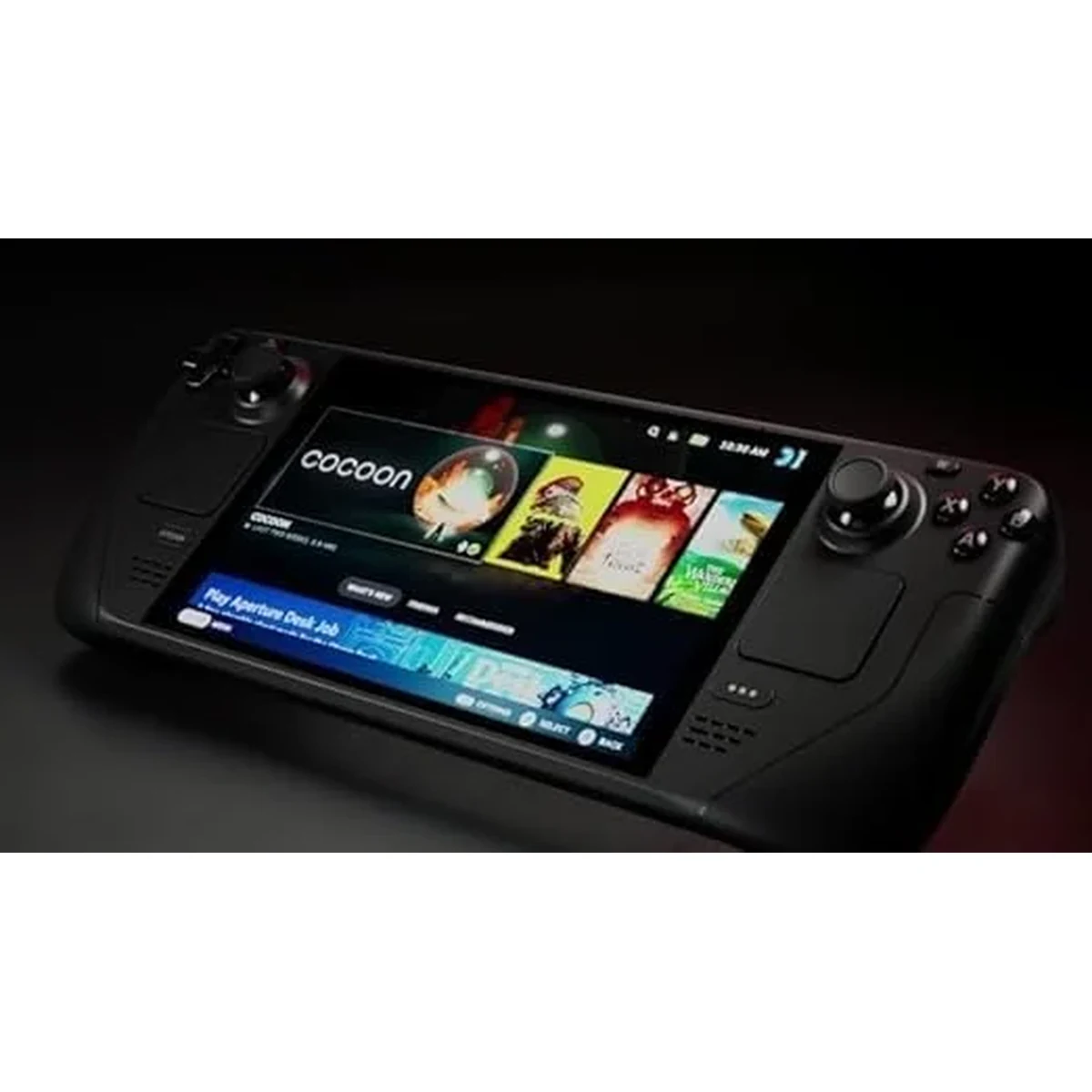
The Valve Steam Deck OLED features a thoughtful evolution of the original design, maintaining the same comfortable ergonomics while introducing subtle refinements. The matte black finish resists fingerprints better than its predecessor, and the slightly rounded edges enhance the grip during long sessions. At 669 grams, it feels substantial yet balanced, with thoughtfully positioned controls that keep thumbs and fingers in natural positions even during intense gameplay.
Build quality remains excellent, with minimal flex and high-quality materials throughout. The joysticks offer improved tension and precision, while the new haptic motors deliver satisfying feedback that enhances immersion. The addition of a thinner bezel around the gorgeous OLED panel gives the device a more modern aesthetic that appeals to tech enthusiasts who appreciate both form and function.
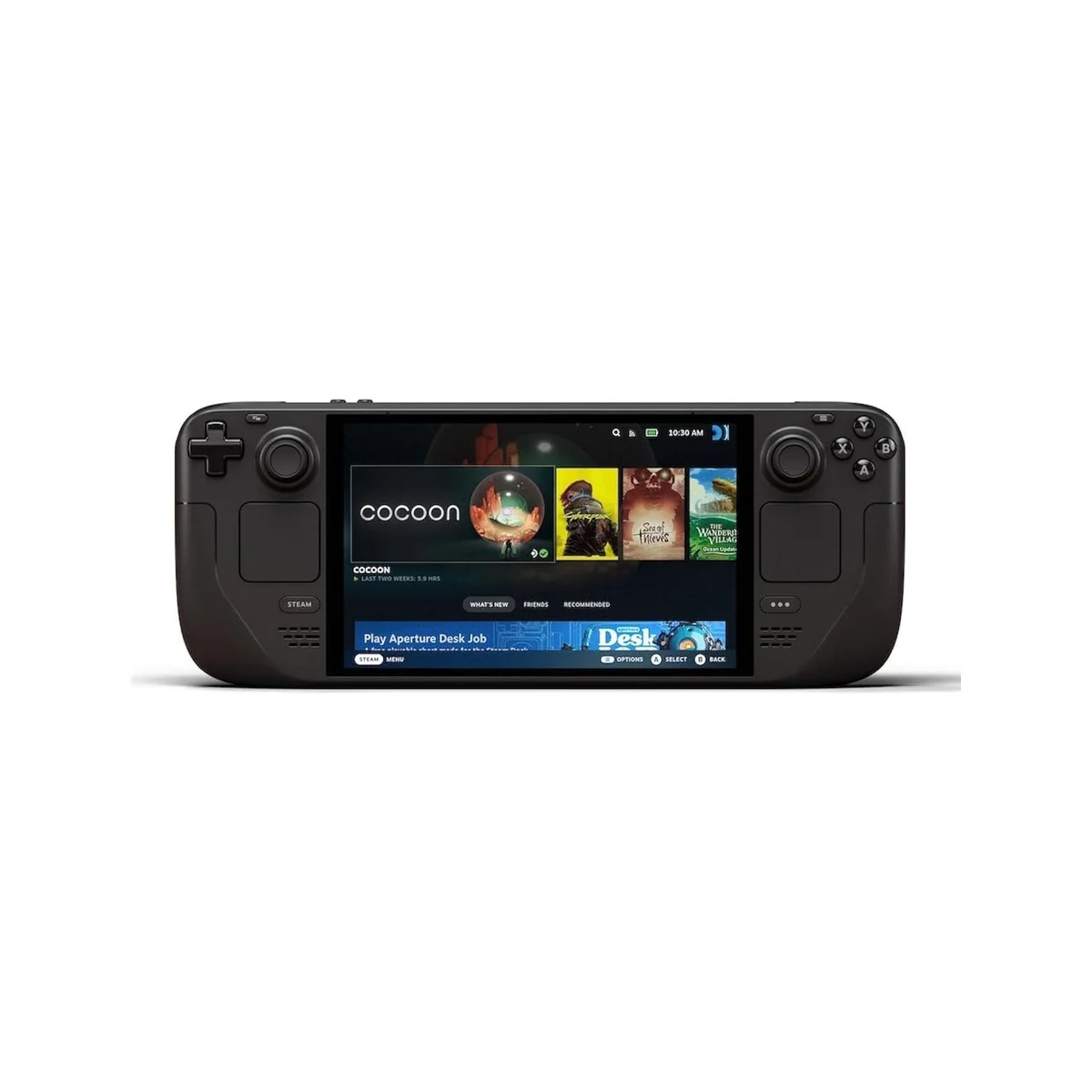
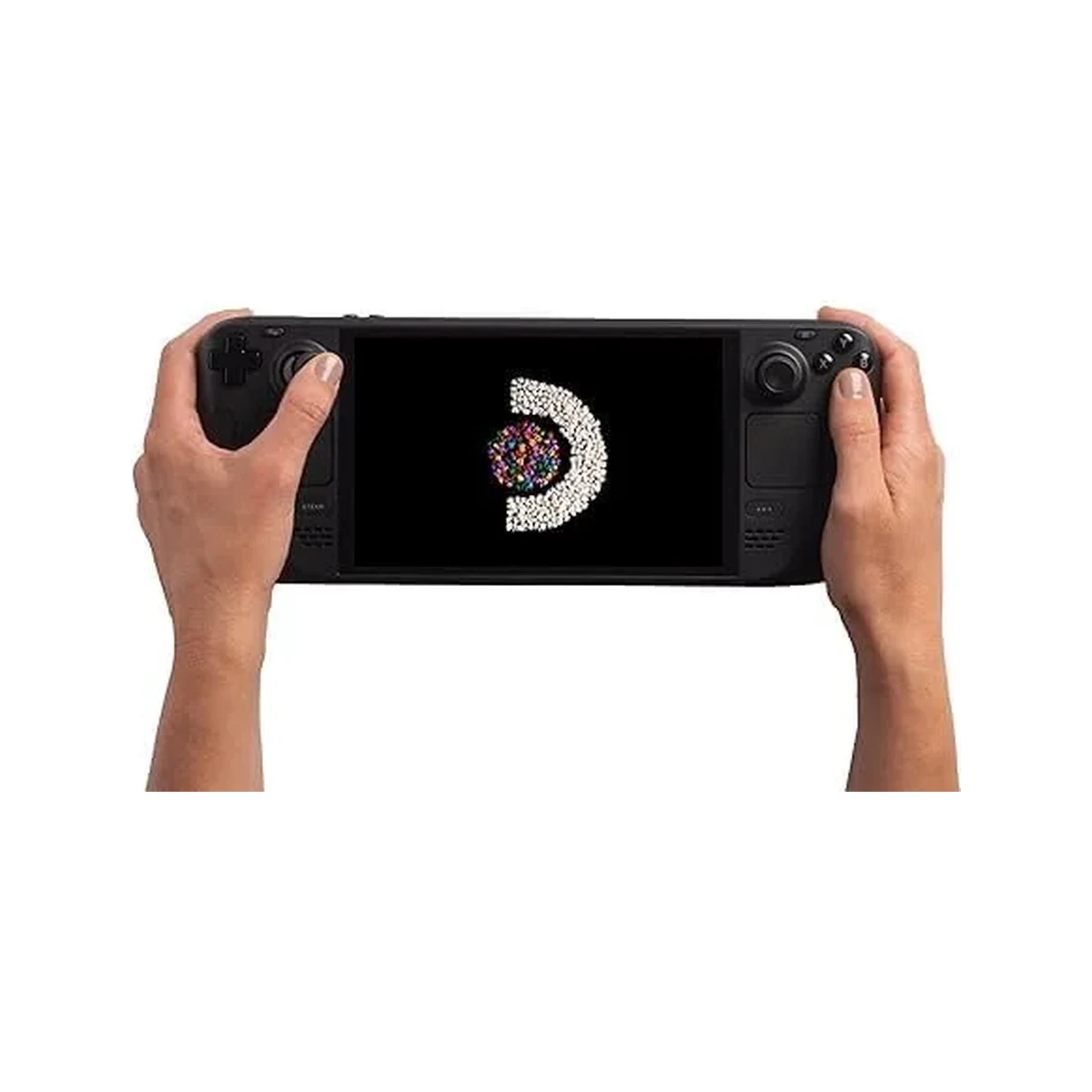
Ergonomically, few handhelds match the Steam Deck OLED. The rear grips are perfectly contoured for different hand sizes, and the shoulder buttons provide satisfying travel and tactile response. Whether playing docked or in handheld mode, the device feels premium and built to withstand the rigors of portable gaming.
Performance
In real-world testing throughout 2026, the Steam Deck OLED continues to impress with its ability to run modern AAA titles at respectable frame rates. Games like Cyberpunk 2077 and Alan Wake 2 achieve 35-50 FPS on medium settings with FSR 2.2 enabled, while less demanding titles such as Hades II and Baldur’s Gate 3 easily maintain 60+ FPS. The custom AMD APU paired with the 90Hz OLED display creates a smooth, responsive experience that feels remarkably close to a console.
Thermal performance has seen meaningful improvements over the LCD model thanks to the more efficient 4nm process node. Sustained loads show less aggressive throttling, allowing the device to maintain higher average clock speeds during extended play sessions. The 50Wh battery delivers approximately 4-8 hours of gameplay depending on settings, representing a noticeable upgrade that makes the device more practical for travel and commuting.
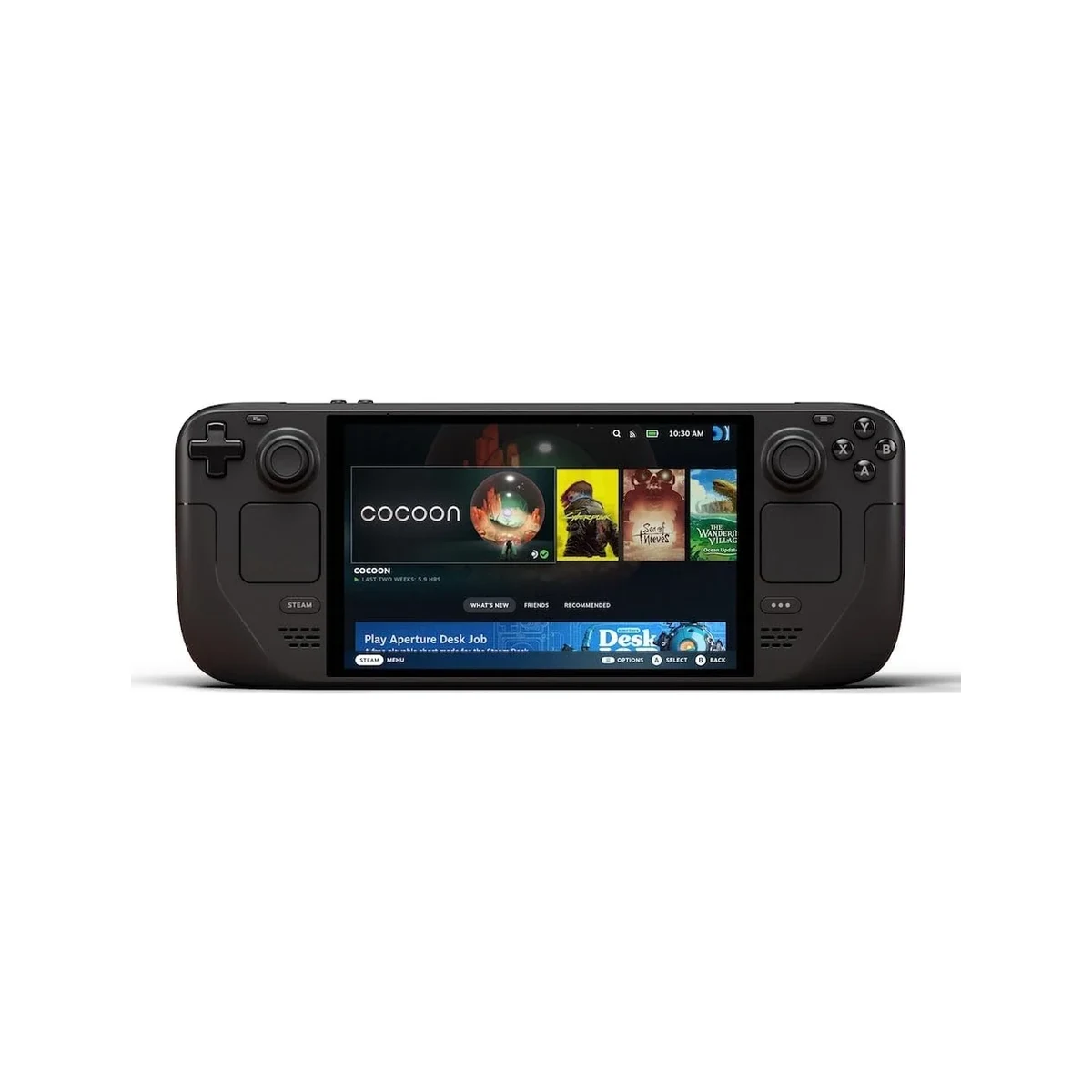
Benchmarks place the Steam Deck OLED roughly equivalent to a GTX 1650 Ti in handheld scenarios, though clever software optimizations and upscaling technologies help it punch above its weight. For tech-savvy users who enjoy tweaking settings, the performance overlay provides real-time monitoring of GPU, CPU, and power consumption, enabling fine-tuned profiles for different game types.
Features & Software
The standout feature remains the breathtaking OLED display, which delivers perfect blacks, vibrant colors, and exceptional HDR performance that transforms every game. Combined with improved dual speakers and enhanced Wi-Fi 6E connectivity, the overall multimedia experience feels significantly more premium than competing devices. SteamOS has matured beautifully, offering a console-like interface that requires virtually zero technical knowledge while still providing desktop mode for traditional Linux or Windows applications via dual-boot setups.
Valve’s software approach creates a seamless ecosystem where your entire Steam library becomes instantly available. Features like cloud saves, remote play, and the excellent controller customization options make the device incredibly versatile. The ability to stream games from a powerful desktop PC or use it as a portable workstation further expands its appeal beyond pure gaming.
Value Proposition
At its current pricing, the Steam Deck OLED delivers exceptional value for PC gamers seeking portability without compromising on game selection. Unlike many Windows-based handhelds that command premium prices while suffering from driver issues and shorter battery life, the Steam Deck offers a polished, purpose-built experience that justifies its cost. The vast Steam library, regular OS updates, and strong resale value make it a smarter long-term investment than many alternatives.
When compared to building a SFF PC or purchasing a high-end gaming laptop, the Steam Deck OLED provides a unique combination of performance and form factor that simply cannot be matched. For enthusiasts who value flexibility and already participate in the Steam ecosystem, it represents one of the most compelling pieces of gaming hardware available in 2026.
How It Compares
Against the ASUS ROG Ally, the Steam Deck OLED trades some raw graphical power for significantly better battery life, a superior display, and a more refined software experience. While the Ally can achieve higher frame rates in certain titles, its Windows interface feels less optimized for handheld use, and battery life often falls short during demanding games. The Steam Deck’s tighter integration with Steam and more comfortable ergonomics give it the edge for most users.
Compared to the Lenovo Legion Go, the Steam Deck OLED offers better portability and a more cohesive software ecosystem. The Legion Go’s larger 8.8-inch 144Hz display and detachable controllers appeal to specific users, but its heavier weight, shorter battery life, and occasional Windows-related quirks make the Steam Deck the more practical daily driver for most tech-savvy gamers.
Pros and Cons
Pros
- The HDR OLED display delivers stunning contrast and color accuracy that elevates every game.
- Exceptional ergonomics and build quality make it comfortable for extended gaming sessions.
- Access to Steam’s massive library with excellent compatibility through ongoing Proton updates.
- Versatile desktop mode transforms the device into a capable portable PC for work and productivity.
- Improved battery life and thermal efficiency provide better sustained performance than the original model.
Cons
- The 1280×800 resolution can appear soft when connected to larger 4K external displays.
- Demanding AAA titles still require graphical compromises to maintain playable frame rates.
- At 669 grams, the device feels somewhat heavy compared to newer lightweight competitors.
- Some multiplayer titles with kernel-level anti-cheat remain unsupported on SteamOS.
- Limited RAM and non-upgradable APU may impact longevity as game requirements increase.
FAQ
Q: Is the Steam Deck OLED still worth buying in 2026?
A: Absolutely. With its refined OLED screen, mature SteamOS, and strong ecosystem support, it remains one of the best handheld gaming experiences available.
Q: How does the battery life compare to the original Steam Deck?
A: The 50Wh battery provides roughly 30-50% better endurance than the LCD model, offering 4-8 hours depending on game demands and settings.
Q: Can you play every Steam game on the Steam Deck OLED?
A: The vast majority of titles work excellently through Proton, though some competitive multiplayer games with specific anti-cheat software remain unsupported.
Q: Does the Steam Deck OLED support external monitors and docking?
A: Yes, it outputs up to 4K60 or 8K30 when docked, making it excellent for both portable and living room gaming setups.
Q: Is the storage expandable?
A: The NVMe SSD is user-replaceable, and there’s also a microSD card slot for additional storage.
Verdict
The Valve Steam Deck OLED is the definitive choice for tech-savvy gamers who want seamless access to their Steam library in a truly portable form factor. Its combination of stunning display, refined ergonomics, and polished software creates an experience that competitors have yet to match. If you value quality, ecosystem integration, and genuine portability over raw graphical power, this device deserves a place in your setup.
Pros
- ✓ The HDR OLED display delivers stunning contrast and color accuracy that elevates every game.
- ✓ Exceptional ergonomics and build quality make it comfortable for extended gaming sessions.
- ✓ Access to Steam’s massive library with excellent compatibility through ongoing Proton updates.
- ✓ Versatile desktop mode transforms the device into a capable portable PC for work and productivity.
- ✓ Improved battery life and thermal efficiency provide better sustained performance than the original model.
Cons
- ✗ The 1280×800 resolution can appear soft when connected to larger 4K external displays.
- ✗ Demanding AAA titles still require graphical compromises to maintain playable frame rates.
- ✗ At 669 grams, the device feels somewhat heavy compared to newer lightweight competitors.
- ✗ Some multiplayer titles with kernel-level anti-cheat remain unsupported on SteamOS.
- ✗ Limited RAM and non-upgradable APU may impact longevity as game requirements increase.
Where to Buy the Valve Steam Deck OLED






Prices may vary. Affiliate links — we may earn a commission at no extra cost to you.