

The Philips Hue Essential BR30 Smart Bulb brings the brand’s polished smart lighting experience to recessed cans and flood fixtures without overcomplicating setup. With reliable app control, broad smart home compatibility, and strong white and color performance, it remains one of the safest premium picks for connected home lighting in 2026.
Table of Contents
Key Specifications
| Feature | Detail |
|---|---|
| Product Name | Philips Hue Essential BR30 Smart Bulb |
| Bulb Type | BR30 smart floodlight bulb |
| Base Type | E26 |
| Light Output | Up to 650 lumens |
| Color Support | White and color ambiance |
| Color Temperature Range | Approximately 2000K–6500K |
| Connectivity | Bluetooth, Zigbee via Philips Hue Bridge |
| Voice Assistants | Amazon Alexa, Google Assistant, Apple HomeKit |
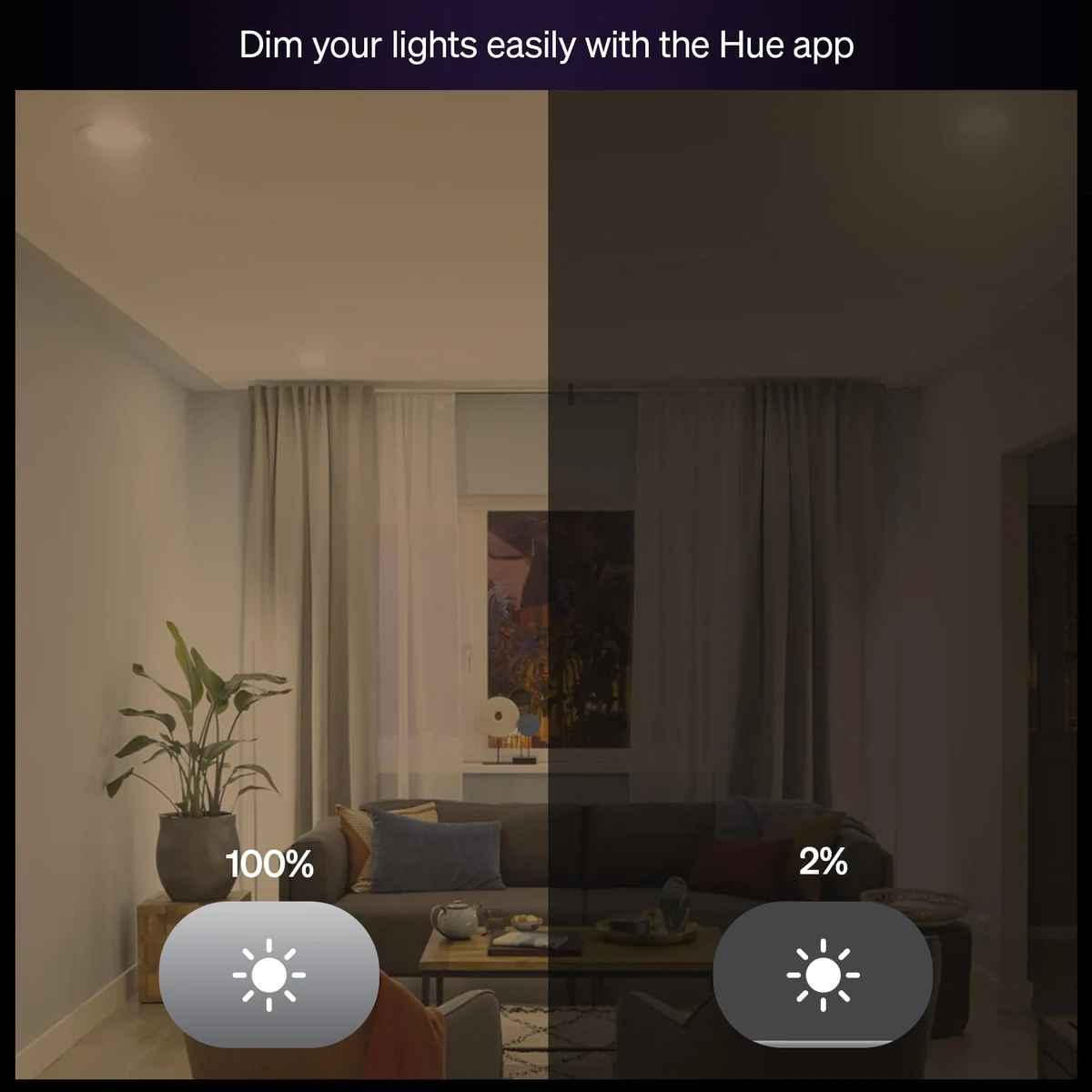
| Dimming | Yes, app and voice controlled |
| Hub Requirement | Optional for basic Bluetooth use; recommended Hue Bridge for full features |
| Rated Lifetime | Up to 25,000 hours |
| Best Use | Recessed ceiling cans, flood fixtures, living rooms, kitchens |
Design & Build Quality
The Philips Hue Essential BR30 Smart Bulb follows the familiar Hue design language: clean, understated, and built to disappear into the fixture rather than draw attention to itself. Its BR30 form factor is ideal for recessed can lighting, and the bulb’s proportions fit standard ceiling housings without awkward overhang. That matters more than it sounds, because many smart bulbs with bulkier housings can look clumsy in exposed floodlight fixtures.
Build quality is strong, with a sturdy plastic shell and diffuser that feels more premium than many budget smart lighting alternatives. The diffuser spreads light evenly across a room, avoiding the patchy hotspotting you sometimes see on lower-cost color bulbs. While it is not a decorative bulb by any means, it is well suited to kitchens, dens, media rooms, and any space where consistent flood-style illumination matters more than visual flair.

From an ergonomics standpoint, setup is simple and familiar. Screw it in, power it on, and pair over Bluetooth for quick control, or add it to a Hue Bridge for the full ecosystem experience. The physical design also manages heat well in typical indoor use, which is important for recessed installations where airflow can be more limited than in open lamps.
Performance
In real-world use, the Philips Hue Essential BR30 Smart Bulb performs exactly how a premium smart bulb should: reliably, consistently, and with minimal friction. Brightness is solid for accent and general room lighting, and the flood pattern works especially well in recessed ceiling cans. At up to 650 lumens, it is not the brightest smart BR30 on the market, but in practice it delivers enough output for living spaces, bedrooms, and entertainment areas where ambiance matters as much as raw illumination.
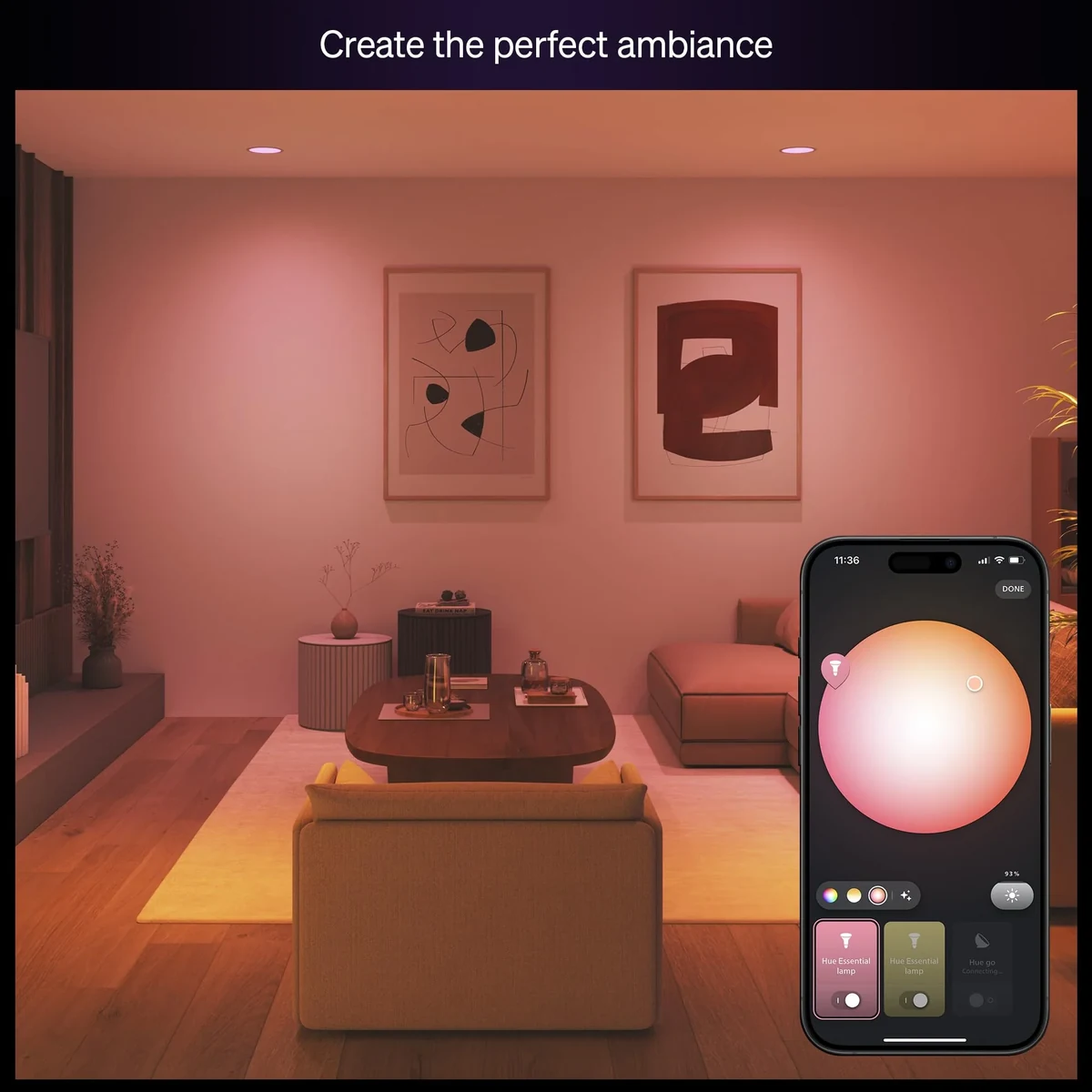
Color performance remains one of Hue’s strongest advantages. Whites look clean across the temperature range, from warm evening tones to cooler daylight settings for task lighting. Saturated colors are vivid without looking cartoonish, and scene transitions are smooth. Compared with cheaper competitors, Hue still does a better job of maintaining color consistency across multiple bulbs in the same room, which is a big deal if you are building out a whole-home lighting setup.
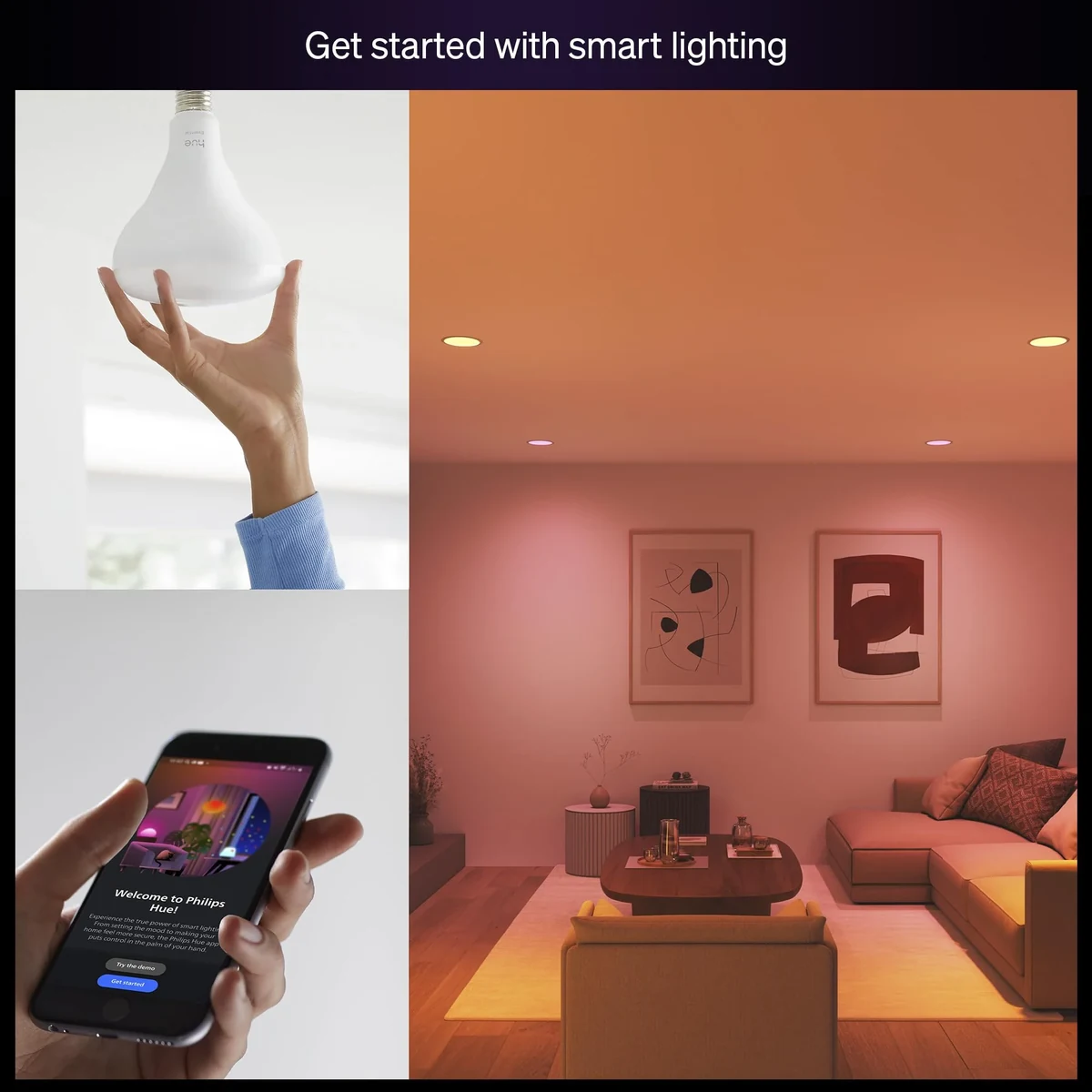
Responsiveness is excellent when paired through the Hue Bridge, with near-instant command execution from the app, voice assistant, or automations. Bluetooth-only control is perfectly usable for a small room setup, but bridge-based Zigbee performance is where the bulb really shines. Scheduling, grouped control, and automation routines feel faster and more dependable than many Wi-Fi-based alternatives, especially in homes with dozens of connected devices competing for network bandwidth.
Features & Software
The headline feature here is not just color lighting, but the maturity of the Philips Hue platform. Through the Hue app, users get access to scenes, automation routines, circadian-style lighting schedules, room zoning, entertainment syncing, and remote access when using the Hue Bridge. The software experience is polished, intuitive, and still among the best in the smart home category in 2026.
Compatibility is another major strength. The Philips Hue Essential BR30 Smart Bulb works with Alexa, Google Assistant, and Apple HomeKit, making it a flexible option regardless of your preferred ecosystem. Hue’s accessory support is also a major differentiator, with dimmer switches, motion sensors, and smart buttons that integrate cleanly into the experience. If you want a smart bulb that can start simple and scale into a more advanced automation setup, this one does that exceptionally well.
Value Proposition
The Philips Hue Essential BR30 Smart Bulb is not the cheapest BR30 smart bulb you can buy, and that is the core value conversation. You are paying a premium for reliability, software quality, ecosystem depth, and long-term support rather than just lumen output on a spec sheet. For users who only want occasional app control, lower-cost alternatives may seem more attractive at first glance.
However, for buyers who care about dependable automations, accurate color reproduction, and a smart lighting system that can expand over time, the Hue premium is easier to justify. The bulb feels less like a disposable gadget and more like an infrastructure purchase for your smart home. In that context, its value is stronger than its upfront price suggests.
How It Compares
Against the TP-Link Tapo Smart Wi-Fi Light Bulb BR30, the Philips Hue Essential BR30 offers a more refined software experience and a stronger accessory ecosystem. Tapo is usually more affordable and easier for users who want a no-hub Wi-Fi setup, but Hue wins on automation depth, multi-bulb consistency, and long-term ecosystem maturity.
Compared with the GE Cync Full Color Smart BR30, Philips Hue again comes out ahead in reliability and platform polish. GE Cync often undercuts Hue on price and may be appealing for casual users, but the Hue app, bridge-based responsiveness, and broader smart home integration make the Philips option the better fit for enthusiasts and power users.
Pros and Cons
Pros
- The Philips Hue Essential BR30 delivers reliable smart lighting performance with excellent app responsiveness when paired with the Hue Bridge.
- Color quality and tunable white output are consistently strong, making it ideal for both ambiance and everyday room lighting.
- The Hue ecosystem remains one of the most polished and expandable smart home lighting platforms available in 2026.
- Broad compatibility with Alexa, Google Assistant, and Apple HomeKit makes it easy to integrate into mixed-device households.
Cons
- The price is noticeably higher than many competing BR30 smart bulbs with similar headline features.
- Maximum brightness is good but not class-leading, which may matter in large rooms or task-heavy spaces.
- Full functionality requires the Hue Bridge, adding extra cost for users who want advanced automations and remote access.
- The bulb is best suited to indoor recessed fixtures and is less versatile than standard A19 smart bulbs for general lamp use.
FAQ
Q: Does the Philips Hue Essential BR30 Smart Bulb require a Hue Bridge?
A: No, it can be used over Bluetooth for basic control, but the Hue Bridge is recommended for advanced automations, remote access, and broader smart home features.
Q: Is the Philips Hue Essential BR30 bright enough for kitchen recessed lighting?
A: Yes, for most kitchens and living spaces it provides solid illumination, though users wanting maximum brightness in large rooms may prefer higher-lumen alternatives.
Q: Does it work with Apple HomeKit?
A: Yes, the bulb supports Apple HomeKit, along with Amazon Alexa and Google Assistant, typically through the Hue ecosystem.
Q: Can I use this bulb in a standard lamp?
A: Physically, if the fixture supports a BR30 bulb and E26 base, yes, but it is primarily designed for recessed cans and flood-style fixtures.
Q: Is Philips Hue still worth it in 2026?
A: For users who value reliability, polished software, and a mature smart lighting ecosystem, Philips Hue remains one of the best premium choices on the market.
Verdict
The Philips Hue Essential BR30 Smart Bulb is best for users who want dependable, high-quality smart recessed lighting and are willing to pay more for a mature ecosystem. It is especially easy to recommend for existing Hue users, Apple HomeKit households, and smart home enthusiasts building a scalable lighting setup.
Pros
- ✓ The Philips Hue Essential BR30 delivers reliable smart lighting performance with excellent app responsiveness when paired with the Hue Bridge.
- ✓ Color quality and tunable white output are consistently strong, making it ideal for both ambiance and everyday room lighting.
- ✓ The Hue ecosystem remains one of the most polished and expandable smart home lighting platforms available in 2026.
- ✓ Broad compatibility with Alexa, Google Assistant, and Apple HomeKit makes it easy to integrate into mixed-device households.
Cons
- ✗ The price is noticeably higher than many competing BR30 smart bulbs with similar headline features.
- ✗ Maximum brightness is good but not class-leading, which may matter in large rooms or task-heavy spaces.
- ✗ Full functionality requires the Hue Bridge, adding extra cost for users who want advanced automations and remote access.
- ✗ The bulb is best suited to indoor recessed fixtures and is less versatile than standard A19 smart bulbs for general lamp use.
Where to Buy the Philips Hue Essential BR30 Smart Bulb





Prices may vary. Affiliate links — we may earn a commission at no extra cost to you.
Related Reviews

Affiliate links — we may earn a commission at no extra cost to you.