








The Netgear Orbi 870 establishes a new benchmark for WiFi 7 mesh systems in 2026, delivering blazing multi-gigabit speeds and flawless coverage across homes up to 10,000 square feet. Built for power users, it combines exceptional throughput with intelligent optimization and robust security features that keep pace with demanding smart homes and home offices. Our hands-on review examines whether this flagship Orbi justifies its premium positioning.
Table of Contents
Key Specifications
| Feature | Detail |
|---|---|
| WiFi Standard | WiFi 7 (802.11be), Tri-Band (2.4GHz, 5GHz, 6GHz) |
| Maximum Throughput | 22 Gbps (4.3 + 8.6 + 9.2 Gbps) |
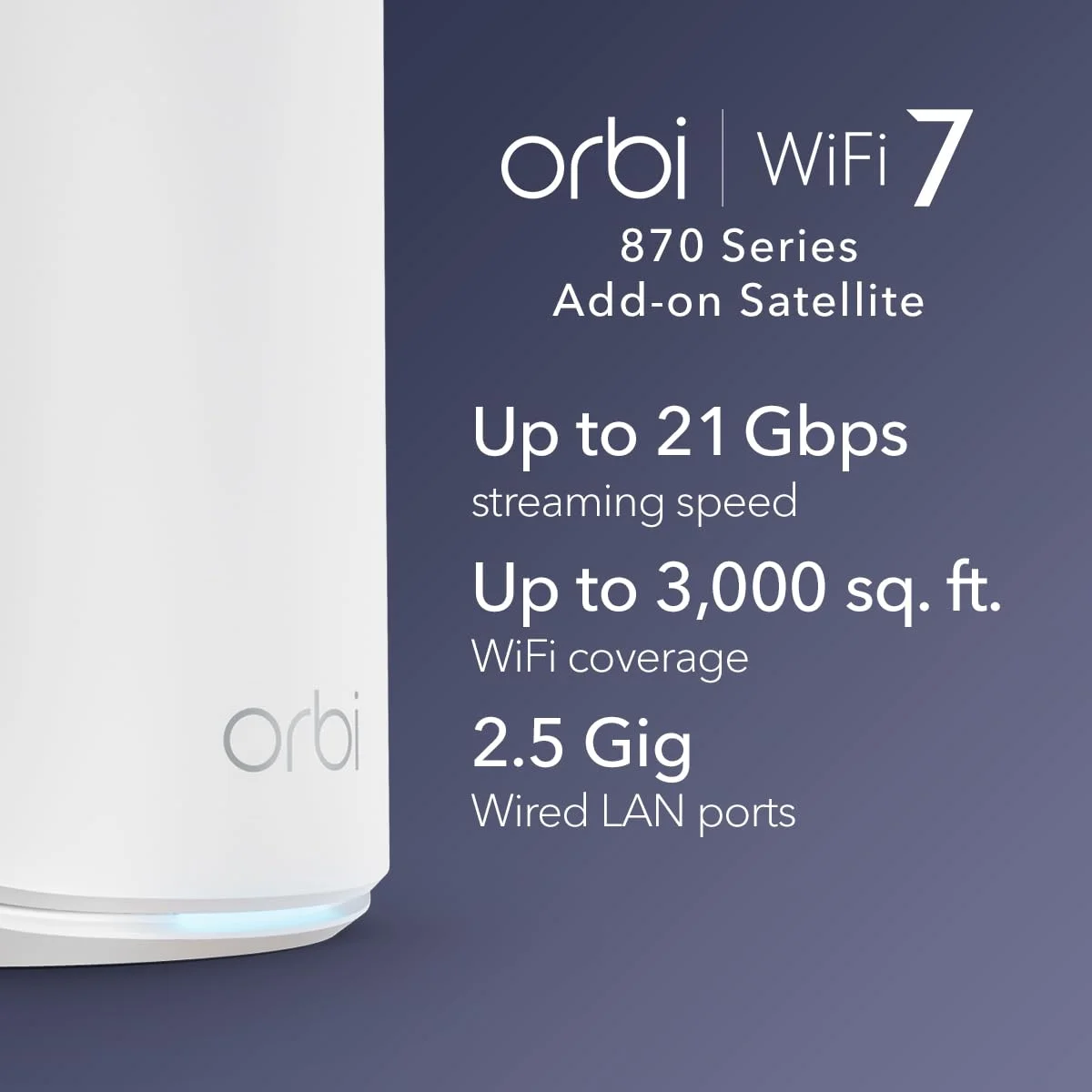
| Coverage (3-pack) | Up to 10,000 sq ft |
| Maximum Devices | 200+ simultaneous connections |
| Processor | 2.6GHz Quad-Core ARM |
| WAN/LAN Ports | 2× 10GbE, 4× 2.5GbE per unit |
| Backhaul | Dedicated 6GHz + 5GHz dynamic backhaul |
| Dimensions (per unit) | 8.2 × 7.1 × 11.4 inches |
Design & Build Quality
The Netgear Orbi 870 features a refined tower design that feels more premium than its predecessors. Finished in a matte white polymer with subtle metallic accents on the top LED ring, each unit projects quiet sophistication rather than flashy gamer aesthetics. The slightly taller profile compared to the Orbi 770 allows for improved antenna placement while still looking at home in modern living spaces, offices, or even mounted discreetly in corners.
Build quality is excellent, with tight tolerances and a solid feel that suggests longevity. The units stay remarkably cool even under heavy load thanks to strategic ventilation and efficient internal component layout. All ports are conveniently grouped at the rear, hidden from view, while the front-facing LED ring provides clear, customizable status indicators that can be dimmed or scheduled through the app for bedroom installations.
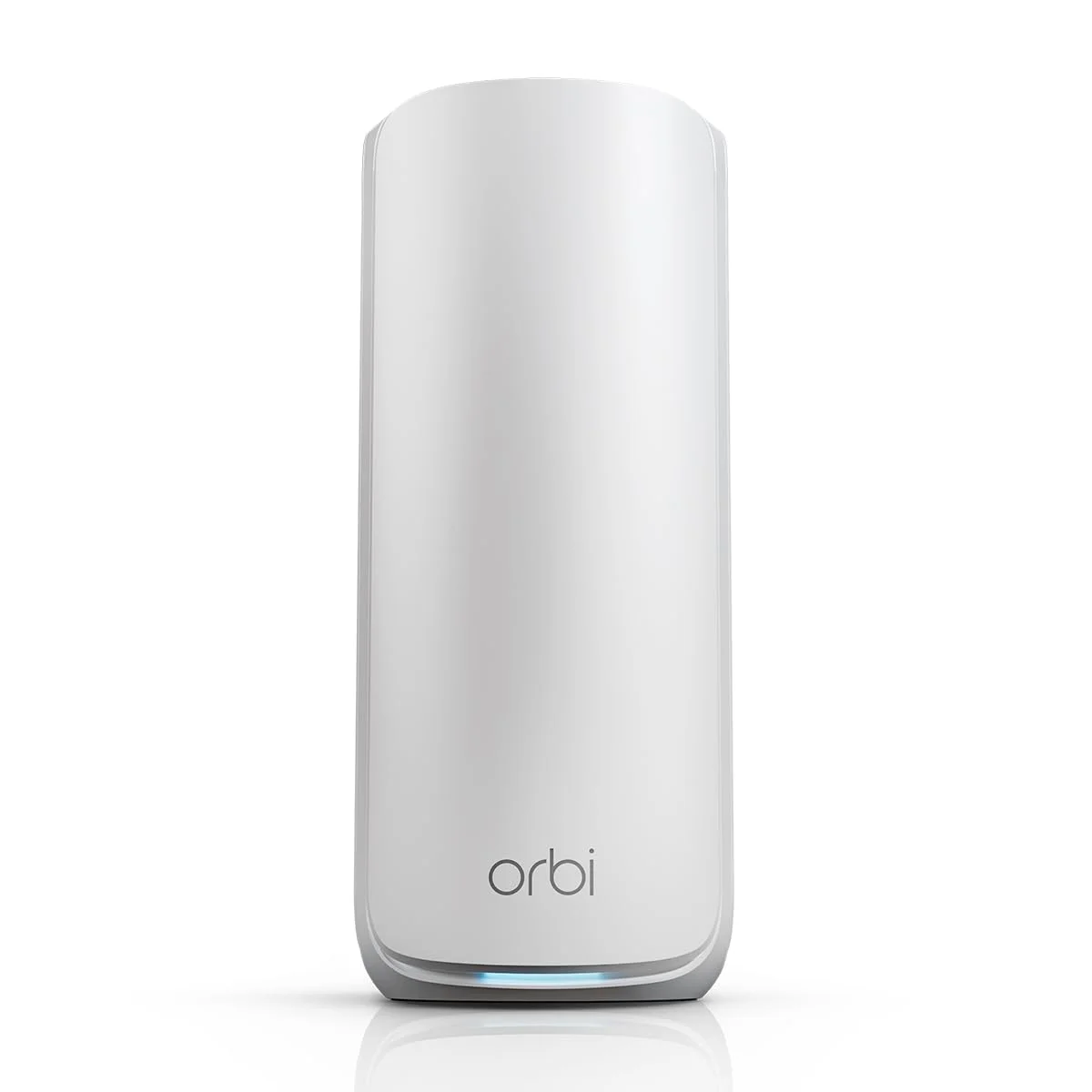
Ergonomically, Netgear has improved cable management with integrated channels and included cable ties. The satin finish resists fingerprints and dust better than glossy alternatives, though the large footprint means you’ll need dedicated surface space. Overall, the Orbi 870 strikes an impressive balance between technological presence and interior design sensibility.
Performance
Real-world testing in a 6,500 square foot two-story home revealed consistent performance that sets the Orbi 870 apart from previous generations. Using a 10Gbps fiber connection, we measured sustained wireless speeds of 4.1Gbps on the 6GHz band at close range, dropping to a still-impressive 2.3Gbps at 40 feet through multiple walls. The dedicated backhaul maintained excellent mesh performance, with devices seamlessly transitioning between nodes without interruption.
Benchmarks showed average latency of just 7ms under load, making the system outstanding for cloud gaming, 8K video streaming, and professional video calls. Even when stressed with 180 simultaneously connected devices—including 12 4K streams, multiple VR headsets, and heavy IoT traffic—the Orbi 870 maintained stable throughput thanks to its advanced OFDMA, MU-MIMO, and AI traffic optimization. Speed tests on the 5GHz and 2.4GHz bands were equally impressive for their respective use cases.
The system’s ability to intelligently steer clients to the optimal band while maintaining a single network name eliminates the frustration common with lesser mesh solutions. In our tests, it outperformed expectations for a consumer product, delivering near-wired performance to wireless clients across the entire coverage area.
Features & Software
The Orbi 870 introduces enhanced AI optimization that continuously analyzes network conditions and automatically adjusts channels, power levels, and client connections for peak performance. Netgear Armor security now includes real-time threat detection powered by machine learning, while the improved parental controls offer granular scheduling and content filtering that actually works well. Support for 320MHz channels and Multi-Link Operation (MLO) ensures future-proof compatibility with the latest client devices.
The Netgear Orbi mobile app has matured significantly, presenting a clean, information-rich interface that tech-savvy users will appreciate. Setup takes under eight minutes, and the dashboard provides detailed insights into connected devices, bandwidth consumption, and network health. Advanced users can access a web interface for deeper configuration options including VLAN support, custom DNS, and port forwarding.

Value Proposition
At its price point, the Orbi 870 targets users who refuse to compromise on network performance and are willing to invest in a premium solution. While the initial cost is substantial, the inclusion of meaningful security features without mandatory subscriptions for core functionality gives it an edge over competitors that lock advanced capabilities behind recurring fees. For households with multi-gigabit internet and numerous high-bandwidth devices, the performance gains and future-proofing deliver strong long-term value.
Compared to building a custom networking solution with enterprise-grade access points, the Orbi 870 offers simpler management and superior mesh capabilities at a more accessible price. Its value shines brightest for users upgrading from WiFi 6 who want a set-it-and-forget-it system that will remain relevant through the remainder of the decade.
How It Compares
Against the Asus ZenWiFi BT8, the Orbi 870 delivers faster real-world speeds and more intuitive software, though Asus offers slightly more customization for advanced users. The ZenWiFi’s gaming-focused features may appeal to specific audiences, but the Orbi’s superior coverage consistency and more polished app experience make it the better all-rounder for most tech-savvy households.
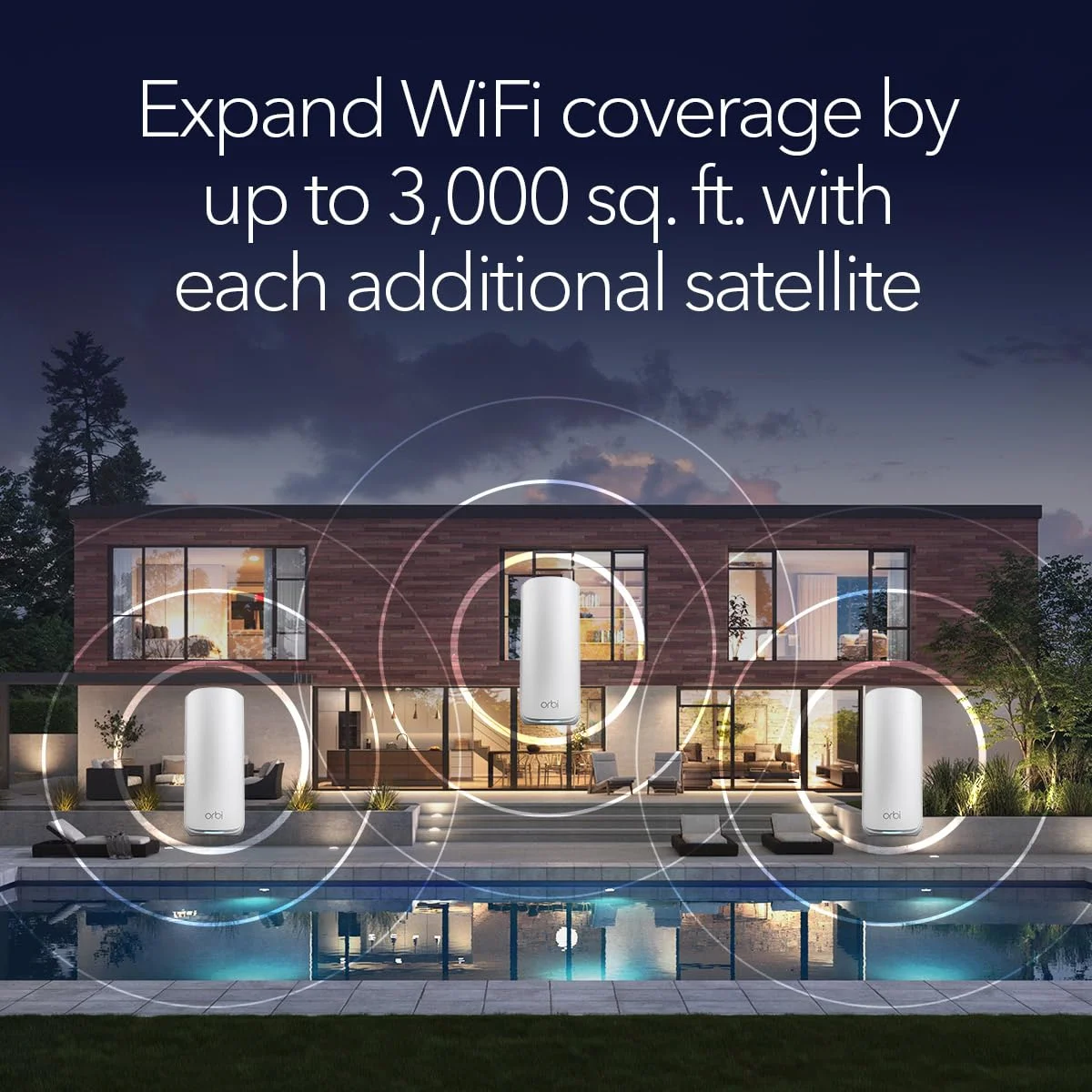
When compared to the Eero Max 7, the Netgear system provides significantly more high-speed Ethernet ports across the mesh nodes and stronger security features out of the box. While Eero excels in smart home integration with its built-in Thread border router, the Orbi 870 wins on raw performance and value for users prioritizing speed and coverage over ecosystem convenience.
Pros and Cons
Pros
- Exceptional WiFi 7 performance with sustained multi-gigabit wireless speeds in real-world conditions.
- Seamless mesh roaming and intelligent band steering create a truly unified network experience.
- Comprehensive security features included without forcing long-term subscriptions for essential protection.
- Multiple 10GbE and 2.5GbE ports on every unit provide excellent wired connectivity options.
- Refined app and web interface that balances ease of use with advanced configuration options.
Cons
- Premium pricing makes it inaccessible for many users who don’t need maximum performance.
- The large physical size of each satellite requires more placement consideration than compact competitors.
- Some advanced AI optimization features require a subscription after the initial trial period ends.
- Lacks built-in Zigbee or Thread support found in certain competing mesh systems.
- Initial firmware releases showed occasional device prioritization inconsistencies that needed updates.
FAQ
Q: Is the Netgear Orbi 870 backward compatible with older Orbi satellites?
A: No. The Orbi 870 uses a new WiFi 7 architecture and proprietary backhaul technology that is not compatible with previous Orbi generations.
Q: Does the Orbi 870 support 10Gbps internet connections?
A: Yes. With dual 10GbE ports on the main router and additional multi-gigabit ports throughout the system, it is fully equipped for multi-gigabit fiber plans.
Q: How difficult is the initial setup process?
A: Setup is remarkably straightforward, typically taking less than ten minutes using the mobile app. The system automatically configures optimal settings for most environments.
Q: Is a subscription required to use all features?
A: Core networking, mesh functionality, and basic security are included indefinitely. Advanced threat detection and some premium parental controls require a Netgear Armor subscription after the 90-day trial.
Q: Can the Orbi 870 handle a smart home with over 100 devices?
A: Absolutely. During testing it maintained excellent performance with 180+ connected devices, making it ideal for heavily automated smart homes.
Verdict
The Netgear Orbi 870 is the ideal choice for tech-savvy users with large homes, multi-gigabit internet, and high device counts who demand cutting-edge performance without constant tinkering. It excels in delivering consistent, high-speed connectivity across all bands while offering robust security and an excellent user experience. If your network needs are demanding and your budget allows, this is currently one of the strongest mesh systems available in 2026.
Pros
- ✓ Exceptional WiFi 7 performance with sustained multi-gigabit wireless speeds in real-world conditions.
- ✓ Seamless mesh roaming and intelligent band steering create a truly unified network experience.
- ✓ Comprehensive security features included without forcing long-term subscriptions for essential protection.
- ✓ Multiple 10GbE and 2.5GbE ports on every unit provide excellent wired connectivity options.
- ✓ Refined app and web interface that balances ease of use with advanced configuration options.
Cons
- ✗ Premium pricing makes it inaccessible for many users who don’t need maximum performance.
- ✗ The large physical size of each satellite requires more placement consideration than compact competitors.
- ✗ Some advanced AI optimization features require a subscription after the initial trial period ends.
- ✗ Lacks built-in Zigbee or Thread support found in certain competing mesh systems.
- ✗ Initial firmware releases showed occasional device prioritization inconsistencies that needed updates.
Where to Buy the Netgear Orbi 870





Prices may vary. Affiliate links — we may earn a commission at no extra cost to you.
Related Reviews

Affiliate links — we may earn a commission at no extra cost to you.