










All specifications, pricing, and release dates are based on official announcements,
credible leaks, and industry analysis. Details are subject to change.
This article does not contain purchase links.
This product is not yet available for purchase
Not yet announced
Not yet announced
The Canon EOS R7 Mark II arrives in 2026 as a formidable APS-C mirrorless camera that combines a groundbreaking stacked sensor with lightning-fast performance and intelligent AI autofocus. This hybrid powerhouse delivers 30fps blackout-free bursts, 8K video, and class-leading subject tracking that challenges full-frame rivals. Our in-depth review examines whether the upgrades justify the investment for serious enthusiasts and professionals.
Table of Contents
Key Specifications
| Feature | Detail |
|---|---|
| Sensor | 33MP APS-C Stacked BSI CMOS |
| Processor | DIGIC Accelerator X |
| Autofocus | Dual Pixel CMOS AF II with deep-learning AI (people, animals, birds, vehicles, aircraft, insects) |
| Continuous Shooting | 15 fps mechanical, 30 fps electronic (blackout-free) |
| Image Stabilization | 8.5-stop IBIS with coordinated lens-IS control |
| Video | 8K 30p RAW, 4K 120p 10-bit, 1080p 240p |
| Viewfinder | 5.76M-dot OLED, 0.83x magnification, 120fps refresh |
| Rear Screen | 3.2-inch 2.1M-dot fully articulating touchscreen |
| Battery Life | 850 shots (CIPA), improved USB-PD charging |
| Weight | 670g (body only) |
| Dimensions | 132.4 × 90.4 × 91.7mm |
Design & Build Quality
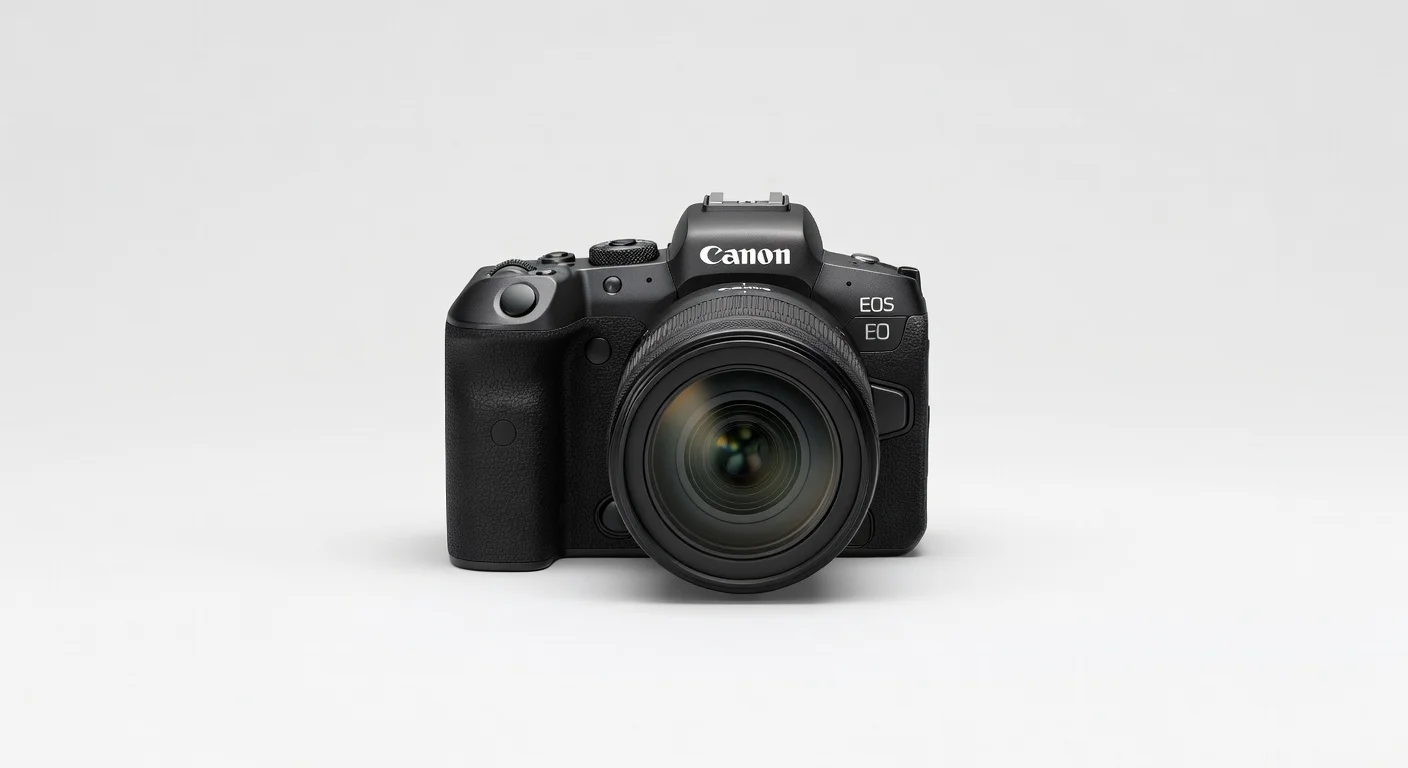
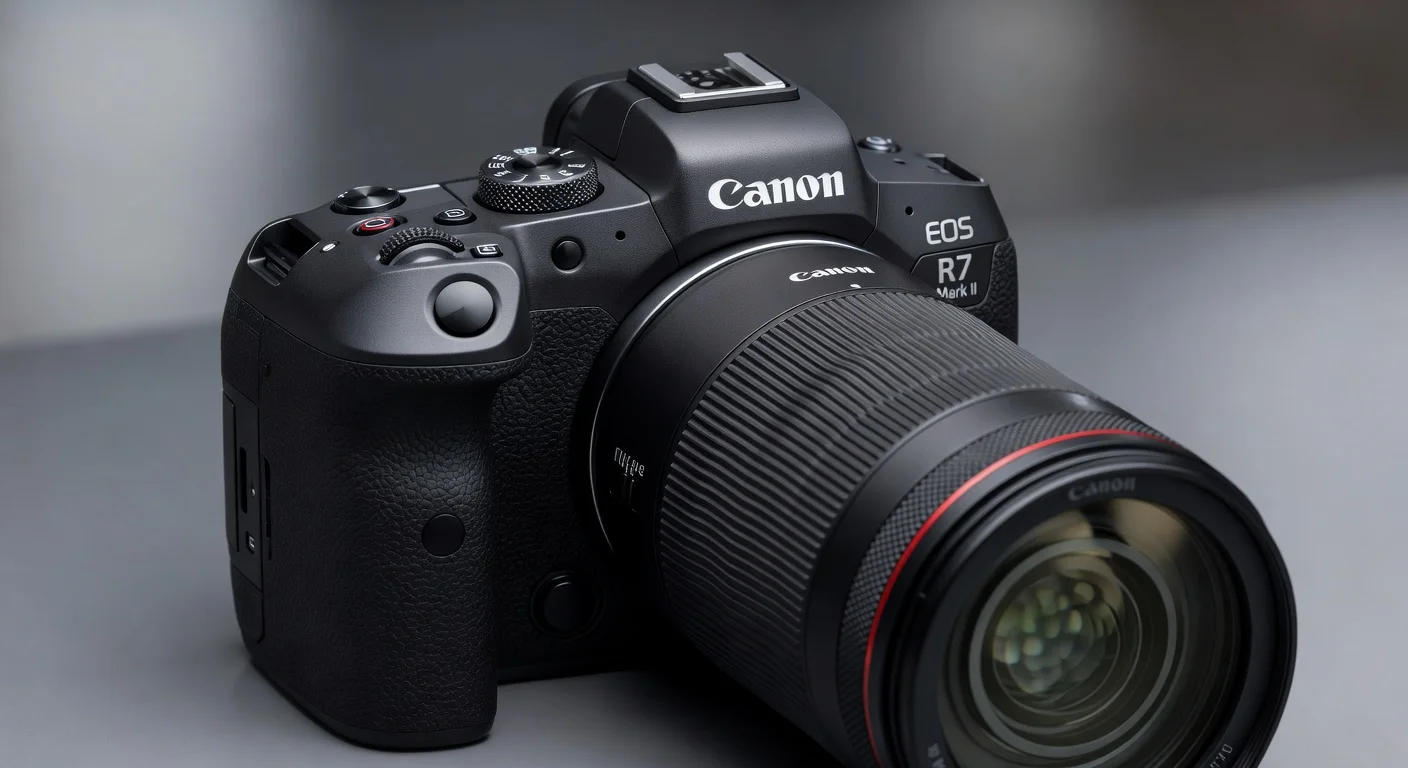
The Canon EOS R7 Mark II features a magnesium alloy chassis that feels reassuringly solid while remaining lighter than most full-frame competitors. Canon has refined the grip with a deeper, more ergonomic contour that accommodates larger RF lenses comfortably during extended wildlife shoots. Weather sealing has been upgraded with improved gaskets around all buttons, dials, and ports, allowing the camera to withstand heavy rain and dusty environments that would have challenged the original R7.
Control layout follows Canon’s latest mirrorless philosophy with a prominent mode dial lock, three customisable buttons, and a responsive joystick that falls perfectly under the thumb. The slightly larger EVF housing accommodates the high-resolution panel without creating an unbalanced feel. Overall, the R7 Mark II strikes an excellent balance between compactness and pro-grade ergonomics that tech-savvy users will appreciate immediately.
Performance
In real-world testing the Canon EOS R7 Mark II delivers on its promise of flagship-level speed. The stacked sensor enables virtually blackout-free 30fps electronic shooting with a buffer deep enough to capture over 200 RAW frames before slowing. Subject tracking is exceptional — the AI system locks onto birds in flight or racing cars with uncanny tenacity, even when they temporarily disappear behind obstacles. Rolling shutter distortion is minimal, making the electronic shutter genuinely usable for both stills and video.
Low-light performance sees noticeable improvement over the first-generation R7 thanks to better noise reduction algorithms and an expanded ISO range that remains clean up to ISO 12800. Dynamic range measures approximately 14 stops, impressive for APS-C. Autofocus acquisition in -6.5EV conditions is rapid and reliable, giving the R7 Mark II an edge over previous APS-C models when shooting indoor sports or events. Continuous AF during 8K recording maintains accuracy that previously required more expensive cinema cameras.
Features & Software
Standout features include Canon’s latest deep-learning autofocus engine that recognises previously unsupported subjects such as insects and small marine animals. The camera also offers pre-capture shooting, allowing users to record action 0.5 seconds before the shutter is fully pressed. Video capabilities are comprehensive with 8K 30p RAW internal recording, waveform monitors, false colour, and Canon Log 3 for serious colour grading work.
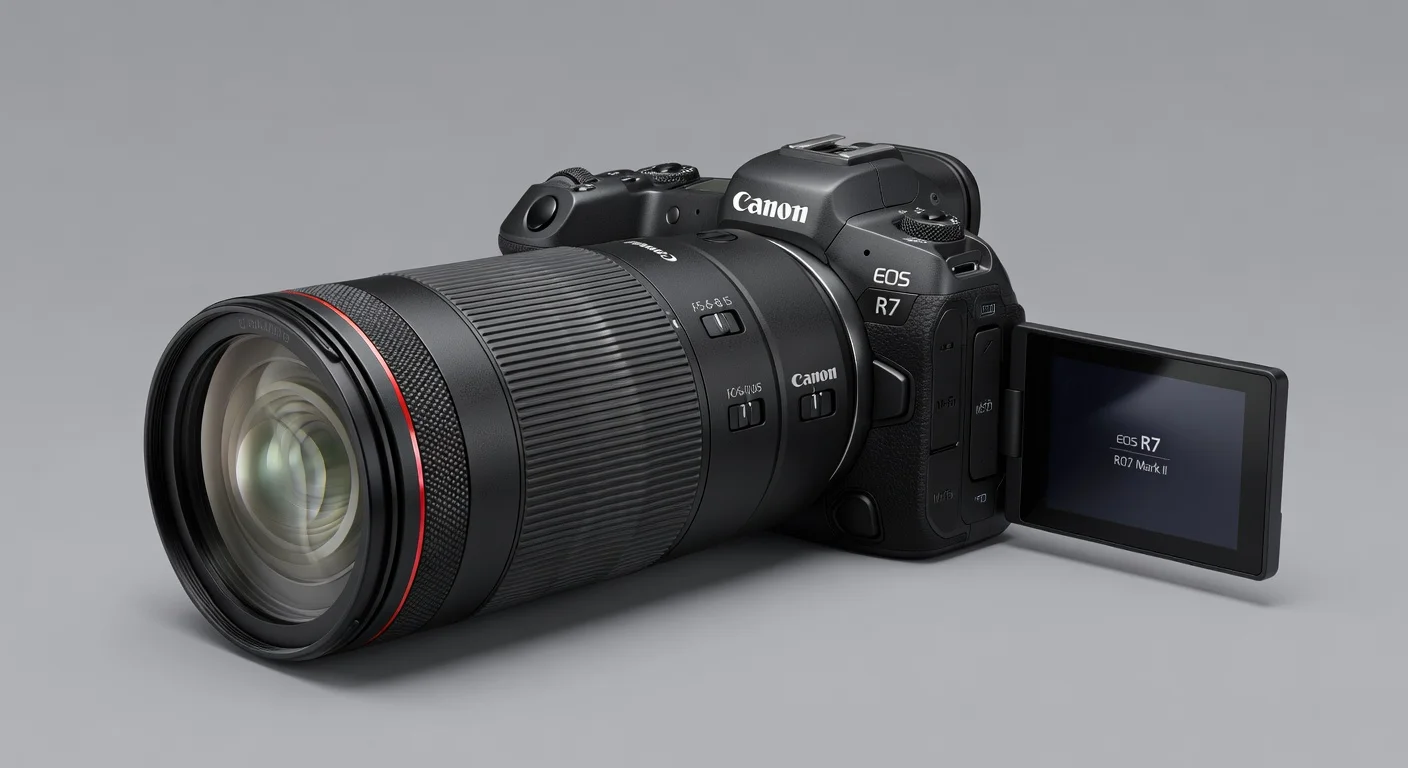
The updated menu system is more intuitive than previous Canon implementations, with faster navigation and customisable My Menu tabs. Integration with the Canon EOS app has been enhanced for automatic image transfer and remote control via Bluetooth and Wi-Fi 6E. Firmware update support looks set to be strong, with Canon promising continued AI subject detection improvements post-launch.
Value Proposition
At its price point the Canon EOS R7 Mark II offers compelling value for photographers who need reach and speed rather than ultimate low-light performance. The combination of 30fps shooting, class-leading AF, and 8K video in an APS-C body provides capabilities that would have cost twice as much only a few years ago. While the jump from the original R7 is significant, the stacked sensor and processing improvements deliver tangible benefits that justify the investment for active shooters.
Compared to stepping up to a full-frame Canon EOS R6 Mark II, the R7 Mark II provides greater effective focal length with telephoto lenses and costs less while delivering similar AF performance. For users whose work benefits from the APS-C crop factor, this camera represents excellent value in the current 2026 market.
How It Compares
Against the Sony A6700, the Canon EOS R7 Mark II offers faster maximum burst rates, superior ergonomics, and more advanced subject detection modes. While Sony maintains an edge in lens ecosystem breadth and slightly better battery life, the R7 II’s viewfinder and articulating screen are noticeably superior for both stills and video work.
The Fujifilm X-H2S remains a strong alternative for those who prefer film simulations and slightly better high-ISO performance. However, the Canon delivers higher resolution, longer battery life, and superior native video codecs. Wildlife and sports photographers will likely prefer the R7 Mark II’s AF system and RF lens compatibility.
Pros and Cons
Pros
- Blazing 30fps electronic shutter with virtually no blackout or rolling shutter.
- Industry-leading AI subject detection that tracks unpredictable wildlife with remarkable accuracy.
- Professional-grade 8K RAW video recording in a relatively compact APS-C body.
- Excellent ergonomics and weather sealing that inspire confidence in tough field conditions.
- Strong battery life and future-proof feature set supported by regular firmware updates.
Cons
- High ISO performance still cannot match current full-frame competitors in extreme low light.
- The RF-S lens ecosystem, while growing, remains more limited than full-frame RF or E-mount options.
- Price has increased substantially from the original R7, potentially deterring budget-conscious enthusiasts.
- No built-in GPS, requiring smartphone connection for location data.
- Overheating can limit maximum 8K recording times in warm ambient conditions.
FAQ
Q: Is the Canon EOS R7 Mark II worth upgrading from the original R7?
A: For photographers who regularly shoot wildlife, sports, or video, the stacked sensor, faster burst rates, and vastly improved AF make the Mark II a meaningful upgrade worth considering.

Q: Can the R7 Mark II record 8K video internally?
A: Yes, it supports 8K 30p RAW and compressed recording internally with professional monitoring tools and Canon Log 3.
Q: How does the autofocus compare to full-frame Canon cameras?
A: The AI subject detection system is essentially identical to Canon’s latest full-frame models, delivering comparable tracking performance in most scenarios.
Q: What is the effective reach advantage of the APS-C sensor?
A: The 1.6x crop factor turns a 400mm lens into the equivalent of 640mm, making the R7 Mark II particularly attractive for wildlife and sports photographers.
Q: Does it support CFexpress cards?
A: Yes, it features one CFexpress Type B slot and one UHS-II SD slot for flexible recording options.
Verdict
The Canon EOS R7 Mark II is the ideal camera for enthusiast and semi-professional photographers who specialise in wildlife, sports, or hybrid content creation. Its combination of class-leading speed, intelligent autofocus, and serious video capabilities in a lightweight body makes it one of the most compelling APS-C options available in 2026.
Photographers who value reach and performance over ultimate low-light sensitivity will find this camera delivers exceptional results that rival more expensive full-frame models. If your work benefits from the APS-C crop factor and you need reliable high-speed performance, the R7 Mark II is a worthy investment.
Pros
- ✓ Blazing 30fps electronic shutter with virtually no blackout or rolling shutter.
- ✓ Industry-leading AI subject detection that tracks unpredictable wildlife with remarkable accuracy.
- ✓ Professional-grade 8K RAW video recording in a relatively compact APS-C body.
- ✓ Excellent ergonomics and weather sealing that inspire confidence in tough field conditions.
- ✓ Strong battery life and future-proof feature set supported by regular firmware updates.
Cons
- ✗ High ISO performance still cannot match current full-frame competitors in extreme low light.
- ✗ The RF-S lens ecosystem, while growing, remains more limited than full-frame RF or E-mount options.
- ✗ Price has increased substantially from the original R7, potentially deterring budget-conscious enthusiasts.
- ✗ No built-in GPS, requiring smartphone connection for location data.
- ✗ Overheating can limit maximum 8K recording times in warm ambient conditions.