Tech Essentials





Apple’s all-in-one desktop has long been an icon of minimalist design and creative power. With the arrival of the M3 chip, the latest iMac promises a significant leap in performance while maintaining its signature aesthetic. This refresh reasserts its place as a powerful, elegant machine for a new generation of users.
The heart of the new 24-inch iMac is, of course, the M3 system-on-a-chip. Built on a 3-nanometer process, this silicon delivers a tangible boost in both CPU and GPU performance over its M1 predecessor. In day-to-day use, this translates to an effortlessly fluid experience, from juggling dozens of browser tabs to editing high-resolution photos in Pixelmator Pro. For more demanding users, the upgraded GPU architecture brings hardware-accelerated ray tracing and mesh shading to the all-in-one form factor for the first time, making it a surprisingly capable machine for light gaming and 3D rendering. While it won’t replace a dedicated Mac Studio, the M3 provides more than enough power for the vast majority of creative professionals and home users, all while running whisper-quiet and remarkably cool.

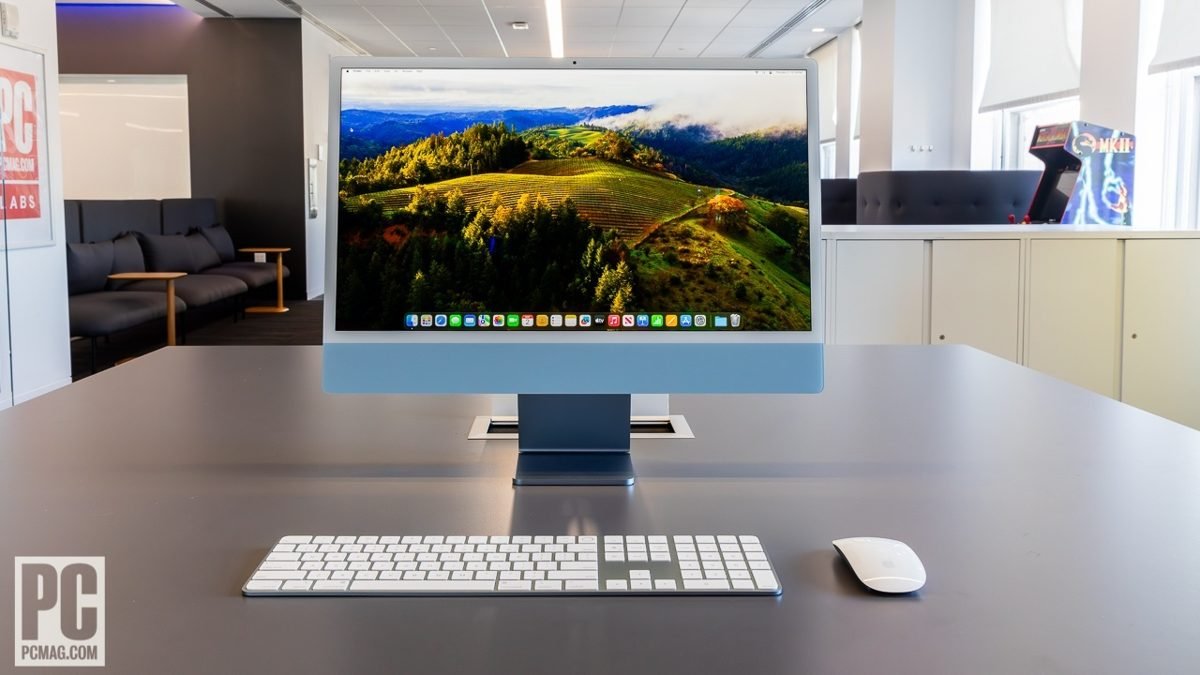
Aesthetically, the M3 iMac is a familiar sight, retaining the exact same ultra-thin chassis and vibrant colorways introduced with the M1 model. The build quality remains impeccable, with a solid aluminum and glass construction that feels every bit as premium as its price tag suggests. The 4.5K Retina display is still the main event—a brilliant, sharp, and color-accurate panel that makes everything from text to 4K video look spectacular. However, the familiarity is also a weakness. The prominent “chin” below the screen and the thick white bezels feel slightly less modern than they did two years ago, and some may have hoped for a design evolution.
Apple continues to excel with the integrated features. The 1080p FaceTime HD camera, studio-quality three-microphone array, and six-speaker sound system with Spatial Audio combine to create a best-in-class communications and media consumption device right out of the box. Unfortunately, the port situation remains a significant compromise. The base model is equipped with just two Thunderbolt / USB 4 ports, forcing users to rely on dongles or hubs for connecting legacy peripherals. To get two additional USB 3 ports and a Gigabit Ethernet port cleverly integrated into the power brick, you must upgrade to the more expensive configuration, a frustrating segmentation of essential connectivity.
Ultimately, the iMac’s value proposition is tied to its all-in-one nature. If you were to purchase a Mac mini, a comparable 4.5K display, a high-quality webcam, and a decent set of speakers, you would likely spend a similar amount, if not more—and end up with a mess of cables. The M3 iMac is for the user who prioritizes a powerful, self-contained, and aesthetically pleasing setup. It is an outstanding machine for the modern home office, students, and creative hobbyists who value elegance and simplicity over modularity and raw expansion. It’s less suited for power users who require extensive I/O or the ability to upgrade components down the line.

Where to Buy:

Apple iMac (M3) Quick Summary
Key Scores:
-
Value:
80% -
Design:
96% -
Performance:
90% -
Quality:
93% -
Popularity:
85%
Top Pros
- ✅ The M3 chip provides exceptionally fast and efficient daily performance.
- ✅ Its 4.5K Retina display remains stunningly sharp and color-accurate.
- ✅ The integrated camera and speaker system are excellent for video calls.
- …
Key Cons
- ❌ The familiar design has not been updated since the M1 model.
- ❌ Base model port selection is frustratingly limited to only two ports.
- ❌ Internal storage and memory upgrades are prohibitively expensive from Apple.