Tech Essentials










In an age where our lives are tethered to a grid of outlets and charging cables, the concept of true energy independence has become the modern frontier. Portable power stations are the pioneers of this new landscape, and few names carry as much weight as Jackery. The Explorer 1000, for years, has been a benchmark in the kilawatt-hour class—a dependable workhorse promising to power everything from a remote campsite to a home office during a blackout. But in a rapidly advancing market, does this industry veteran still hold its own?
Performance Under Pressure
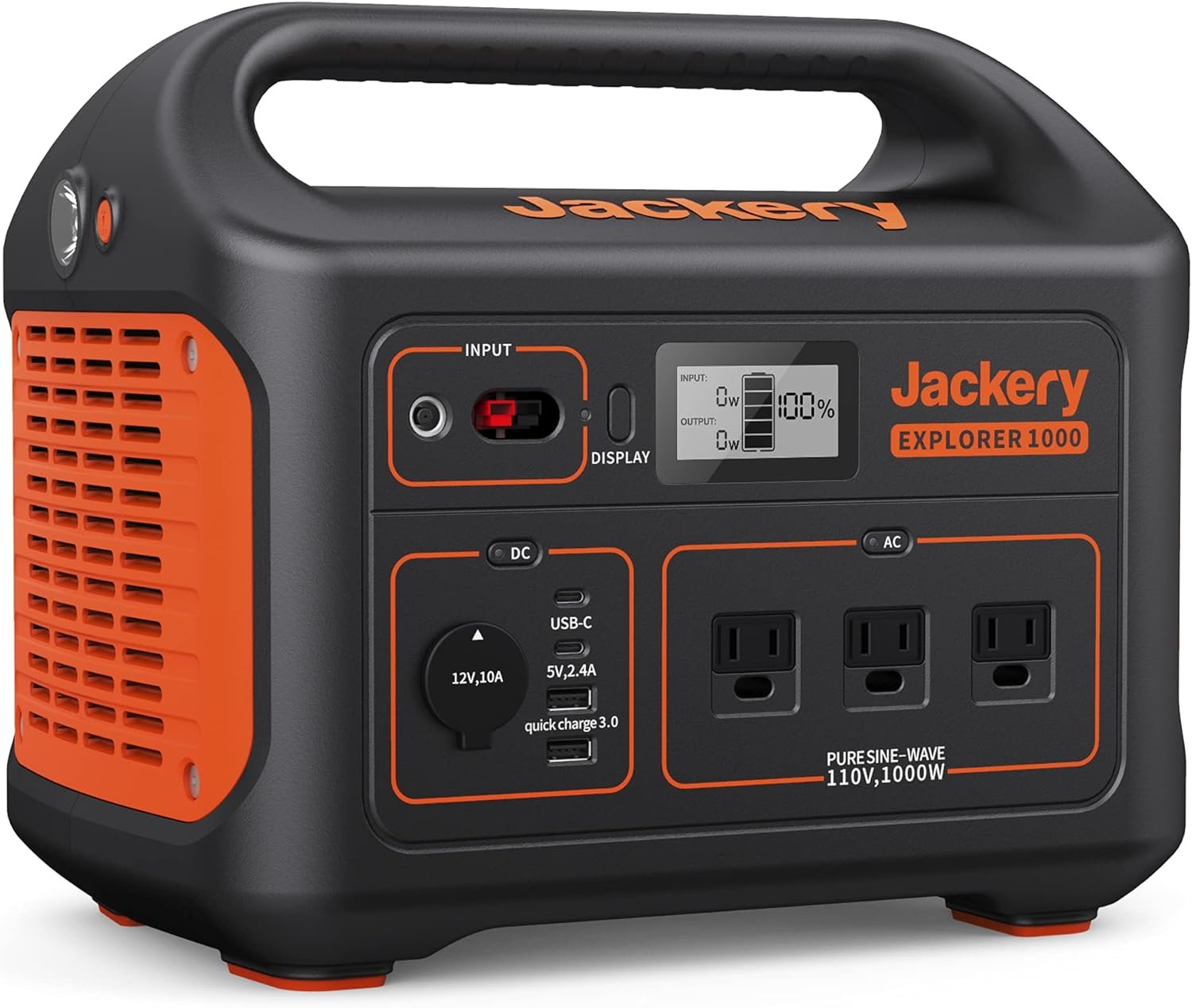
At the heart of the Explorer 1000 is a 1002Wh (46.4Ah) Lithium-ion NCM battery, a capacity that hits the sweet spot for weekend trips and serious power needs. It delivers 1000 watts of continuous power with a generous 2000W surge peak. In practical terms, this is more than enough to run a mini-fridge for over half a day, recharge a high-end laptop 10-12 times, or keep a CPAP machine running through the night.
Crucially, the power delivered through its three AC outlets is a pure sine wave. This isn’t just a marketing buzzword; it ensures a clean, stable current identical to what you get from a wall outlet, making it safe for sensitive electronics like cameras, drones, and medical equipment. During testing, it handled a 700W microwave and a 500W coffee maker without breaking a sweat, proving its inverter is both robust and reliable.
Design, Feel, and Portability
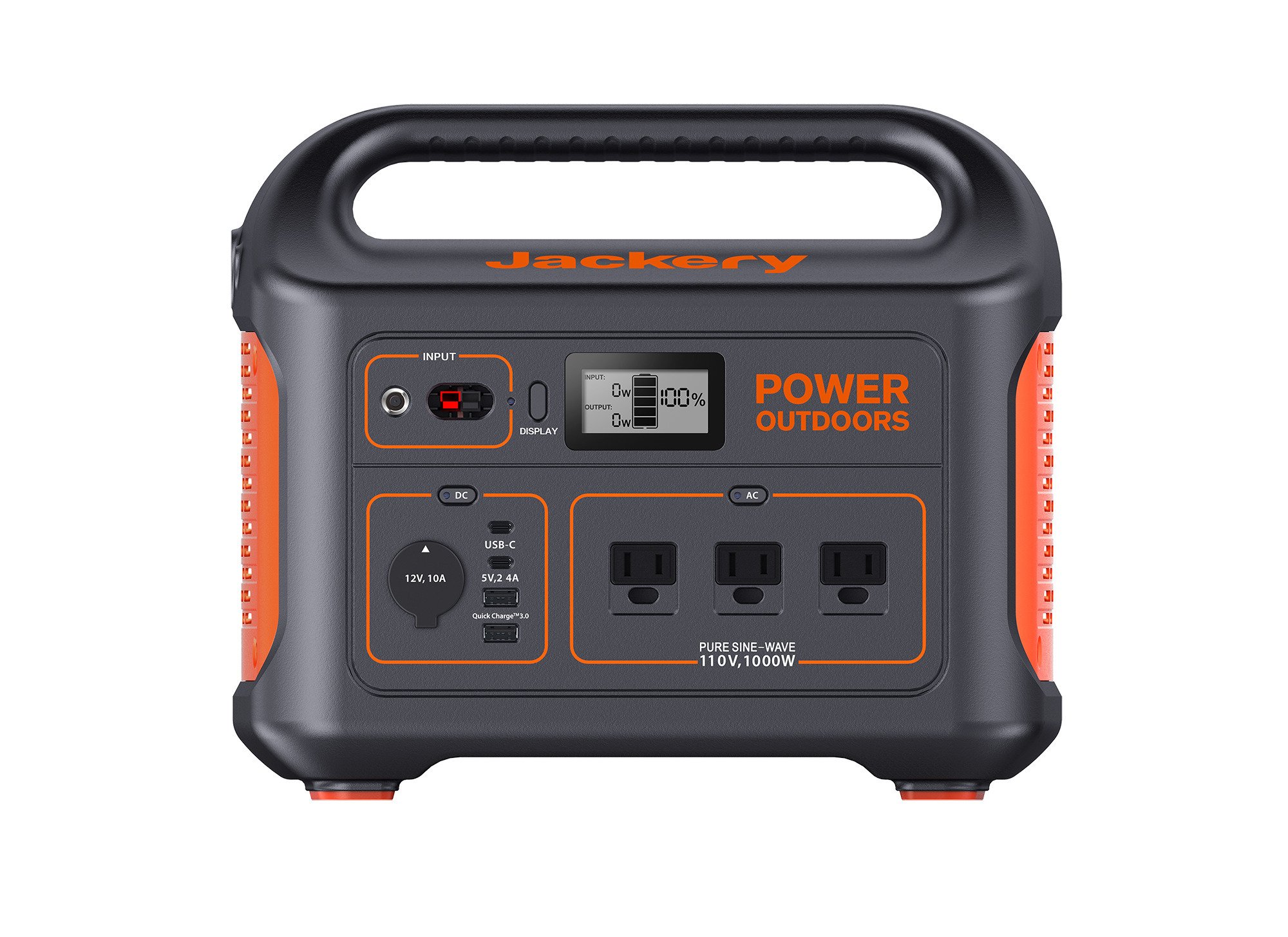
Jackery’s signature black-and-orange aesthetic is instantly recognizable, and the Explorer 1000 is a prime example of its function-first design language. The chassis is made of tough, durable plastic that feels reassuringly solid. There are no creaks or flex, and the unit feels built to withstand the bumps and scrapes of outdoor life. The star of the show is the large, integrated handle. It makes lugging the 22-pound (10kg) unit manageable, providing a balanced and comfortable grip. While it’s too heavy for a backpacking trip, it’s perfectly portable for car camping, van life, or moving around the house.
The front panel is a model of clarity. A crisp, backlit LCD screen displays vital information: battery percentage, input watts, and output watts. It’s intuitive and immediately understandable, removing any guesswork from power management. Flanking the screen is a well-organized array of ports, each sectioned off for easy access.
Features and Connectivity
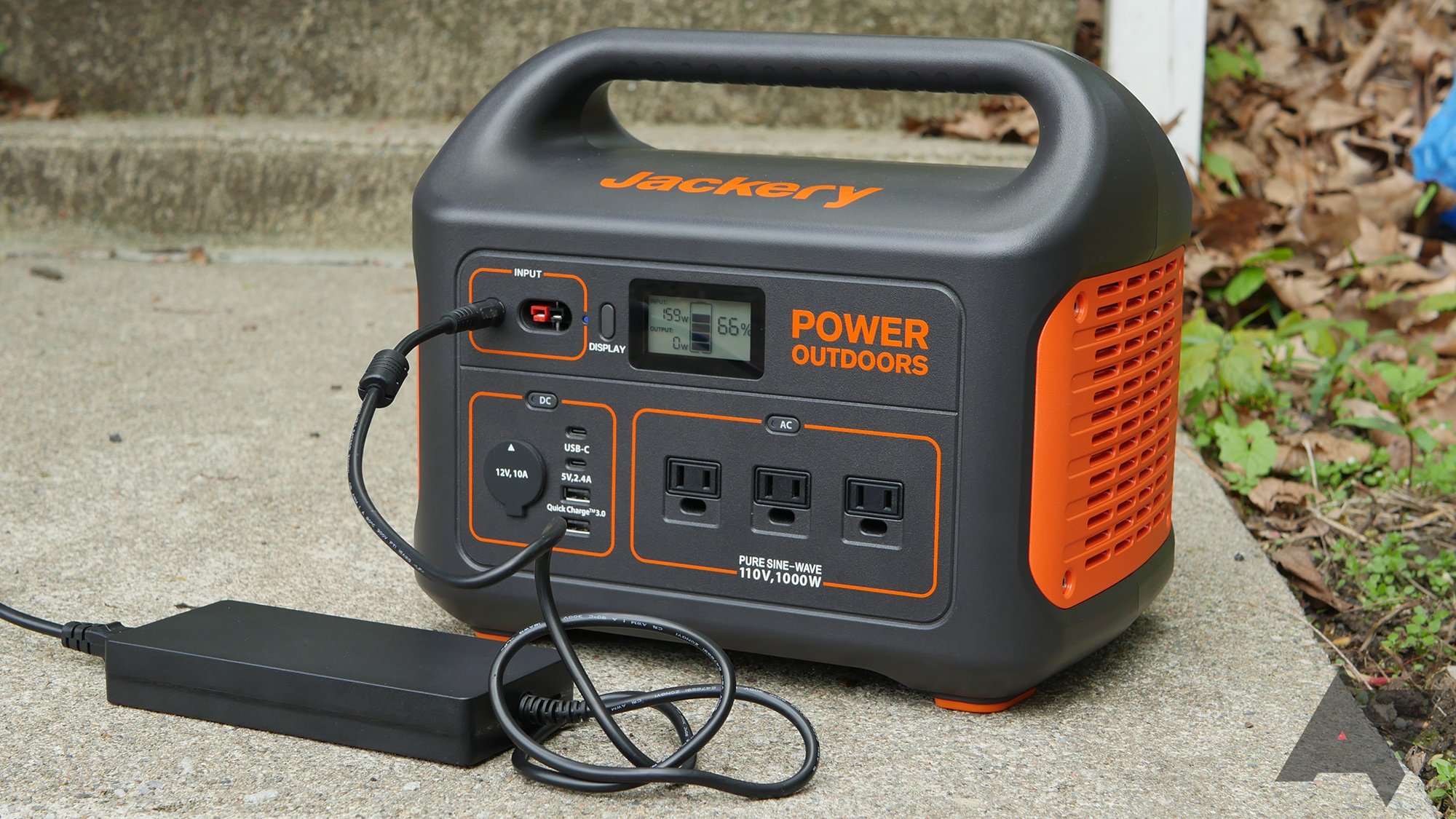
The Explorer 1000 offers a versatile selection of outputs to cover nearly any scenario. You get three 110V AC outlets, two standard USB-A ports (one of which is Quick Charge 3.0), two USB-C ports, and a 12V regulated car port. This loadout allows you to power a multitude of devices simultaneously, from a TV and a fan to a host of personal gadgets.
However, this is also where the Explorer 1000 begins to show its age. The two USB-C ports are rated for a mere 18W. In 2024, this is a significant bottleneck. It’s fine for charging a phone or tablet, but it’s nowhere near the 65W or 100W Power Delivery standard needed to efficiently charge modern ultrabooks or a MacBook Pro. Users with power-hungry laptops will be forced to use the less efficient AC adapter, which is a notable drawback for tech-savvy users and remote workers.
Charging and Solar Prowess
Recharging the Explorer 1000 is straightforward. Plugged into a standard wall outlet, it takes roughly 7 hours to go from empty to full. Using the included car adapter takes closer to 14 hours. While functional, these speeds are now eclipsed by competitors who can achieve a full charge in under two hours.
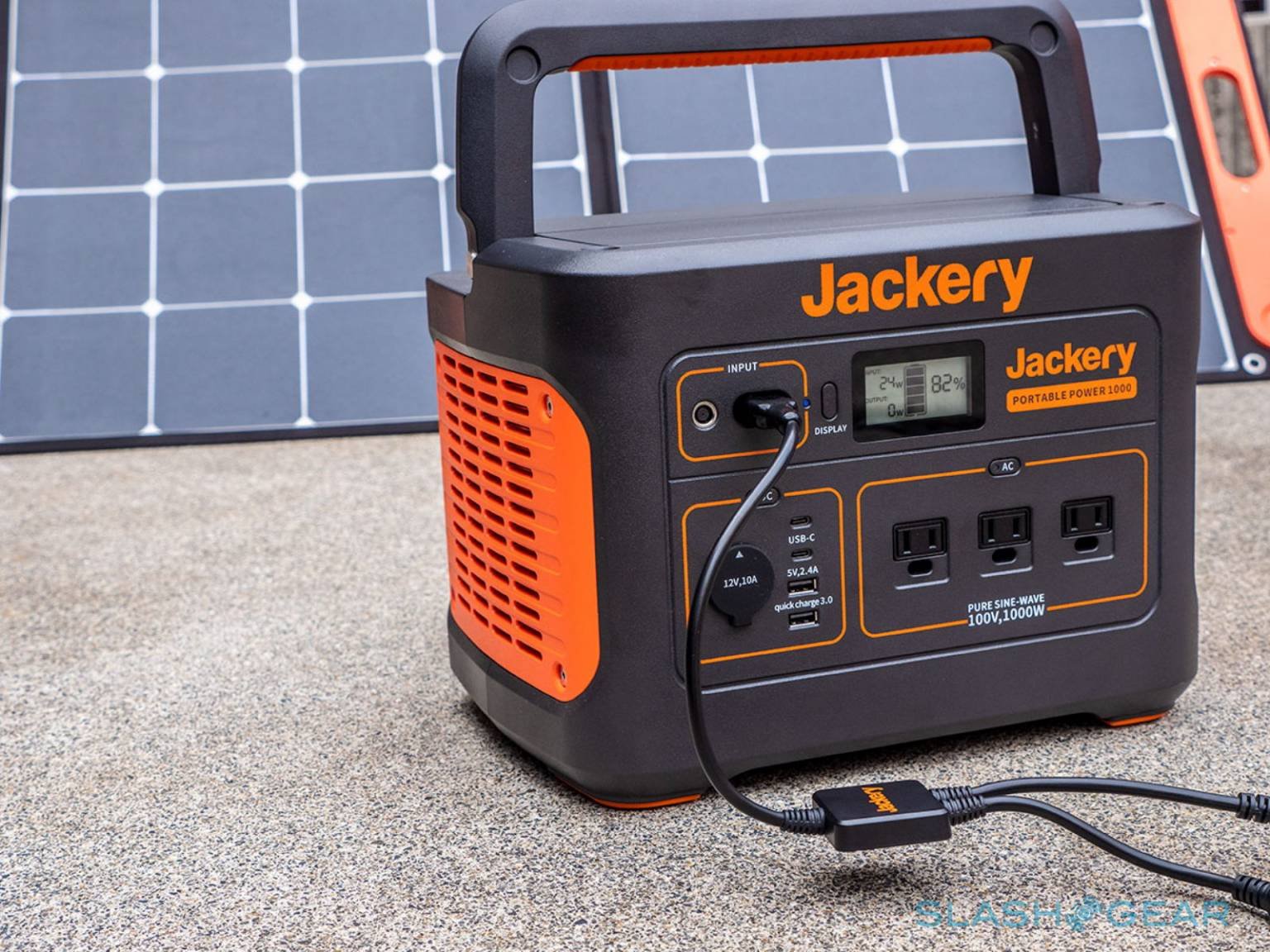
Where the Jackery truly shines is its seamless integration with the brand’s SolarSaga solar panels. Equipped with a built-in MPPT (Maximum Power Point Tracking) charge controller, the unit efficiently converts solar energy into stored power. With two 100W SolarSaga panels in ideal sunlight, you can expect a full recharge in about 8 hours, enabling a truly off-grid, sustainable power cycle. The setup is plug-and-play, reinforcing Jackery’s reputation for user-friendliness.
The Final Verdict
The Jackery Explorer 1000 is the Toyota Camry of portable power stations: it is exceptionally reliable, well-built, and does its job without any fuss. Its pure sine wave output and user-friendly design make it a trustworthy companion for a wide range of uses.
However, it’s no longer the undisputed king of the hill. The lack of LiFePO4 battery chemistry means a shorter overall lifespan compared to newer rivals, and the underpowered USB-C ports are a genuine inconvenience for the modern tech user. Faster charging is also becoming a standard feature elsewhere.
Ultimately, the Explorer 1000 is best for those who prioritize proven reliability and ease of use over cutting-edge features. It remains an excellent choice for weekend campers, casual RVers, and homeowners seeking a dependable emergency power source for essential devices. But for power users demanding the fastest charging and most modern I/O, the competition now offers compelling, and often superior, alternatives.
Where to Buy:
Jackery Explorer 1000 Quick Summary
Key Scores:
- Value: 89%
- Design: 91%
- Performance: 94%
- Quality: 93%
- Popularity: 90%
Top Pros
- ✅ The rugged build quality and integrated handle offer excellent portability.
- ✅ Its clear LCD screen provides essential and easy-to-read metrics.
- ✅ It delivers stable pure sine wave power for sensitive electronics.
- …
Key Cons
- ❌ Its NCM battery has a shorter lifespan than newer LiFePO4 cells.
- ❌ The USB-C ports lack sufficient wattage for modern laptop charging.
- ❌ Wall charging speeds are significantly slower than many competitors.