







The Google Nest Learning Thermostat 4th Gen refines one of the smartest names in home climate control with a sleeker design, deeper automation, and better smart home awareness. For homeowners who want premium aesthetics paired with genuinely useful energy-saving intelligence, it remains one of the most compelling smart thermostats in 2026.
Table of Contents
Key Specifications
| Feature | Detail |
|---|---|
| Product Name | Google Nest Learning Thermostat 4th Gen |
| Category | Smart learning thermostat |
| Display | Large high-resolution color display with dynamic information view |
| Controls | Touch and dial-style on-device interaction via redesigned interface |
| Connectivity | Wi-Fi, smart home app integration, voice assistant support |
| Smart Home Compatibility | Google Home ecosystem, voice control, automation routines |
| Learning Features | Adaptive scheduling based on user behavior and occupancy patterns |
| Sensors | Temperature, humidity, occupancy, and ambient awareness sensors |
| Energy Tools | Usage reports, eco modes, scheduling suggestions, efficiency insights |
| Installation | Designed for broad HVAC compatibility; professional installation may be recommended for some systems |
| Power Requirements | Depends on HVAC wiring; C-wire support may be required depending on system |
| Release Positioning | Flagship Nest thermostat for premium smart home setups |
Design & Build Quality
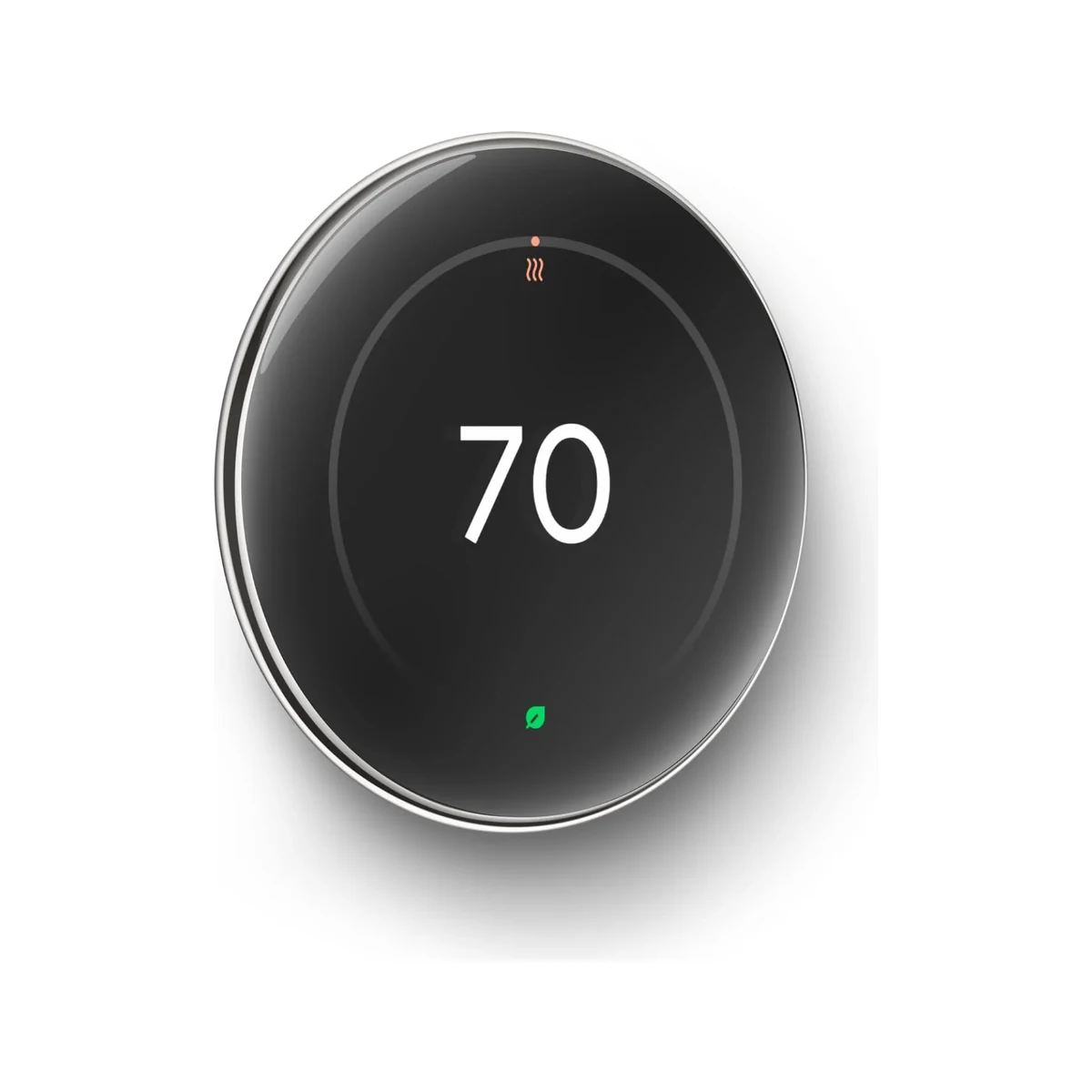
Google has taken a more refined approach with the Nest Learning Thermostat 4th Gen, and it shows immediately. This is a thermostat designed not just to blend into a wall, but to elevate it. The larger display is brighter, easier to read from across the room, and better at presenting useful information without feeling cluttered. Compared with older smart thermostats that often looked purely functional, this model leans into premium home décor appeal while still maintaining the minimalist Nest identity.
Material quality is excellent, with a polished finish and a solid, reassuring feel that makes cheaper plastic competitors seem dated. The front surface looks clean and modern, while the overall profile remains slim enough to feel elegant rather than bulky. Google’s attention to detail in the fit and finish gives the 4th Gen model the kind of “installed luxury” presence that matters in visible living spaces like hallways, kitchens, and open-plan family rooms.
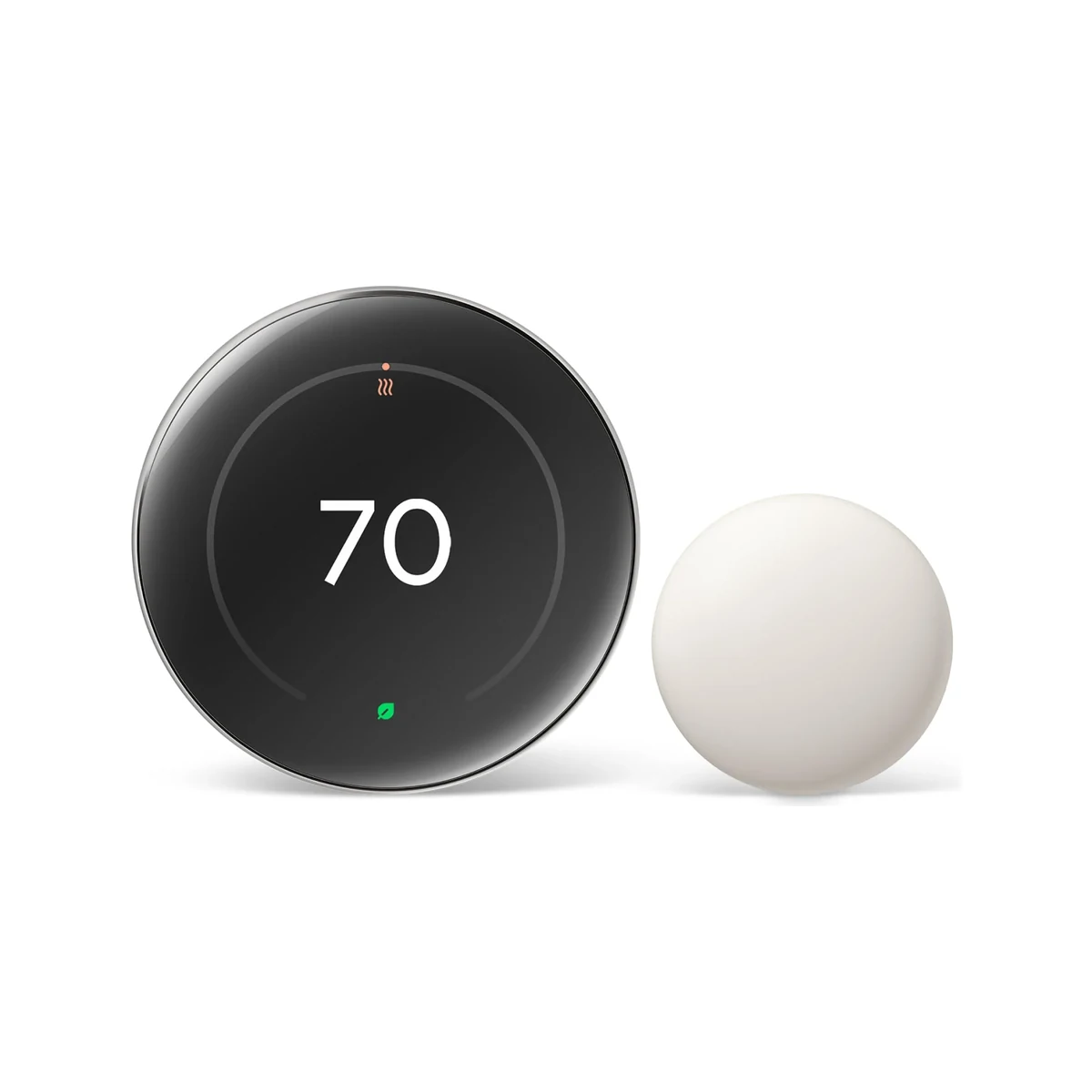
Ergonomically, the thermostat strikes a smart balance between touch interaction and simple, intuitive control. The interface feels more responsive than earlier generations, and the larger visual layout reduces the friction of quick adjustments. Whether you are changing the target temperature manually or checking system status at a glance, the experience feels polished and genuinely high-end.
Performance
In day-to-day use, the Google Nest Learning Thermostat 4th Gen performs exactly as a flagship smart thermostat should. Temperature adjustments are quick, app sync is reliable, and schedule changes propagate smoothly without the lag that can frustrate users on lower-end models. In practical terms, that means less waiting, fewer missed commands, and a more seamless connection between the thermostat, your phone, and the broader Google Home environment.
The real strength of the 4th Gen model is how effectively it adapts over time. Its learning algorithms are better at recognizing recurring patterns, occupancy habits, and preferred comfort windows, which helps it move beyond simple scheduled automation. In a real household, this translates into fewer manual overrides after the first few weeks and more confidence that the system will heat or cool the home appropriately before you even think about it.
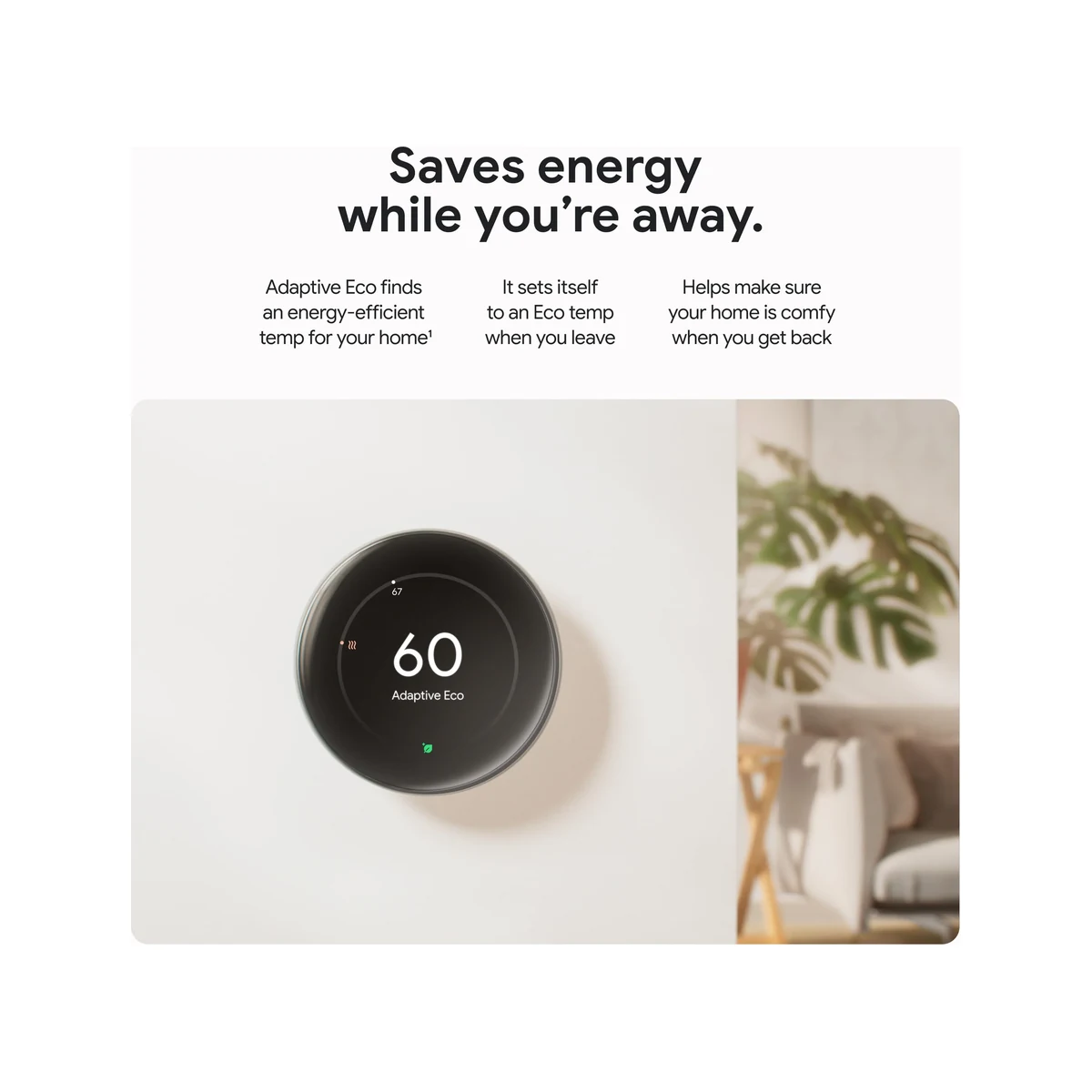
Performance also extends to energy management, and this is where Nest continues to justify its premium positioning. Usage tracking, eco settings, and automated setbacks work together to reduce unnecessary runtime without making the home feel uncomfortable. While exact savings vary depending on climate, insulation, and HVAC system efficiency, the thermostat does a strong job of balancing comfort with conservation. For tech-savvy homeowners who care about data-driven efficiency, that is one of its biggest advantages.
Features & Software
The standout feature remains Nest’s learning capability, but the 4th Gen experience feels more mature and context-aware than before. It can build schedules around actual use rather than forcing users to micromanage every time block, and its occupancy intelligence helps prevent wasted heating or cooling when nobody is home. The software also does a good job surfacing useful energy insights without overwhelming users with technical jargon.
Google Home integration is a major selling point. If your household already uses Google Assistant, smart speakers, cameras, or routines, this thermostat fits naturally into that ecosystem. Voice commands are straightforward, remote control through the app is polished, and automation options make it easy to tie climate behavior to time of day, presence, or broader smart home scenes. The result is a software experience that feels cohesive rather than bolted on.

Value Proposition
The Google Nest Learning Thermostat 4th Gen is not a budget buy, and it does not pretend to be. Its value comes from the combination of premium industrial design, strong software polish, and automation that actually improves with use. For buyers who want a thermostat that looks upscale, saves energy, and integrates deeply with a modern smart home, the asking price makes sense.
That said, value depends heavily on your priorities. If you only want basic app-based temperature control, there are cheaper options that cover the essentials. But if you want a smarter long-term system with adaptive scheduling, rich ecosystem support, and a more premium in-home experience, the Nest 4th Gen earns its place as a flagship choice.
How It Compares
Against the ecobee Smart Thermostat Premium, the Nest Learning Thermostat 4th Gen offers a cleaner design language and a more streamlined Google Home-centric experience. Ecobee still has an edge for users who want broader built-in voice assistant flexibility and room sensor-focused tuning, but Nest feels more elegant and less busy in everyday operation.
Compared with the Amazon Smart Thermostat, Nest is clearly the more premium and more capable product. Amazon’s option is attractive on price and simplicity, but it lacks the same level of industrial design, advanced learning behavior, and flagship feel. If budget is the main concern, Amazon’s model is compelling; if performance, aesthetics, and automation matter most, Nest is in another tier.
Pros and Cons
Pros
- The premium design and larger display make it one of the best-looking smart thermostats available.
- Learning automation reduces manual scheduling and becomes more useful over time.
- Google Home integration is polished and works especially well in Google-centric smart homes.
- Energy monitoring and eco features provide meaningful efficiency tools for long-term savings.
- The interface is intuitive, responsive, and easier to use than many competing thermostats.
Cons
- The price is significantly higher than entry-level smart thermostat alternatives.
- Some HVAC systems may require additional wiring considerations or professional installation.
- Its best features are most valuable if you are already invested in the Google Home ecosystem.
- Advanced room-by-room optimization is less flexible than some sensor-heavy competitors.
- Real-world savings vary widely depending on home insulation, climate, and HVAC efficiency.
FAQ
Q: Does the Google Nest Learning Thermostat 4th Gen work with most HVAC systems?
A: It is designed for broad compatibility, but not every system is supported equally. It is wise to check compatibility before purchase, especially if your setup is older, multi-stage, or lacks a C-wire.
Q: Is the Nest Learning Thermostat 4th Gen worth upgrading to from an older Nest model?
A: If you want the improved display, updated design, and more refined smart automation, the upgrade can be worthwhile. Users satisfied with an older Nest may find the biggest benefits in usability and ecosystem polish rather than dramatic functional changes.
Q: Can you control the thermostat remotely?
A: Yes. Remote control through the Google Home app is one of its core features, allowing you to adjust temperature, modes, and schedules from virtually anywhere.
Q: Does it actually save energy?
A: It can, especially in homes where heating and cooling schedules are inconsistent or overly aggressive. Savings depend on your home, climate, and HVAC system, but its automation and eco tools are designed specifically to reduce unnecessary runtime.
Q: Is professional installation necessary?
A: Not always. Many users can install it themselves, but professional installation is a smart choice if your wiring is unclear or your HVAC system is more complex.
Verdict
The Google Nest Learning Thermostat 4th Gen is best for homeowners who want a premium smart thermostat with strong automation, elegant design, and seamless Google Home integration. It is not the cheapest option, but for users who value polished hardware and intelligent climate control, it remains one of the best smart thermostat choices in 2026.
Pros
- ✓ The premium design and larger display make it one of the best-looking smart thermostats available.
- ✓ Learning automation reduces manual scheduling and becomes more useful over time.
- ✓ Google Home integration is polished and works especially well in Google-centric smart homes.
- ✓ Energy monitoring and eco features provide meaningful efficiency tools for long-term savings.
- ✓ The interface is intuitive, responsive, and easier to use than many competing thermostats.
Cons
- ✗ The price is significantly higher than entry-level smart thermostat alternatives.
- ✗ Some HVAC systems may require additional wiring considerations or professional installation.
- ✗ Its best features are most valuable if you are already invested in the Google Home ecosystem.
- ✗ Advanced room-by-room optimization is less flexible than some sensor-heavy competitors.
- ✗ Real-world savings vary widely depending on home insulation, climate, and HVAC efficiency.
Where to Buy the Google Nest Learning Thermostat 4th Gen





Prices may vary. Affiliate links — we may earn a commission at no extra cost to you.
Related Reviews

Affiliate links — we may earn a commission at no extra cost to you.