Tech Essentials









Every 3D printing enthusiast knows the frustration of a print ruined by moisture-laden filament. The Chitu Systems FilaPartner E1 aims to solve this persistent problem with a sleek and modern approach to filament drying. This device promises not just dry filament, but a smoother, more reliable printing experience from start to finish.
In the ever-growing ecosystem of 3D printing accessories, a filament dryer has shifted from a luxury to a near-necessity, especially for those working with hygroscopic materials like PETG, TPU, and Nylon. The Chitu Systems FilaPartner E1 enters a competitive market with a clear focus on design and efficiency. Unboxing it, the first impression is one of modern minimalism. Its clean, white, capsule-like design with a transparent, magnetically-latched lid is a significant aesthetic upgrade over many of the utilitarian, food-dehydrator-style boxes on the market. The build is entirely plastic, but it feels solid and well-assembled, avoiding the cheap creakiness that can plague lower-end accessories.
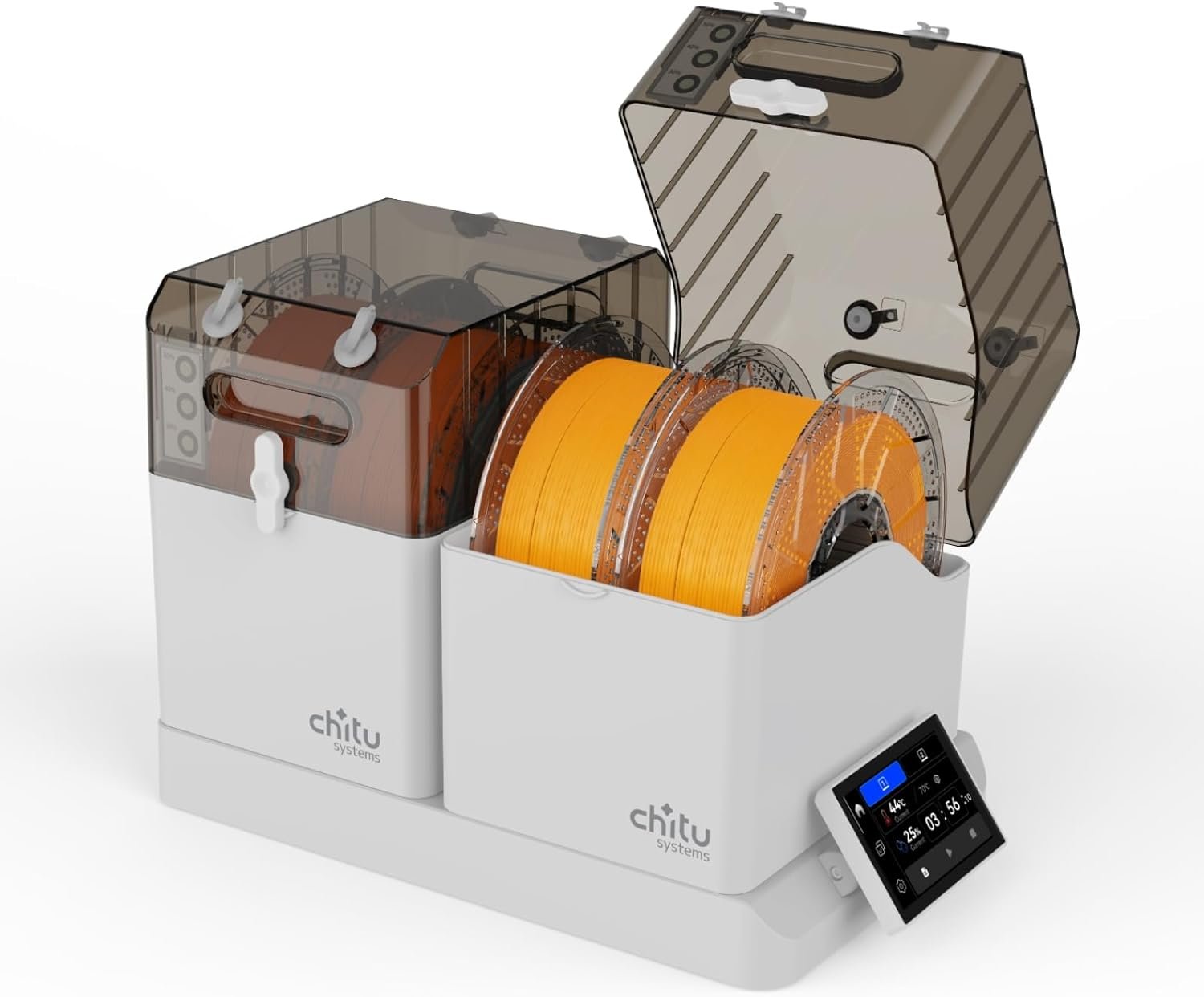
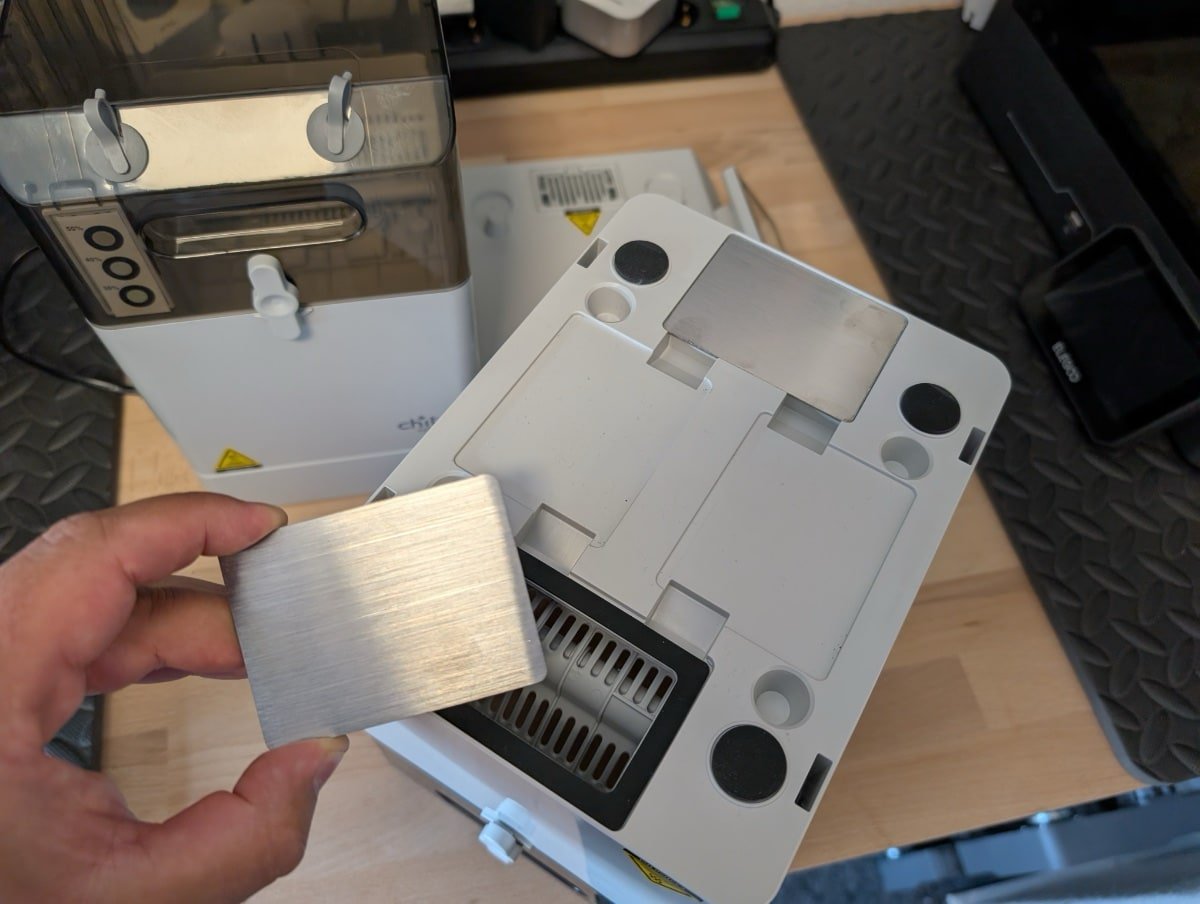
At its core, the FilaPartner E1 is built around a 48W PTC (Positive Temperature Coefficient) heating element, which is known for its self-regulating properties and safety. This heater works in concert with a fan to circulate warm air 360 degrees around the spool, promising even and efficient drying. The unit supports temperatures up to 70°C, adjustable in 5-degree increments, and a timer can be set for up to 24 hours. This temperature range is sufficient for drying the vast majority of consumer filaments, from PLA and PETG to ABS and most Nylons. Inside, the spool rests on two rollers, allowing it to turn freely, and several filament exit ports with PTFE tubing enable you to print directly from the dryer, protecting the material from ambient humidity until the moment it enters the extruder.
Performance is where the FilaPartner E1 shines. It heats up to its target temperature quickly and maintains it with reasonable stability. We tested a notoriously “wet” spool of PETG that was exhibiting significant stringing and popping. After a six-hour cycle at 65°C, the difference was night and day. Prints were cleaner, with dramatically reduced stringing and a much smoother, almost glossy surface finish, indicating proper material extrusion. The internal fan, while audible, is not obtrusive and is easily drowned out by the noise of a typical 3D printer.
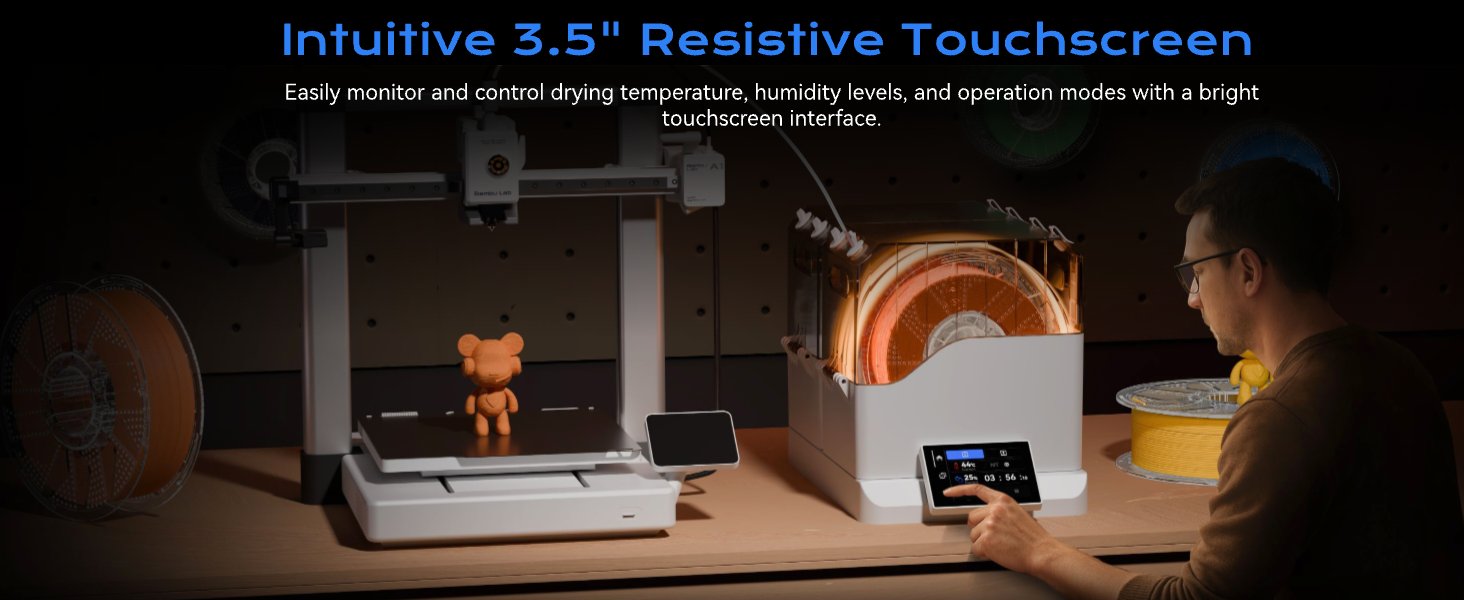
However, the pursuit of minimalism creates a few usability quirks. The entire device is controlled by a single capacitive touch button, which requires a series of short and long presses to cycle through temperature and time settings. While it keeps the interface clean, it’s not immediately intuitive and will have you consulting the manual for the first few uses. A more significant omission is the lack of a built-in hygrometer. While the device effectively dries filament, you have no way to quantify the humidity level inside the chamber without adding your own sensor. This feels like a missed opportunity, as competitors in the same price bracket are beginning to include this feature, providing valuable real-time feedback.
Ultimately, the Chitu Systems FilaPartner E1 is a strong contender. It’s a performant filament dryer that looks great on a workbench and does its primary job exceptionally well. For makers who prioritize aesthetics, set-and-forget functionality, and the ability to print directly from a sealed, dry environment, the E1 is an excellent choice. It’s a reliable partner for combating moisture and achieving the best possible print quality, even if it trades some advanced user feedback features for its elegant simplicity.
Where to Buy:
Chitu Systems FilaPartner E1 Filament Dryer review – Keep your filament dry and your prints trouble-free! Quick Summary
Key Scores:
-
Value:
88% -
Design:
85% -
Performance:
90% -
Quality:
87% -
Popularity:
82%
Top Pros
- ✅ The PTC heater provides fast and consistent temperature control.
- ✅ Its modern design includes a useful magnetic top cover.
- ✅ Pass-through ports allow for printing directly from the dryer.
- …
Key Cons
- ❌ The single-button control system can be initially unintuitive.
- ❌ It lacks an integrated hygrometer for monitoring humidity levels.
- ❌ The 70°C maximum temperature limits some high-performance materials.
- …