



The Samsung Galaxy Z TriFold arrives in 2026 as Samsung’s most ambitious foldable yet, delivering a triple-hinged design that expands from a standard smartphone into a 10.2-inch productivity canvas. With a Snapdragon 8 Gen 5 chipset, refined titanium build, and intelligent software optimizations, it aims to replace both phone and tablet for power users. This in-depth review examines whether the innovative form factor justifies its premium price.
Table of Contents
Key Specifications
| Feature | Detail |
|---|---|
| Display (Unfolded) | 10.2-inch Dynamic AMOLED 2X, 2560×1856, 120Hz, 1750 nits peak |
| Display (Folded) | 6.3-inch Cover AMOLED, 120Hz |
| Processor | Qualcomm Snapdragon 8 Gen 5 |
| RAM | 16GB LPDDR5X |
| Storage | 512GB / 1TB UFS 4.1 |
| Battery | 5,100mAh with 45W wired, 15W wireless charging |
| Rear Cameras | 50MP main (OIS) + 12MP ultrawide + 10MP 3x telephoto |
| Front Camera | 10MP under-display + 4MP cover camera |
| Dimensions | Folded: 158.6 x 72.4 x 13.5mm; Unfolded: 158.6 x 214.8 x 5.2mm |
| Weight | 265g |
| OS | Android 16 with One UI 8.1 |
| Price | Starting at $1,899 |
Design & Build Quality
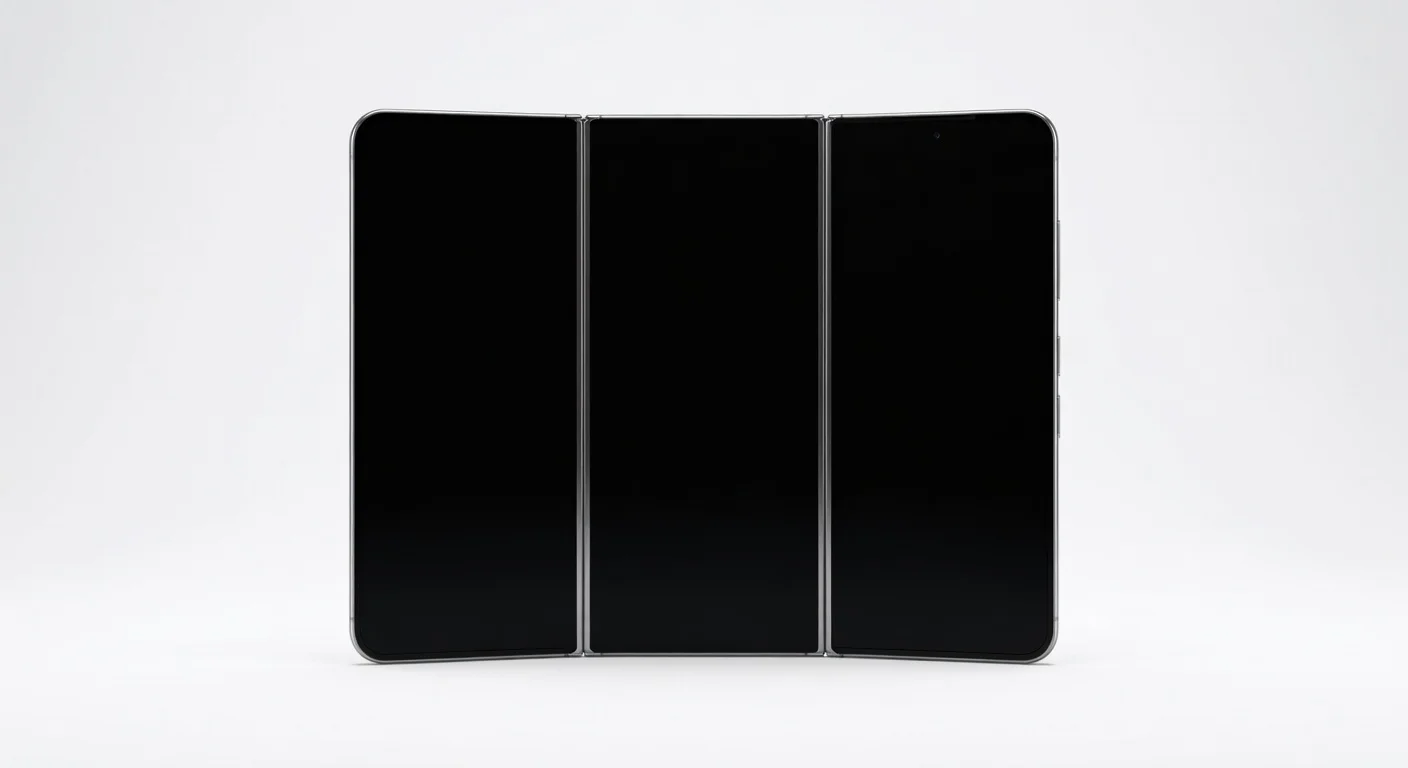
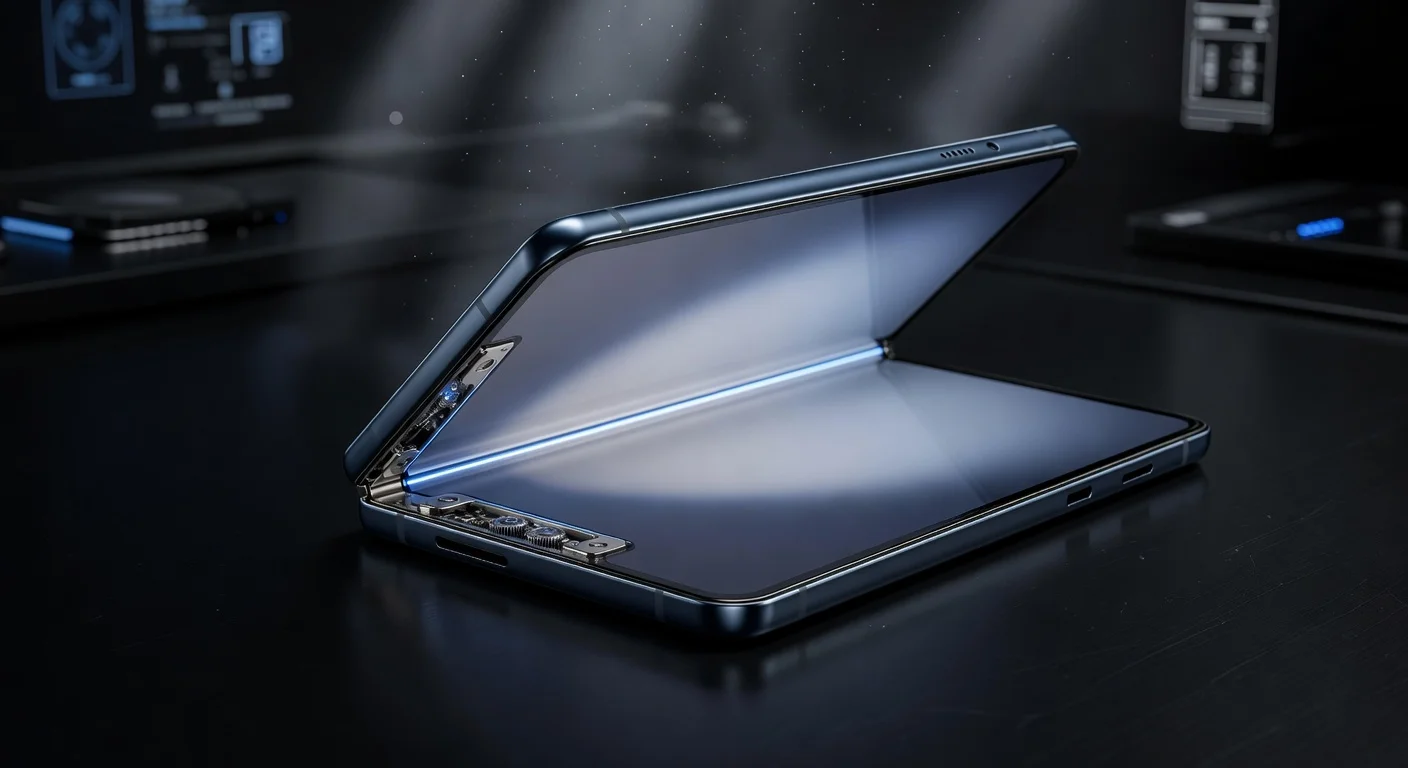
Samsung has executed the tri-fold mechanism with impressive precision. The device uses a triple-hinge system constructed from ultra-strong titanium alloy that feels remarkably solid despite the complexity. When fully folded, the Galaxy Z TriFold mimics the dimensions of a slightly thicker traditional flagship, making one-handed use feasible. Unfolding it reveals a nearly seamless 10.2-inch canvas with minimal visible creasing thanks to Samsung’s sixth-generation Ultra Thin Glass and improved layer stacking.
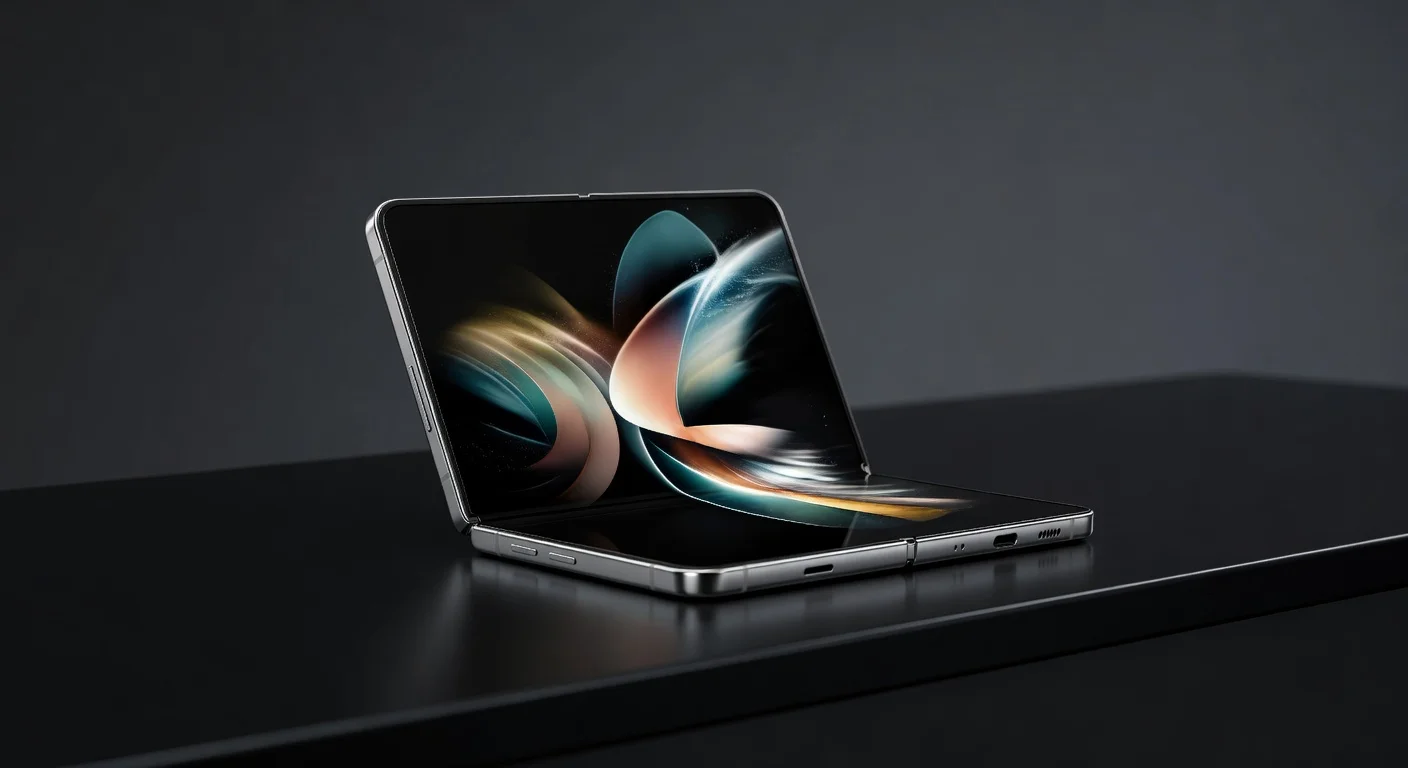
The exterior features a matte-finish Armor Aluminum frame paired with Gorilla Glass Victus 2 on both the cover screen and rear panel. IPX8 water resistance gives users confidence in daily carry, while the hinge has been tested to 600,000 folds — roughly three years of heavy use. At 265 grams the phone is noticeably heavier than slab flagships, yet the weight distribution feels balanced. The half-fold “Flex” positions are stable for video calls or content consumption, though the device does become somewhat unwieldy when using all three segments fully open on the move.
Ergonomically, Samsung added subtle texture changes along the edges for better grip and included a redesigned S Pen that magnetically attaches to the rear. The overall build exudes flagship luxury while addressing many durability concerns that plagued earlier foldables.
Performance
Powered by the Snapdragon 8 Gen 5 and 16GB of RAM, the Galaxy Z TriFold delivers class-leading performance in both single-screen and fully expanded modes. Real-world multitasking is transformative; users can comfortably run three to four productivity apps simultaneously across the large canvas without noticeable slowdown. Gaming at 120fps on titles like Genshin Impact remains smooth even when the device is unfolded, thanks to an advanced vapor-chamber cooling system that keeps surface temperatures in check.
Benchmark results place it at the top of 2026 foldables: Geekbench 6 scores average 3,120 single-core and 10,450 multi-core, while 3DMark Wild Life Extreme hits 6,850. App launching is near-instantaneous, and the large display makes split-screen editing genuinely useful rather than a novelty. Thermal throttling only appears after 45 minutes of sustained maximum load, a significant improvement over the Z Fold 7.
Battery efficiency benefits from the new 4nm process node, though the power-hungry 10.2-inch panel means heavy users will still reach for the charger by late evening. Overall, the Galaxy Z TriFold feels like a desktop replacement that fits in a coat pocket.
Features & Software
The standout feature is Samsung’s enhanced Flex Mode 3.0, which intelligently recognizes how the device is folded and adjusts the interface accordingly. Whether used in laptop stance, tent mode for media, or fully expanded for note-taking with the S Pen, the software adapts seamlessly. One UI 8.1 brings improved gesture navigation tailored to the tri-fold canvas and deeper integration with Galaxy AI features such as real-time translation across multiple windows and intelligent note summarization.
Samsung has also added “Continuity Canvas” that lets users start a document on the cover screen and instantly expand it to full size without losing context. The under-display camera has improved significantly, though it still isn’t as sharp as a traditional punch-hole. Wireless DeX support and optional keyboard cover turn the TriFold into a legitimate laptop substitute for travel.
Value Proposition
At $1,899, the Galaxy Z TriFold commands a substantial premium over standard flagships and even dual-fold competitors. However, it delivers a genuine three-in-one experience: smartphone, mini-tablet, and portable workstation. For professionals who currently carry both a phone and tablet, the convenience and productivity gains can justify the cost. Samsung’s generous trade-in program and five years of OS updates further sweeten the long-term value.
Compared to buying a flagship phone plus an 11-inch tablet, the TriFold ultimately offers better portability and seamless ecosystem integration, making it compelling for users already invested in the Galaxy ecosystem.
How It Compares
Against the Google Pixel Fold 3, the Z TriFold provides a significantly larger unfolded display and superior multitasking capabilities thanks to Samsung’s software maturity. The Pixel offers cleaner Android and better computational photography, but its dual-fold design feels limiting once you’ve experienced the TriFold’s expansive canvas.
The Huawei Mate XT 2 remains the TriFold’s closest rival in hardware ambition. Huawei’s build quality is exceptional, yet the lack of Google services outside China severely limits its appeal for Western users. Samsung delivers broader software support, more reliable updates, and stronger ecosystem features that most professionals will find more practical day-to-day.
Pros and Cons
Pros
- Revolutionary tri-fold design delivers true tablet-sized productivity in pocketable form.
- Outstanding Snapdragon 8 Gen 5 performance with excellent thermal management.
- Bright, vibrant 10.2-inch display with minimal crease visibility.
- Feature-rich One UI 8.1 optimized specifically for the tri-fold format.
- Five years of software updates and strong Galaxy AI integration.
Cons
- The $1,899 starting price positions it as an ultra-premium device out of reach for most consumers.
- At 265g and 13.5mm thick when folded, it feels noticeably heavier and bulkier than conventional smartphones.
- Multiple hinge points introduce long-term durability concerns despite manufacturer testing claims.
- Battery life drops significantly when the large inner display remains active for extended periods.
- Limited third-party app optimization for the unique 10.2-inch aspect ratio still exists in early software versions.
FAQ
Q: Is the Samsung Galaxy Z TriFold durable enough for daily use?
A: Samsung rates the triple-hinge mechanism for 600,000 folds. Combined with IPX8 water resistance and titanium construction, it is one of the most robust foldables available in 2026, though care is still recommended.
Q: Does the Galaxy Z TriFold support the S Pen?
A: Yes. It supports the new S Pen Fold Edition that attaches magnetically to the rear and offers low-latency writing across the full 10.2-inch canvas.
Q: How does battery life compare to dual-fold phones?
A: The 5,100mAh cell delivers 7-8 hours of screen-on time with mixed usage. Heavy multitasking on the large display reduces this to 5-6 hours, requiring more frequent top-ups than traditional phones.
Q: Can you use it as a laptop replacement?
A: With the optional keyboard cover and DeX mode, many professionals successfully use the TriFold as their primary computing device while traveling.
Q: Is the crease visible on the unfolded display?
A: Samsung’s sixth-generation UTG reduces crease visibility dramatically. The line is detectable under certain lighting but does not distract during normal use.
Verdict
The Samsung Galaxy Z TriFold is the most compelling vision yet of what foldable phones can become. It excels for power users, digital creatives, and professionals who value screen real estate and seamless multitasking in an impressively portable package. While the high price and minor software teething issues prevent it from being an everyday recommendation, those who can afford it will find it genuinely transformative. If your workflow benefits from a large canvas that folds away, the Z TriFold is currently unmatched.
Pros
- ✓ Revolutionary tri-fold design delivers true tablet-sized productivity in pocketable form.
- ✓ Outstanding Snapdragon 8 Gen 5 performance with excellent thermal management.
- ✓ Bright, vibrant 10.2-inch display with minimal crease visibility.
- ✓ Feature-rich One UI 8.1 optimized specifically for the tri-fold format.
- ✓ Five years of software updates and strong Galaxy AI integration.
Cons
- ✗ The $1,899 starting price positions it as an ultra-premium device out of reach for most consumers.
- ✗ At 265g and 13.5mm thick when folded, it feels noticeably heavier and bulkier than conventional smartphones.
- ✗ Multiple hinge points introduce long-term durability concerns despite manufacturer testing claims.
- ✗ Battery life drops significantly when the large inner display remains active for extended periods.
- ✗ Limited third-party app optimization for the unique 10.2-inch aspect ratio still exists in early software versions.
Where to Buy the Samsung Galaxy Z TriFold





Prices may vary. Affiliate links — we may earn a commission at no extra cost to you.
Related Reviews

Affiliate links — we may earn a commission at no extra cost to you.