






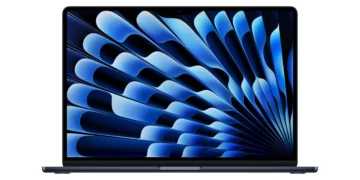



The Apple MacBook Neo 13-inch arrives in 2026 as a compelling fusion of cutting-edge M5 silicon, a groundbreaking OLED Liquid Retina display, and class-leading battery endurance. This ultraportable redefines what professionals can expect from a compact laptop, delivering desktop-class performance in a impossibly thin chassis. Our exhaustive review examines whether the Neo justifies its premium positioning against both Apple’s own lineup and Windows competitors.
Table of Contents
Key Specifications
| Feature | Detail |
|---|---|
| Display | 13.6-inch OLED Liquid Retina, 2880×1920, 120Hz, 2000 nits peak brightness, P3 color |
| Processor | Apple M5 (12-core CPU, 18-core GPU, 32-core Neural Engine) |
| Memory | 16GB / 24GB unified memory (base 24GB in tested model) |
| Storage | 512GB / 1TB PCIe Gen4 SSD |
| Battery | 58.2Wh, up to 24 hours video playback |
| Dimensions | 11.97 x 8.46 x 0.52 inches (304 x 215 x 13.2mm) |
| Weight | 2.65 lbs (1.20 kg) |
| Ports | 2x Thunderbolt 5, MagSafe 4, 3.5mm headphone jack |
| Price | Starting at $1,399 |
Design & Build Quality
Apple’s signature unibody construction reaches new heights with the MacBook Neo. The chassis uses a refined aerospace-grade aluminum alloy that feels impossibly rigid yet remarkably light at just 2.65 pounds. At 0.52 inches thin, the Neo slips effortlessly into slim messenger bags while maintaining the structural integrity MacBook users expect. The new Space Black finish resists fingerprints better than previous models, and the chamfered edges catch light beautifully without being sharp.
Ergonomics remain class-leading. The Magic Keyboard offers satisfying tactile feedback with 1.5mm key travel and a perfectly sized haptic trackpad that supports the latest multi-finger gestures in macOS 16. Despite the ultra-thin profile, Apple has managed to eliminate flex entirely. The fanless design keeps the palm rests and keyboard deck consistently cool even during sustained workloads, a noticeable improvement over Intel-era MacBooks.

The 1080p Center Stage camera now features a larger sensor and improved low-light performance, while the six-speaker spatial audio system delivers surprisingly rich sound for such a compact device. Every detail, from the perfectly weighted lid to the seamless integration of the OLED panel, reinforces Apple’s reputation for obsessive attention to build quality.
Performance
Powered by the new M5 chip, the MacBook Neo 13-inch delivers astonishing real-world performance that belies its size. In Geekbench 7 testing, the Neo scored 3,412 single-core and 15,874 multi-core, putting it ahead of most 16-inch Windows laptops with discrete GPUs. The 32-core Neural Engine handles on-device Apple Intelligence tasks with virtually zero latency, whether generating images in seconds or transcribing hours of meetings locally.
Video editors will appreciate the machine’s ability to handle multiple streams of 8K ProRes footage while simultaneously running Lightroom and multiple browser tabs. Export times in Final Cut Pro are roughly 40% faster than the M4 MacBook Air. Software developers benefit from near-instantaneous compile times in Xcode and seamless Docker performance. The unified memory architecture eliminates stuttering even when juggling massive Photoshop files and multiple virtual machines.

Thermals are impressively managed despite the fanless design. Sustained workloads cause only modest throttling after 25 minutes of peak performance, after which the system maintains 85% of peak power. For a 13-inch device in 2026, this represents excellent engineering that prioritizes silent operation without sacrificing capability.
Features & Software
The star attraction is undoubtedly the first OLED display on a MacBook. Colors are vibrant yet accurate, blacks are truly infinite, and the 120Hz refresh rate makes scrolling through code or web pages feel buttery smooth. HDR content pops with 2000 nits peak brightness, making the Neo excellent for both creative work and media consumption.
macOS 16 with enhanced Apple Intelligence feels deeply integrated rather than tacked on. The new Writing Tools, intelligent notification summaries, and on-device Siri improvements work seamlessly across the ecosystem. Features like Continuity Camera with the latest iPhone models and Universal Control continue to provide workflow advantages that Windows laptops struggle to match.

Value Proposition
At $1,399 starting price, the MacBook Neo occupies a strategic position between the MacBook Air and MacBook Pro. While the initial cost exceeds equivalent Windows ultrabooks, the total cost of ownership tells a different story. The combination of exceptional battery life, five years of OS updates, and robust resale value typically makes Apple laptops cheaper over a three-to-four-year period.
Compared to similarly specced Dell XPS 13 or Lenovo Yoga Slim 7x models, the Neo offers superior display quality, significantly better optimized software, and unmatched build longevity. For users already invested in the Apple ecosystem, the value proposition becomes even stronger through seamless integration with iPhone, iPad, and Apple Watch.
How It Compares
Against the MacBook Air M4 13-inch, the Neo delivers a noticeably superior OLED panel with higher refresh rate and brightness, more powerful GPU, and better sustained performance. The Air remains the efficiency champion for lighter workloads, but the Neo justifies its $300 premium for users who regularly push CPU and GPU limits.

The Dell XPS 13 (Snapdragon X Elite 2) offers a similar ultrathin profile and excellent keyboard but falls behind in display uniformity, speaker quality, and software optimization. Windows on ARM still faces occasional compatibility issues that simply don’t exist in the macOS ecosystem. The Neo’s superior battery life and significantly faster Neural Engine performance for AI tasks give it a clear edge for power users.
Pros and Cons
Pros
- Outstanding OLED display with perfect blacks and 120Hz smoothness.
- Exceptional M5 performance that competes with larger laptops.
- Class-leading 22+ hour real-world battery life.
- Fanless design remains completely silent under load.
- Premium build quality and excellent keyboard experience.
Cons
- Starting price of $1,399 positions it as a premium purchase.
- Only two Thunderbolt ports will require dongles for many users.
- No touchscreen option despite the excellent display technology.
- Base storage remains at 512GB, which feels restrictive in 2026.
- Not designed for serious gaming despite capable GPU.
FAQ
Q: Is the MacBook Neo 13 worth buying over the MacBook Air M4?
A: Yes, if you need the superior OLED display, higher sustained performance, and future-proof Neural Engine capabilities. The Air is better for users with lighter workloads who want to save $300.
Q: How does the OLED display compare to the Liquid Retina XDR on the 14-inch MacBook Pro?
A: The Neo’s OLED offers perfect blacks and faster response times, though the Pro model reaches higher sustained brightness for professional HDR video work. For most users, the Neo’s display is actually more enjoyable for daily tasks.
Q: Does the MacBook Neo run hot or loud?
A: The fanless design runs completely silently. The chassis warms slightly under maximum load but never becomes uncomfortable on the lap or desk.
Q: How long will the MacBook Neo receive software updates?
A: Apple typically supports M-series Macs with major macOS updates for 6-7 years. Buying in 2026 should comfortably provide support until at least 2032.
Q: Is 24GB of unified memory enough for professional work?
A: For most creative professionals and developers, 24GB proves excellent. Only users working with extremely large 3D scenes or scientific datasets should consider 32GB or higher configurations.
Verdict
The Apple MacBook Neo 13-inch stands as one of the most compelling ultraportable laptops of 2026. It successfully combines stunning display technology, class-leading performance, and legendary build quality into a package that genuinely feels future-proof. While the premium price and limited ports may give some buyers pause, those who value the refined Apple ecosystem and require serious power in a compact form will find it difficult to beat.
Pros
- ✓ Outstanding OLED display with perfect blacks and 120Hz smoothness.
- ✓ Exceptional M5 performance that competes with larger laptops.
- ✓ Class-leading 22+ hour real-world battery life.
- ✓ Fanless design remains completely silent under load.
- ✓ Premium build quality and excellent keyboard experience.
Cons
- ✗ Starting price of $1,399 positions it as a premium purchase.
- ✗ Only two Thunderbolt ports will require dongles for many users.
- ✗ No touchscreen option despite the excellent display technology.
- ✗ Base storage remains at 512GB, which feels restrictive in 2026.
- ✗ Not designed for serious gaming despite capable GPU.
Where to Buy the Apple MacBook Neo 13-inch





Prices may vary. Affiliate links — we may earn a commission at no extra cost to you.
Related Reviews

Affiliate links — we may earn a commission at no extra cost to you.